
线粒体功能障碍在阿尔茨海默病发病机制中的作用及靶向治疗的未来策略。
The role of mitochondrial dysfunction in the pathogenesis of Alzheimer's disease and future strategies for targeted therapy.
作者信息
Li Xin, Wu Ziyang, Si Xiaying, Li Jing, Wu Guode, Wang Manxia
机构信息
Department of Neurology, The Second Hospital & Clinical Medical School, Lanzhou University, Lanzhou, China.
The Second Hospital & Clinical Medical School, Lanzhou University, Lanzhou, China.
出版信息
Eur J Med Res. 2025 May 31;30(1):434. doi: 10.1186/s40001-025-02699-w.
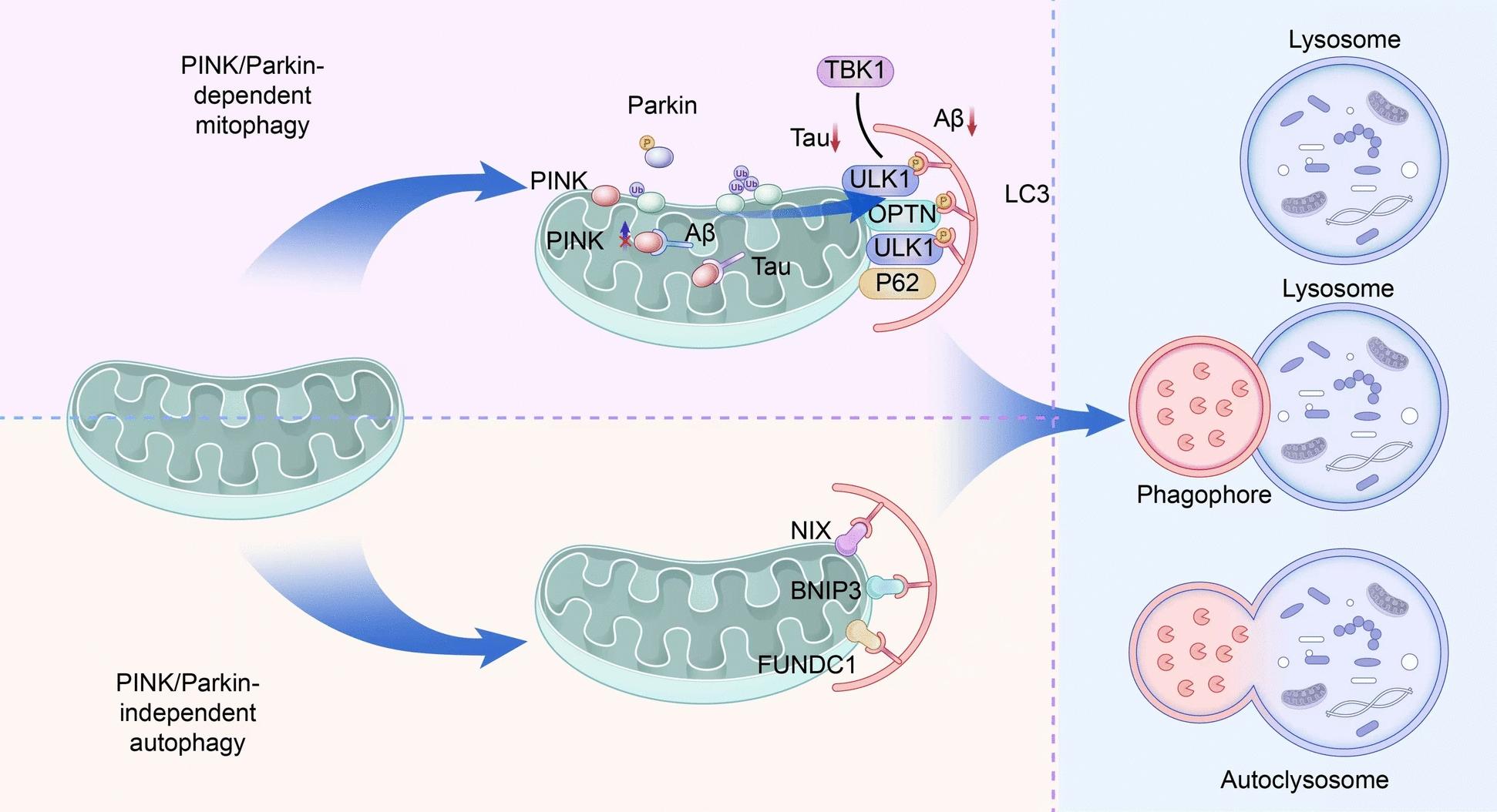
Alzheimer's disease (AD) is a neurodegenerative disorder characterized by progressive cognitive decline, behavioral impairments, and psychiatric comorbidities. The pathogenesis of AD remains incompletely elucidated, despite advances in dominant hypotheses such as the β-amyloid (Aβ) cascade, tauopathy, cholinergic deficiency, and neuroinflammation mechanisms. However, these hypotheses inadequately explain the multifactorial nature of AD, which exposes limitations in our understanding of its mechanisms. Mitochondrial dysfunction is known to play a pivotal role in AD, and since patients exhibit intracellular mitochondrial dysfunction and structural changes in the brain at an early stage, correcting the imbalance of mitochondrial homeostasis and the cytopathological changes caused by it may be a potential target for early treatment of AD. Mitochondrial structural abnormalities accelerate AD pathogenesis. For instance, structural and functional alterations in the mitochondria-associated endoplasmic reticulum membrane (MAM) can disrupt intracellular Ca⁺ homeostasis and cholesterol metabolism, consequently promoting Aβ accumulation. In addition, the overaccumulation of Aβ and hyperphosphorylated tau proteins can further damage neurons by disrupting mitochondrial integrity and mitophagy, thereby amplifying pathological aggregation and exacerbating neurodegeneration in AD. Furthermore, Aβ deposition and abnormal tau proteins can disrupt mitochondrial dynamics through dysregulation of fission/fusion proteins, leading to excessive mitochondrial fragmentation and subsequent dysfunction. Additionally, hyperphosphorylated tau proteins can impair mitochondrial transport, resulting in axonal dysfunction in AD. This article reviews the biological significance of mitochondrial structural morphology, dynamics, and mitochondrial DNA (mtDNA) instability in AD pathology, emphasizing mitophagy abnormalities as a critical contributor to AD progression. Additionally, mitochondrial biogenesis and proteostasis are critical for maintaining mitochondrial function and integrity. Impairments in these processes have been implicated in the progression of AD, further highlighting the multifaceted role of mitochondrial dysfunction in neurodegeneration. It further discusses the therapeutic potential of mitochondria-targeted strategies for AD drug development.
阿尔茨海默病(AD)是一种神经退行性疾病,其特征为进行性认知衰退、行为障碍和精神共病。尽管在诸如β-淀粉样蛋白(Aβ)级联反应、tau蛋白病、胆碱能缺乏和神经炎症机制等主流假说方面取得了进展,但AD的发病机制仍未完全阐明。然而,这些假说不足以解释AD的多因素性质,这暴露了我们对其机制理解的局限性。已知线粒体功能障碍在AD中起关键作用,并且由于患者在疾病早期就表现出细胞内线粒体功能障碍和大脑结构变化,纠正线粒体稳态失衡及其引起的细胞病理学变化可能是AD早期治疗的一个潜在靶点。线粒体结构异常会加速AD的发病机制。例如,线粒体相关内质网膜(MAM)的结构和功能改变会破坏细胞内Ca⁺稳态和胆固醇代谢,从而促进Aβ积累。此外,Aβ的过度积累和tau蛋白的过度磷酸化会通过破坏线粒体完整性和线粒体自噬进一步损害神经元,从而放大病理聚集并加剧AD中的神经退行性变。此外,Aβ沉积和异常的tau蛋白可通过裂变/融合蛋白的失调破坏线粒体动力学,导致线粒体过度碎片化及随后的功能障碍。另外,过度磷酸化的tau蛋白会损害线粒体运输,导致AD中的轴突功能障碍。本文综述了线粒体结构形态、动力学和线粒体DNA(mtDNA)不稳定性在AD病理学中的生物学意义,强调线粒体自噬异常是AD进展的关键因素。此外,线粒体生物发生和蛋白质稳态对于维持线粒体功能和完整性至关重要。这些过程的损害与AD的进展有关,进一步突出了线粒体功能障碍在神经退行性变中的多方面作用。本文还讨论了针对线粒体的策略在AD药物开发中的治疗潜力。


 Zotero 插件