
高血压管理中的新兴治疗前沿。
Emerging therapeutic frontiers in hypertension management.
作者信息
Pena Diana-Ligia, Aurelian Justin, Grigore Mihai, Hodorogea Andreea-Simona, Weiss Emma, Bădilă Elisabeta, Ilieșiu Adriana-Mihaela, Balahura Ana-Maria
机构信息
Department of Cardiology, "Prof. Dr. Theodor Burghele" Clinical Hospital, Bucharest, Romania.
Department of Urology, "Prof. Dr. Theodor Burghele" Clinical Hospital, Carol Davila University of Medicine and Pharmacy, Bucharest, Romania.
出版信息
Front Cardiovasc Med. 2025 May 16;12:1550181. doi: 10.3389/fcvm.2025.1550181. eCollection 2025.
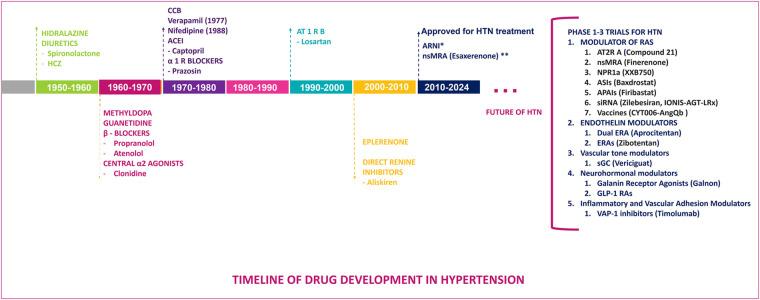
Resistant hypertension, characterized by persistently elevated blood pressure despite adherence to multiple antihypertensive therapies, remains a significant global health challenge. This condition is associated with increased cardiovascular morbidity and mortality, highlighting the urgent need for more effective treatment strategies. While current management focuses on lifestyle modification and pharmacotherapy, many patients do not achieve target blood pressure levels. Recent advances have led to the development of emerging therapies targeting novel mechanisms, including gene silencing, receptor modulation, enzyme inhibition, and immunomodulation. This descriptive review examines the efficacy, safety, and clinical trial progress of these innovative therapeutic approaches, offering new hope for improved blood pressure control in resistant hypertension.
顽固性高血压的特征是尽管坚持多种抗高血压治疗但血压仍持续升高,它仍然是一项重大的全球健康挑战。这种情况与心血管发病率和死亡率增加相关,凸显了对更有效治疗策略的迫切需求。虽然目前的管理重点是生活方式改变和药物治疗,但许多患者并未达到目标血压水平。最近的进展导致了针对新机制的新兴疗法的发展,包括基因沉默、受体调节、酶抑制和免疫调节。这篇描述性综述探讨了这些创新治疗方法的疗效、安全性和临床试验进展,为改善顽固性高血压的血压控制带来了新希望。

 Zotero 插件