
中国仓鼠卵巢细胞批次培养中单克隆抗体的生产动力学:探索细胞外和细胞内动态变化
mAb production kinetics in CHO batch culture: exploring extracellular and intracellular dynamics.
作者信息
Avilan Garzon Alejandro, Ebel Bruno, Paris Cédric, Schneider Samuel, Pfister David, Olmos Eric
机构信息
Université de Lorraine, CNRS, LRGP, Nancy, France.
Ypso-Facto, Nancy, France.
出版信息
Front Bioeng Biotechnol. 2025 May 21;13:1546105. doi: 10.3389/fbioe.2025.1546105. eCollection 2025.
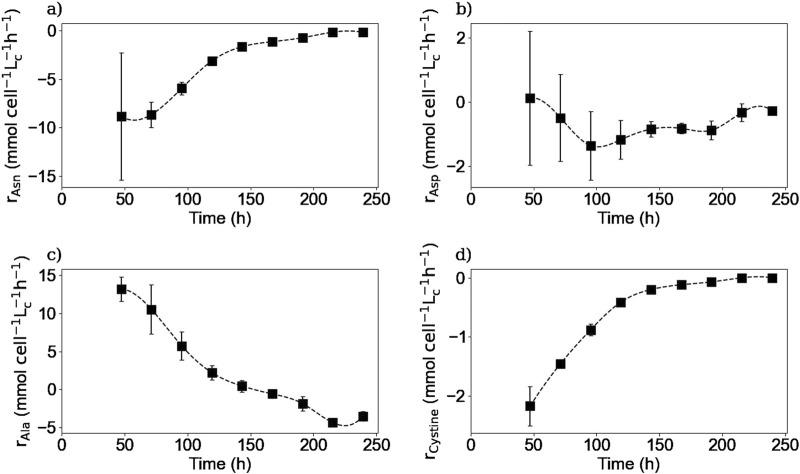
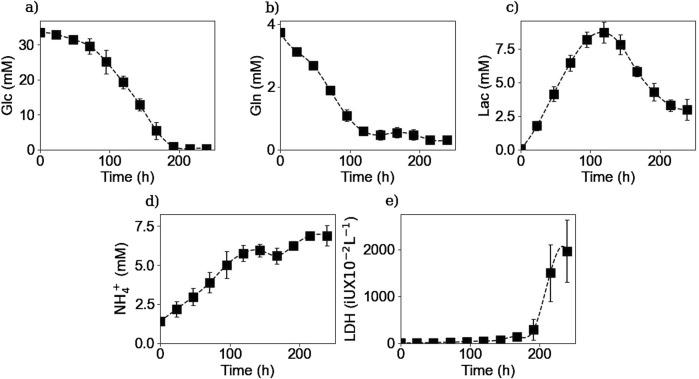
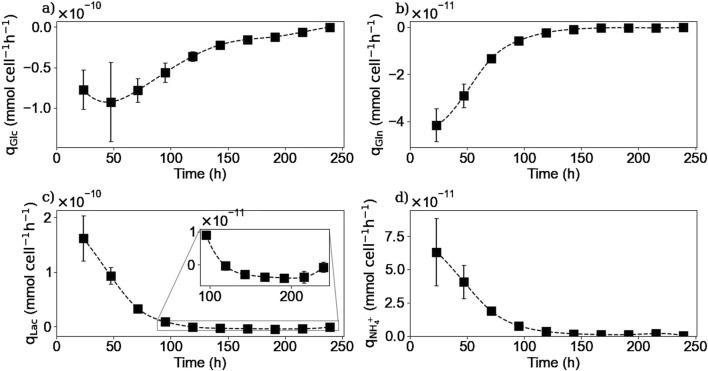
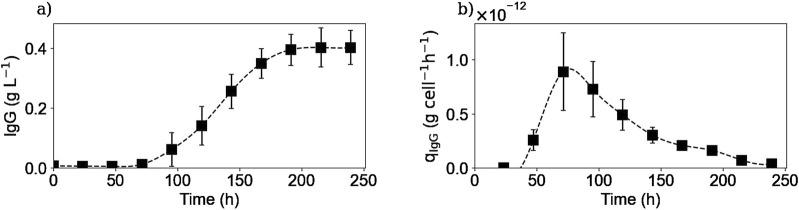
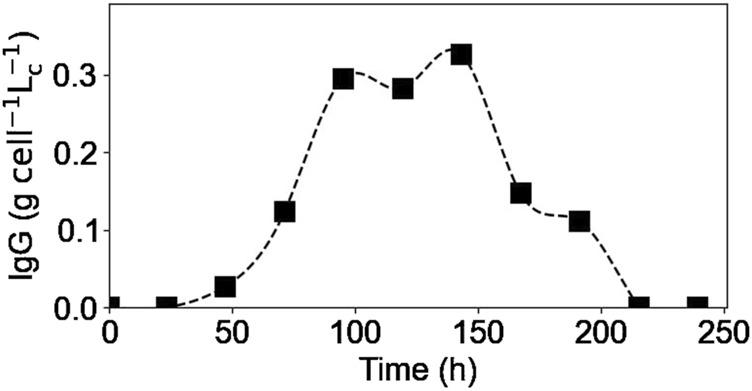
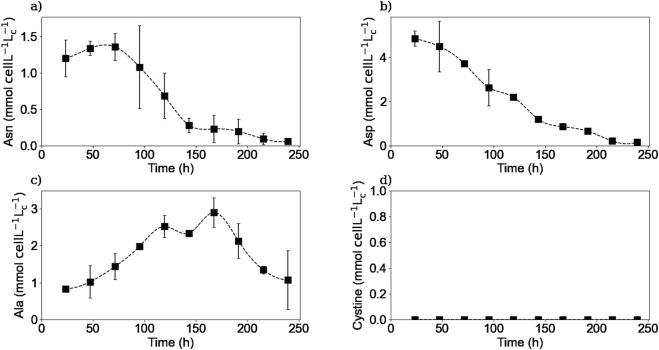
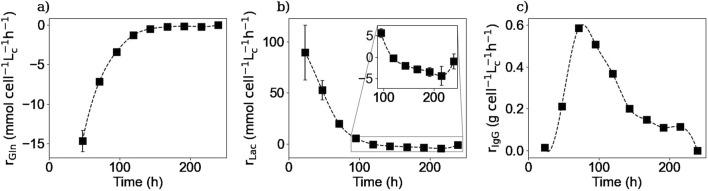
Monoclonal antibodies (mAbs) are complex therapeutic proteins commonly produced by Chinese Hamster Ovary cell culture. Cells are cultivated using a chemically defined medium containing essential nutrients like glucose, amino acids, vitamins, etc., that cells use to grow and produce the target protein among other by-products. Various studies have focused on both extracellular and intracellular culture dynamics, measuring the concentration of various metabolites in the culture medium and inside the cell, but in the vast majority of cases these studies have excluded the intracellular concentration profile of the antibody. To better understand the complexity of the culture process, and the intracellular and extracellular dynamics of the antibody production, the present study focuses on both the extracellular and intracellular biochemical dynamics. A quenching and a lysis protocol were used to obtain the intracellular and the extracellular concentration profiles for the main substrates, metabolites, and mAb during a standard batch culture. The results revealed that three amino acids (glutamine, asparagine, and cystine) were limiting substrates as they were completely depleted almost simultaneously from the culture medium. Intracellular accumulation of different metabolites during the culture process was demonstrated, as well as a 2-day delay between the onset of the intracellular mAb production and its secretion to the culture medium. Finally, a comparison of mass transfer rates across the cell membrane, intracellular production/consumption rates, and accumulation of metabolites in the cell interior revealed that although the intracellular concentrations of the different metabolites changed during the culture process, the dynamics of these variations were much slower than the other two phenomena.
单克隆抗体(mAb)是复杂的治疗性蛋白质,通常通过中国仓鼠卵巢细胞培养产生。细胞使用含有葡萄糖、氨基酸、维生素等必需营养素的化学限定培养基进行培养,细胞利用这些营养素生长并产生目标蛋白质以及其他副产物。各种研究都集中在细胞外和细胞内的培养动态,测量培养基和细胞内各种代谢物的浓度,但在绝大多数情况下,这些研究都排除了抗体的细胞内浓度分布情况。为了更好地理解培养过程的复杂性以及抗体产生的细胞内和细胞外动态,本研究聚焦于细胞外和细胞内的生化动态。采用淬灭和裂解方案来获取标准分批培养过程中主要底物、代谢物和单克隆抗体的细胞内和细胞外浓度分布。结果显示,三种氨基酸(谷氨酰胺、天冬酰胺和胱氨酸)是限制性底物,因为它们几乎同时从培养基中完全耗尽。证明了培养过程中不同代谢物的细胞内积累,以及细胞内单克隆抗体产生与分泌到培养基之间存在2天的延迟。最后,对跨细胞膜的传质速率、细胞内产生/消耗速率以及细胞内部代谢物积累的比较表明,尽管培养过程中不同代谢物的细胞内浓度发生了变化,但这些变化的动态比其他两种现象要慢得多。



 Zotero 插件