
牙囊干细胞衍生的小细胞外囊泡通过重编程巨噬细胞代谢改善牙髓炎。
Dental follicle stem cell-derived small extracellular vesicles ameliorate pulpitis by reprogramming macrophage metabolism.
作者信息
Tian Jun, Lou Yaxin, Li Mengjie, Duan Yihong, Liu He, Chen Chanchan, Qiu Yu, Chen Weiyang, Pang Chunfeng, Xiong Yuhua, Shen Ya, Wei Xi
机构信息
Hospital of Stomatology, Guanghua School of Stomatology, Sun Yat-Sen University, Guangzhou, Guangdong, 510055, PR China.
Guangdong Provincial Key Laboratory of Stomatology, Guangzhou, Guangdong, 510055, PR China.
出版信息
Bioact Mater. 2025 May 12;51:179-196. doi: 10.1016/j.bioactmat.2025.04.034. eCollection 2025 Sep.
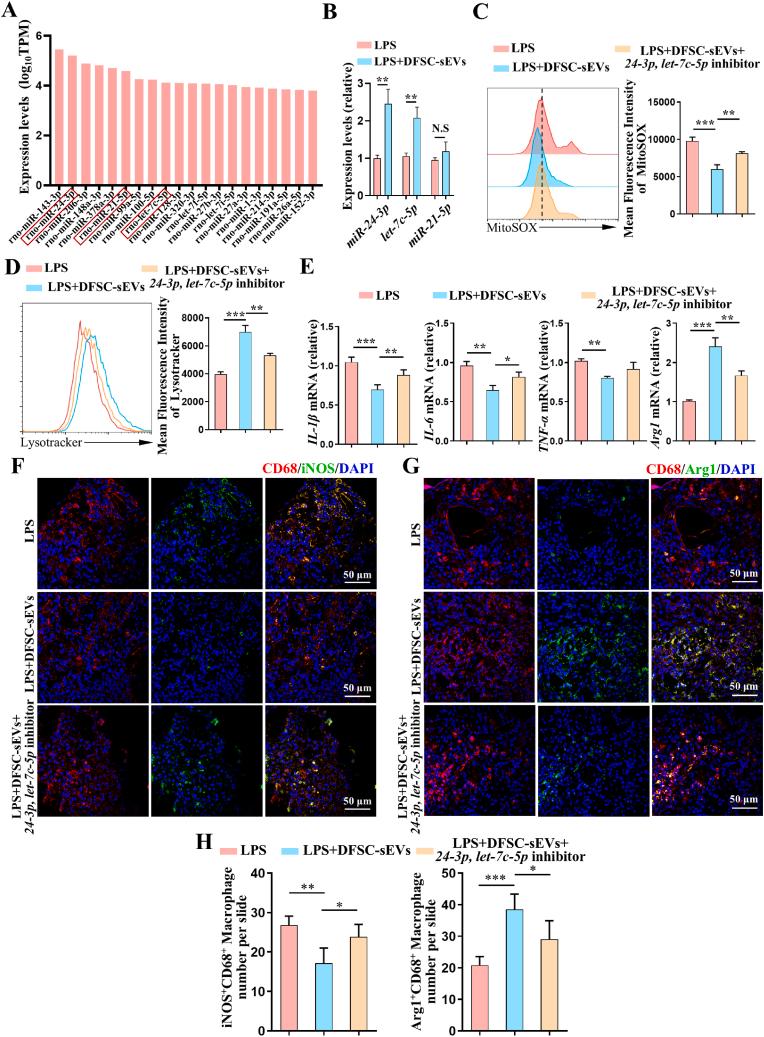
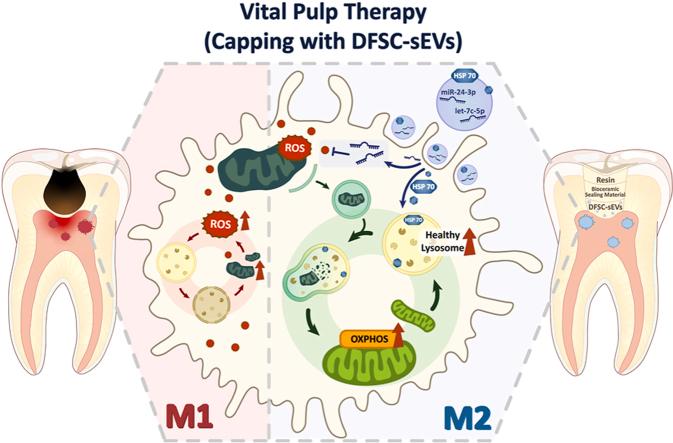
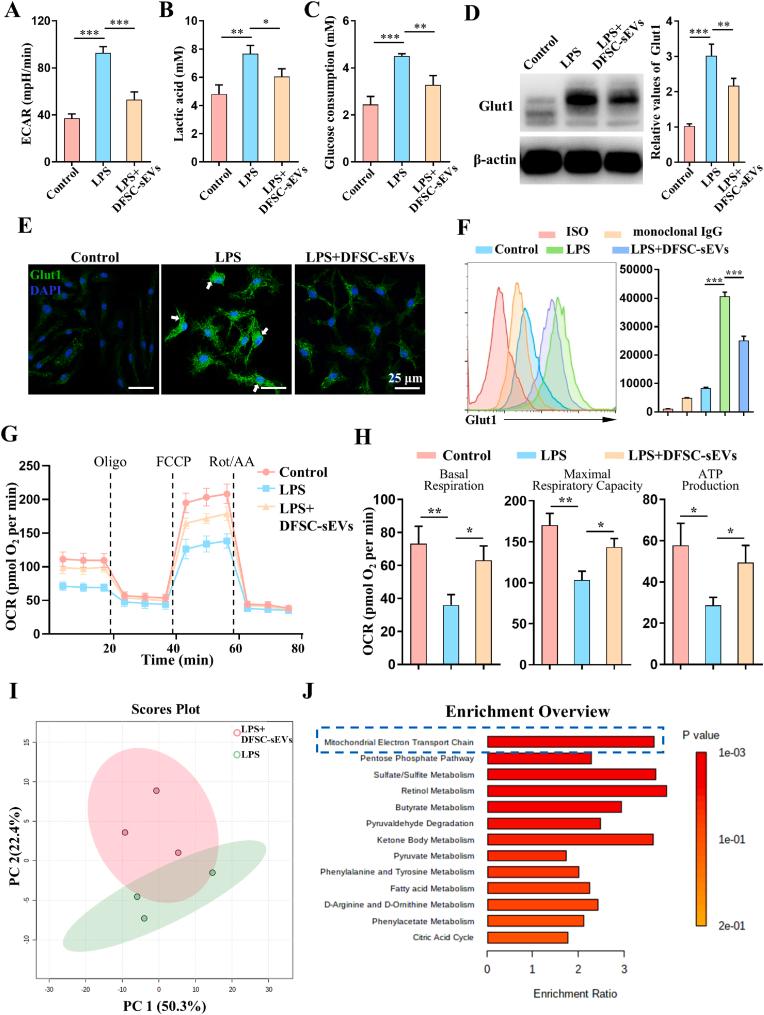
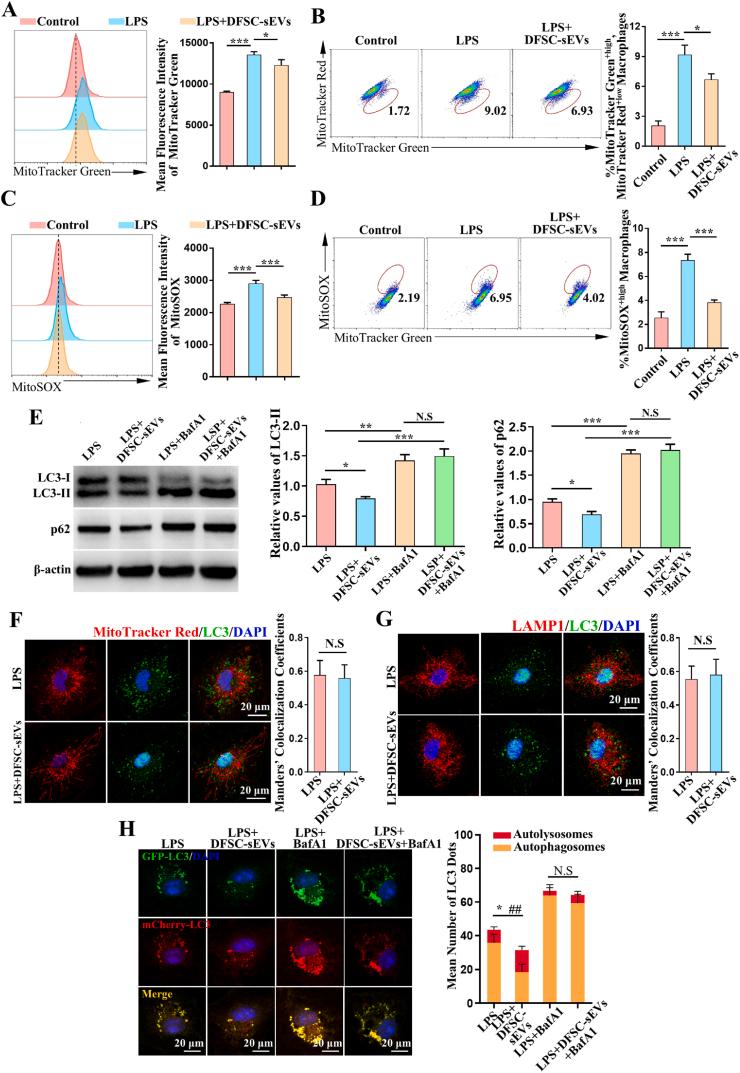
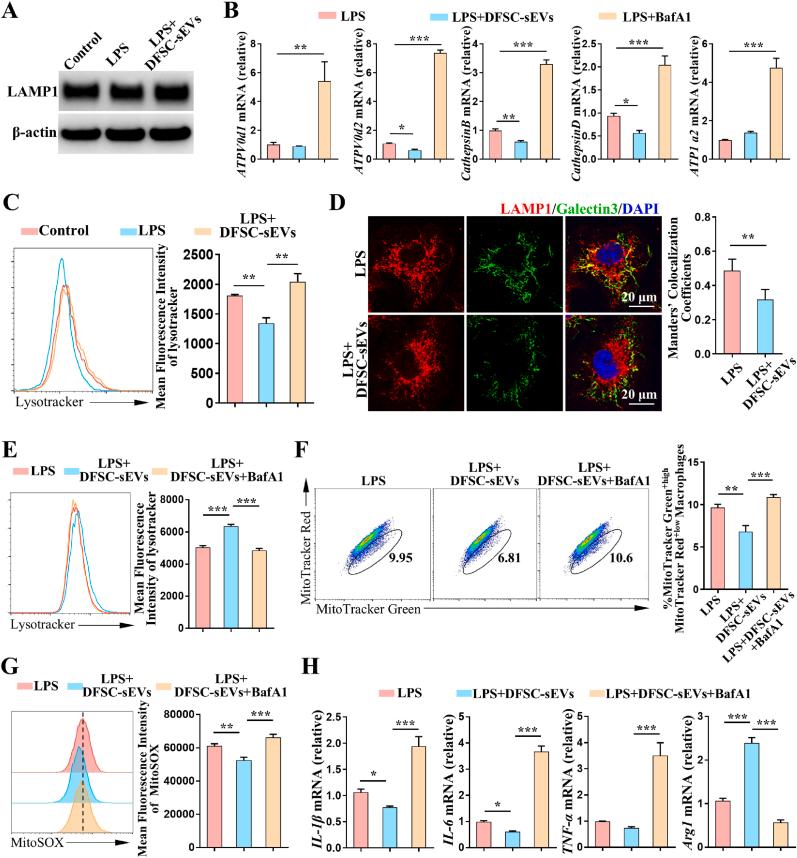
Vital pulp therapy (VPT) is considered a conservative means of preserving the vitality and function of the dental pulp after injury. However, current VPT has unfavorable effects on inflamed pulp. Mesenchymal stem cell (MSC)-derived small extracellular vesicles (MSC-sEVs) show powerful immunomodulatory capacities and exert therapeutic effects on a variety of inflammatory diseases. However, whether MSC-sEVs ameliorate the inflammatory response and promote inflammatory pulp repair in pulpitis is largely unknown. In this study, we show that sEVs derived from dental follicle stem cells (typical dental MSCs, DFSC-sEVs) alleviate lipopolysaccharide-induced pulpitis in rats and enhance pulp repair by inducing M2 macrophage polarization. Mechanistically, heat shock protein 70 (HSP70) within DFSC-sEVs can be supplemented into lysosomes to directly protect lysosomal function and induce mitophagy to promote the degradation of depolarized mitochondria, thereby preprogramming inflammatory macrophages to commit to oxidative phosphorylation, which fuels M2 polarization. Furthermore, DFSC-sEVs also transfer antioxidant miRNAs, including and , to inhibit mitochondrial reactive oxygen species production, thereby indirectly stabilizing lysosomes to induce M2 macrophage generation. Our study reveals a promising immunotherapeutic potential of DFSC-sEVs for VPT in inflamed pulp and a novel role for DFSC-sEVs in inhibiting the macrophage inflammatory response by protecting lysosomes and inducing mitophagy-mediated metabolic shifts toward oxidative phosphorylation.
活髓治疗(VPT)被认为是一种在牙齿损伤后保留牙髓活力和功能的保守方法。然而,目前的VPT对炎症牙髓有不利影响。间充质干细胞(MSC)来源的小细胞外囊泡(MSC-sEVs)具有强大的免疫调节能力,并对多种炎症性疾病发挥治疗作用。然而,MSC-sEVs是否能改善牙髓炎中的炎症反应并促进炎症牙髓修复在很大程度上尚不清楚。在本研究中,我们表明,来自牙囊干细胞(典型的牙髓间充质干细胞,DFSC-sEVs)的小细胞外囊泡可减轻大鼠脂多糖诱导的牙髓炎,并通过诱导M2巨噬细胞极化来增强牙髓修复。机制上,DFSC-sEVs内的热休克蛋白70(HSP70)可被补充到溶酶体中,直接保护溶酶体功能并诱导线粒体自噬以促进去极化线粒体的降解,从而预先设定炎症巨噬细胞进行氧化磷酸化,为M2极化提供能量。此外,DFSC-sEVs还转移抗氧化miRNA,包括 和 ,以抑制线粒体活性氧的产生,从而间接稳定溶酶体以诱导M2巨噬细胞生成。我们的研究揭示了DFSC-sEVs在炎症牙髓的VPT中具有有前景的免疫治疗潜力,以及DFSC-sEVs通过保护溶酶体和诱导线粒体自噬介导的代谢向氧化磷酸化转变来抑制巨噬细胞炎症反应的新作用。



 Zotero 插件