
1990年至2021年中国与全球肝癌负担趋势的比较分析。
Comparative analysis of liver cancer burden trends in China and worldwide between 1990 and 2021.
作者信息
Chen Chunrong, Xu Qianjie, Wang Tao, Yuan Yuliang, Hu Zuhai, Li Xiaosheng, Zheng Xiaodong, Lei Haike
机构信息
Department of Health Information Management, School of Public Health and Management, Chongqing Three Gorges Medical and Pharmaceutical College, Chongqing, China.
Chongqing Cancer Multiomics Big Data Application Engineering Research Center, Chongqing University Cancer Hospital, Chongqing, China.
出版信息
Front Public Health. 2025 May 23;13:1513210. doi: 10.3389/fpubh.2025.1513210. eCollection 2025.
BACKGROUND
The Global Burden of Diseases, Injuries, and Risk Factors Study (GBD) 2021 provides comprehensive data on liver cancer burden worldwide. This study aims to analyze and compare the trends in liver cancer burden in China and globally between 1990 and 2021.
METHODS
Data were extracted from the GBD 2021 database, which includes incidence, prevalence, mortality, and disability-adjusted life years (DALYs) for liver cancer in 204 countries and territories. Age-standardized rates (ASIR, ASPR, ASMR, ASDR) and crude rates (CIR, CPR, CMR, CDR) were calculated. Joinpoint regression analysis was used to determine the average annual percentage change (AAPC) in liver cancer burden trends.
RESULTS
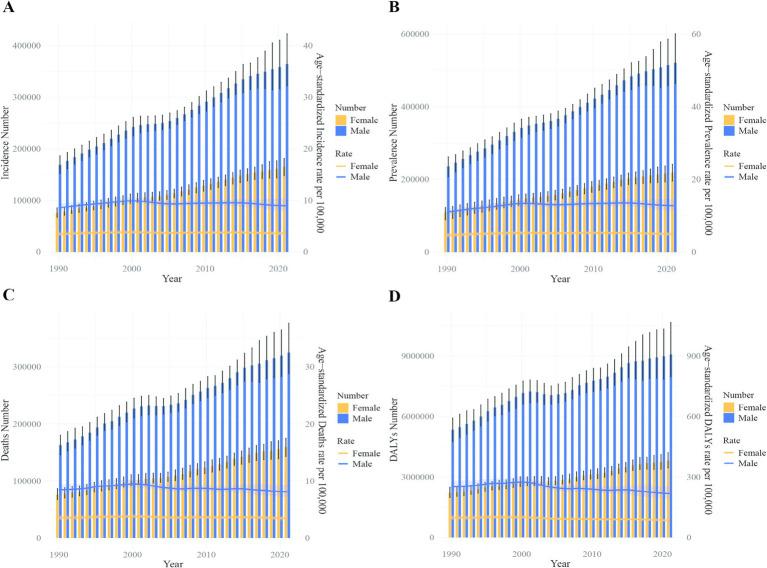
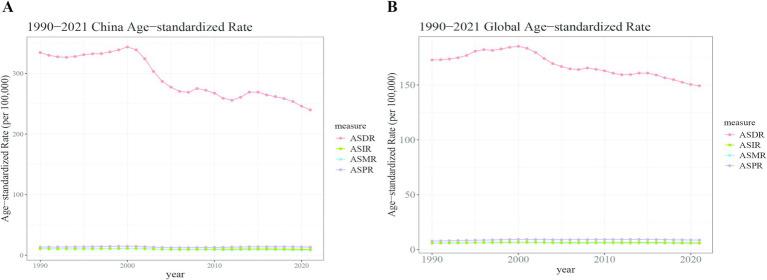
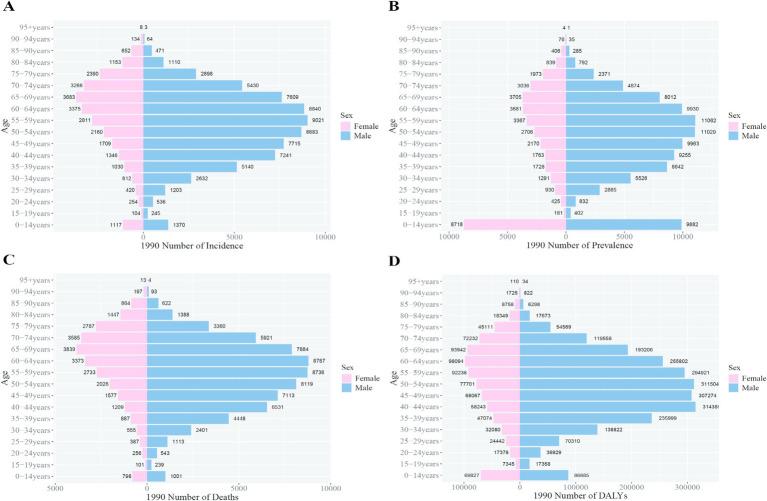
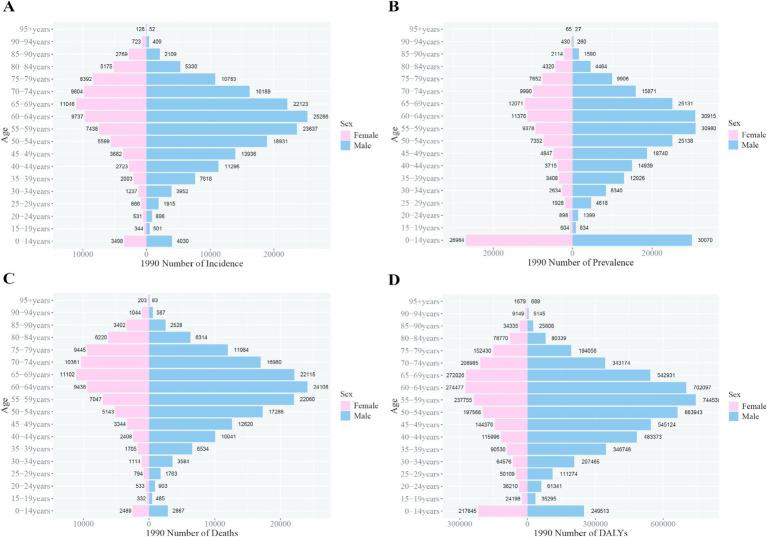
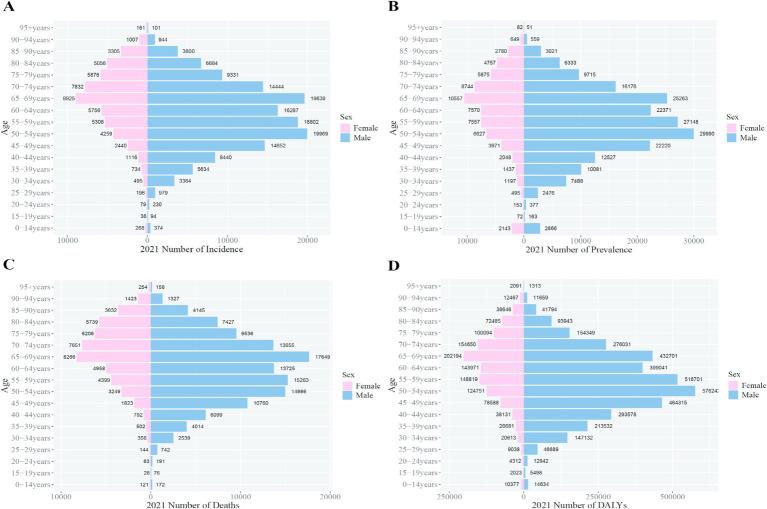
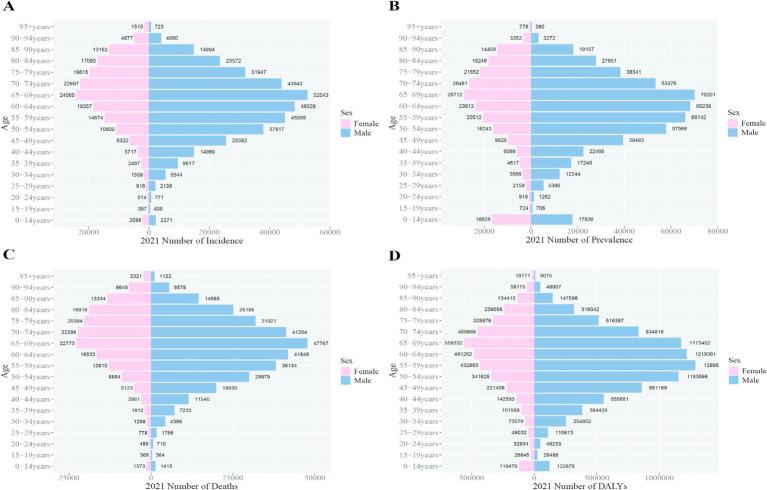
In China, the number of liver cancer cases increased from 96,434 in 1990 to 196,637 in 2021, while the age-standardized incidence rate (ASIR) decreased. Globally, cases increased from 244,689 to 529,202, with a slight increase in ASIR. The age-standardized prevalence rate (ASPR) in China remained stable, while globally it increased. Age-standardized mortality rates (ASMR) and age-standardized DALY rates (ASDR) decreased in both China and globally. Males had higher rates than females in all age groups. The peak age for liver cancer burden occurred earlier in Chinese males compared to the global average.
CONCLUSION
The liver cancer burden in China has declined over the past three decades, with a more significant decrease in China than globally. However, China still faces a higher burden compared to the global average. The earlier peak in liver cancer burden among Chinese males suggests the need for targeted prevention and control measures, especially in light of the impact of risk factors like hepatitis B and C, alcohol consumption, drug abuse, obesity, diabetes and tobacco use. Globally, liver cancer remains a significant public health challenge with rising incidence and prevalence rates, emphasizing the need for a comprehensive global approach to liver cancer prevention.
背景
《2021年全球疾病、伤害及风险因素负担研究》(GBD 2021)提供了全球范围内肝癌负担的全面数据。本研究旨在分析和比较1990年至2021年中国和全球肝癌负担的趋势。
方法
数据从GBD 2021数据库中提取,该数据库包含204个国家和地区的肝癌发病率、患病率、死亡率及伤残调整生命年(DALY)。计算了年龄标准化率(ASIR、ASPR、ASMR、ASDR)和粗率(CIR、CPR、CMR、CDR)。采用Joinpoint回归分析确定肝癌负担趋势的年均变化百分比(AAPC)。
结果
在中国,肝癌病例数从1990年的96,434例增加到2021年的196,637例,而年龄标准化发病率(ASIR)下降。在全球范围内,病例数从244,689例增加到529,202例,ASIR略有上升。中国的年龄标准化患病率(ASPR)保持稳定,而全球范围内则有所上升。中国和全球的年龄标准化死亡率(ASMR)和年龄标准化DALY率(ASDR)均下降。所有年龄组中男性的发病率均高于女性。与全球平均水平相比,中国男性肝癌负担的高峰年龄出现得更早。
结论
在过去三十年中,中国的肝癌负担有所下降,且中国的下降幅度比全球更为显著。然而,与全球平均水平相比,中国仍面临更高的负担。中国男性肝癌负担的较早高峰表明需要采取有针对性的预防和控制措施,特别是考虑到乙肝和丙肝、饮酒、药物滥用、肥胖、糖尿病和吸烟等风险因素的影响。在全球范围内,肝癌仍然是一个重大的公共卫生挑战,发病率和患病率不断上升,这凸显了采取全面的全球肝癌预防方法的必要性。



 Zotero 插件