
2015年至2021年在巴拿马通过GenoType MTBDRplus在该复合体菌株中鉴定出的与利福平及异烟肼耐药相关的突变。
Mutations associated with resistance to rifampicin and isoniazid identified in strains of the complex by GenoType MTBDRplus in Panama, 2015-2021.
作者信息
Domínguez González Juan, Castillo Mewa Juan, González Prudencio, Del Cid Pedro, Pérez Ruíz Jacinto Ariel, Rosas Hermosilla Samantha Eunice
机构信息
Instituto Conmemorativo Gorgas de Estudios de la Salud, Panama City, Panama.
出版信息
Microbiol Spectr. 2025 Jul;13(7):e0240024. doi: 10.1128/spectrum.02400-24. Epub 2025 Jun 9.
UNLABELLED
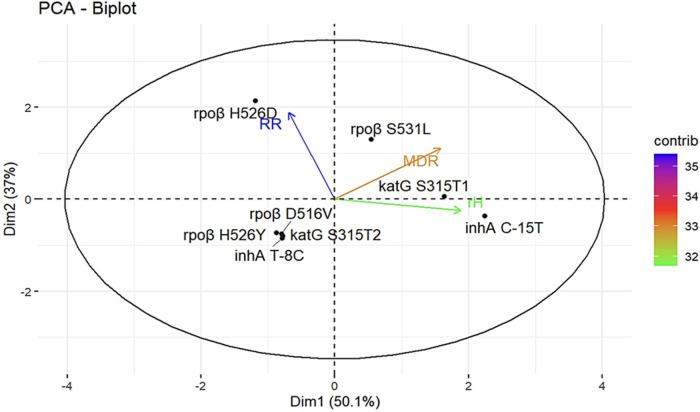
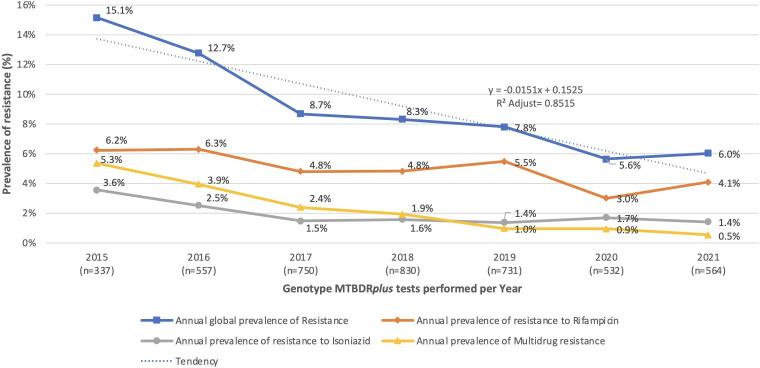
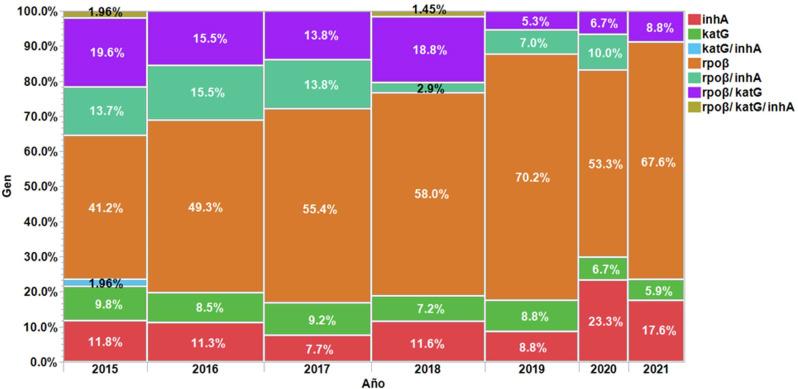
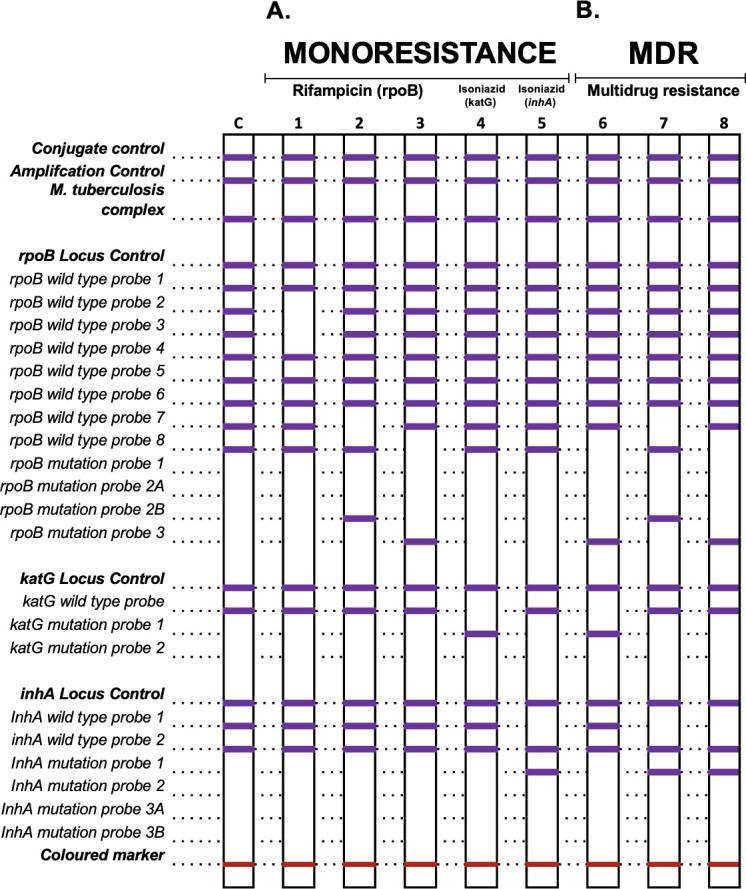
Tuberculosis is one of the diseases causing high rates of morbidity and mortality in several countries. However, efforts in the use of diagnostic methods for tuberculosis and the detection of drug resistance are essential to reduce cases. Since 2015, rapid molecular diagnostic tests have been implemented in Panama, enabling the detection of drug resistance, mainly rifampicin and isoniazid, in patients with suspected tuberculosis. This study aimed to identify mutations in complex strains with resistance to rifampicin and isoniazid using GenoType MTBDRplus. It is a retrospective study reviewing the results of the GenoType MTBDRplus version 2.0 test from 2015 to 2021. Strains not identified as complex and those that did not show a mutation pattern and were categorized as sensitive were excluded. Data analysis was carried out using the Chi-square tests, Pearson's Correlation, and principal components analysis. A total of 4,301 strains were analyzed, of which 8.8% were detected with mutation or resistance probes in one or more of the genes analyzed: 56.0% in the gene, 11.9% in the gene, and 8.2% in the gene. In addition, other mutations such as and were detected in 9.5% and 13.5% of cases, respectively. Thirty-eight resistance patterns were identified, with H526D and S531L being the most frequent mutations in the gene, and S315T1 and C-15T are the most common in and , respectively. The resistance patterns detected by the GenoType MTBDRplus assay highlight the genetic variability of drug resistance in the country and emphasize the need to implement epidemiological surveillance methodologies. Integrating patient clinical data with genetic variation information is essential for improving disease control and understanding transmission dynamics and drug resistance acquisition. These findings also provide important insights for guiding tuberculosis treatment strategies in Panama, supporting the use of molecular tools for the early detection of drug resistance, enhancing our understanding of the epidemiology, and informing clinical decision-making.
IMPORTANCE
This study focuses on understanding how strains in Panama develop resistance. With tuberculosis (TB) cases becoming harder to treat due to drug resistance, especially after the disruptions caused by the COVID-19 pandemic, rapid and accurate diagnosis is crucial. By using advanced molecular tests to identify specific genetic mutations in drug-resistant TB strains, this research helps improve treatment decisions, leading to better outcomes for patients. Understanding these mutations also aids in controlling the spread of TB. Given the rising global concern over drug-resistant TB, the findings of this study are important not only for Panama but also for other regions facing similar challenges.
未标注
结核病是在多个国家导致高发病率和高死亡率的疾病之一。然而,努力运用结核病诊断方法以及检测耐药性对于减少病例至关重要。自2015年以来,巴拿马已实施快速分子诊断检测,能够在疑似结核病患者中检测出耐药性,主要是对利福平及异烟肼的耐药性。本研究旨在使用GenoType MTBDRplus鉴定对利福平和异烟肼耐药的复杂菌株中的突变。这是一项回顾性研究,回顾了2015年至2021年GenoType MTBDRplus 2.0版本检测的结果。未鉴定为复杂菌株以及未显示突变模式且被归类为敏感的菌株被排除。使用卡方检验、皮尔逊相关性分析和主成分分析进行数据分析。总共分析了4301株菌株,其中8.8%在一个或多个分析基因中检测到突变或耐药探针:在 基因中为56.0%,在 基因中为11.9%,在 基因中为8.2%。此外,在9.5%和13.5%的病例中分别检测到其他突变,如 和 。鉴定出38种耐药模式,H526D和S531L是 基因中最常见的突变,S315T1和C-15T分别是 和 基因中最常见的突变。GenoType MTBDRplus检测所检测到的耐药模式突出了该国耐药性的遗传变异性,并强调需要实施流行病学监测方法。将患者临床数据与基因变异信息相结合对于改善疾病控制以及理解传播动态和耐药性获得至关重要。这些发现也为指导巴拿马的结核病治疗策略提供了重要见解,支持使用分子工具早期检测耐药性,增强我们对流行病学的理解,并为临床决策提供依据。
重要性
本研究着重于了解巴拿马的 菌株如何产生耐药性。由于耐药性,尤其是在新冠疫情造成的干扰之后,结核病病例变得更难治疗,快速准确的诊断至关重要。通过使用先进的分子检测来鉴定耐药结核病菌株中的特定基因突变,本研究有助于改善治疗决策,从而为患者带来更好的治疗结果。了解这些突变也有助于控制结核病的传播。鉴于全球对耐药结核病的关注度不断上升,本研究的结果不仅对巴拿马很重要,对其他面临类似挑战的地区也很重要。
 Zotero 插件