
聚赖氨酸衍生的碳量子点通过抗菌和成骨作用促进骨髓炎骨缺损的修复。
Poly-Lysine-Derived Carbon Quantum Dots Promote the Repair of Bone Defects in Osteomyelitis Through Antibacterial and Osteogenic Effects.
作者信息
Wu Jianghong, Yan He, Yang Xiaorong, Qiao Li, Rao Xiancai, Zhou Renjie
机构信息
Department of Emergency, The Second Affiliated Hospital, Army Medical University, Chongqing, People's Republic of China.
Department of Microbiology, College of Basic Medical Science, Army Medical University, Chongqing, People's Republic of China.
出版信息
Int J Nanomedicine. 2025 Jun 5;20:7199-7214. doi: 10.2147/IJN.S521727. eCollection 2025.
BACKGROUND
Osteomyelitis is a challenging clinical condition to manage effectively. In this study, we used ε-Poly (L-lysine) as the raw material to synthesize carbon quantum dots (PL-CQDs). These PL-CQDs possess antibacterial and osteogenesis ability, and are expected to improve the therapeutic effect of osteomyelitis.
METHODS
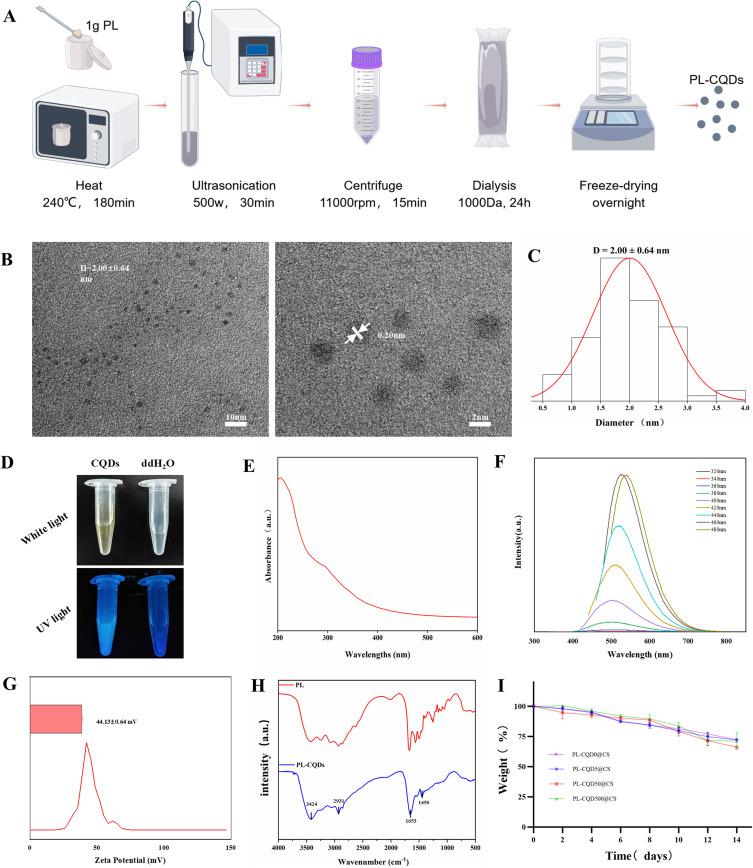
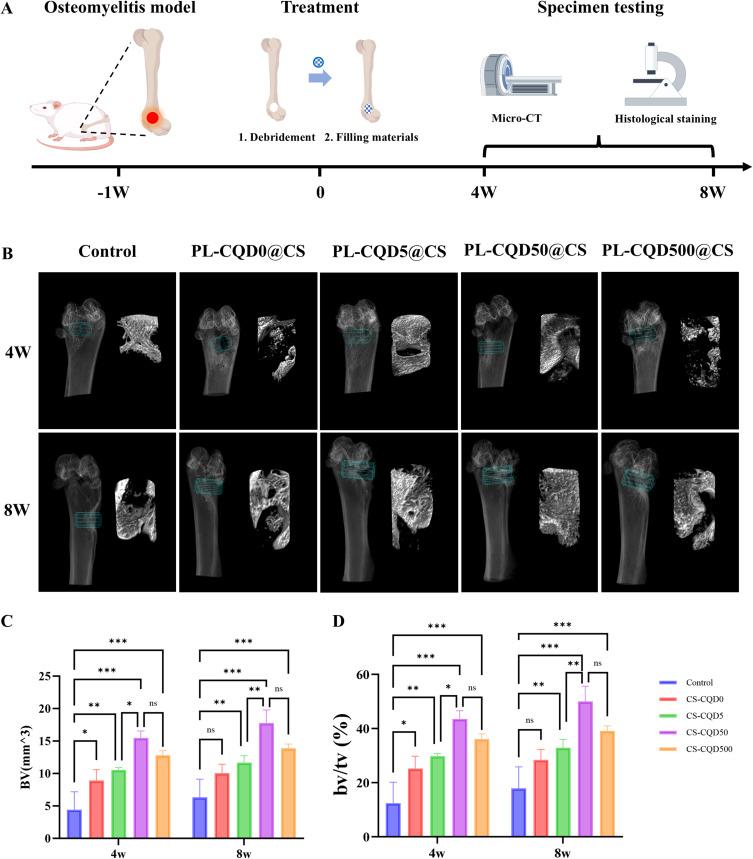
PL-CQDs were synthesized via a dry heat-intermittent ultrasound method and characterized. The antibacterial efficacy of PL-CQDs was assessed using the spread plate method. The biological functions of PL-CQDs were evaluated through CCK-8 assays, scratch wound healing assay, osteogenic differentiation experiments, and transcriptome sequencing. In the in vivo experiments, the rats with osteomyelitis were evenly divided into five groups and treated with calcium sulfate containing different concentrations of PL-CQDs, and the therapeutic effects were evaluated by micro-CT and histology.
RESULTS
PL-CQDs at concentrations of 200, 400, and 800 µg/mL exhibited no cytotoxicity and demonstrated the ability to kill methicillin-resistant and . Additionally, PL-CQDs promoted the migration and osteogenic differentiation of mouse pre-osteoblasts (MC3T3-E1) cells. Transcriptome sequencing revealed that PL-CQDs significantly altered the ECM-receptor interaction signaling pathways and participated in biological processes such as the positive regulation of chondrocyte proliferation, collagen fiber organization, and regulation of fibroblast proliferation. Micro-CT and Masson staining results showed that the incorporation of PL-CQDs at different concentrations was beneficial to the repair of osteomyelitis defects, with the best repair in the PL-CQD50@CS group. Immunohistochemistry (CD31, DMP1) suggested that PL-CQDs facilitated the repair of osteomyelitis by enhancing matrix deposition and vascularization at the bone defect site.
CONCLUSION
PL-CQDs exhibit antibacterial and osteogenic properties and may serve as a potential alternative treatment for osteomyelitis.
背景
骨髓炎是一种难以有效治疗的临床病症。在本研究中,我们以ε-聚(L-赖氨酸)为原料合成了碳量子点(PL-CQDs)。这些PL-CQDs具有抗菌和成骨能力,有望提高骨髓炎的治疗效果。
方法
通过干热间歇超声法合成并表征PL-CQDs。采用平板涂布法评估PL-CQDs的抗菌效果。通过CCK-8测定、划痕伤口愈合试验、成骨分化实验和转录组测序评估PL-CQDs的生物学功能。在体内实验中,将骨髓炎大鼠均匀分为五组,用含不同浓度PL-CQDs的硫酸钙进行治疗,并通过微型计算机断层扫描(micro-CT)和组织学评估治疗效果。
结果
浓度为200、400和800μg/mL的PL-CQDs无细胞毒性,并表现出杀灭耐甲氧西林菌的能力。此外,PL-CQDs促进了小鼠前成骨细胞(MC3T3-E1)的迁移和成骨分化。转录组测序显示,PL-CQDs显著改变了细胞外基质-受体相互作用信号通路,并参与了软骨细胞增殖的正向调节、胶原纤维组织形成和成纤维细胞增殖调节等生物学过程。Micro-CT和Masson染色结果表明,不同浓度PL-CQDs的掺入有利于骨髓炎缺损的修复,其中PL-CQD50@CS组修复效果最佳。免疫组织化学(CD31、DMP1)表明,PL-CQDs通过增强骨缺损部位的基质沉积和血管生成促进骨髓炎的修复。
结论
PL-CQDs具有抗菌和成骨特性,可能成为骨髓炎的一种潜在替代治疗方法。



 Zotero 插件