
通过迷走神经在肠脑神经通讯中传递的即时葡萄糖信号。
Immediate glucose signaling transmitted via the vagus nerve in gut-brain neural communication.
作者信息
Yamada Serika, Natsubori Akiyo, Harada Kazuki, Tsuboi Takashi, Monai Hiromu
机构信息
Department of Biology, Faculty of Science, Ochanomizu University, 2-1-1 Ohtsuka, Bunkyo-ku, Tokyo 112-8610, Japan.
Sleep Disorders Project, Tokyo Metropolitan Institute of Medical Science, 2-1-6 Kamikitazawa, Setagaya-ku, Tokyo 156-8506, Japan.
出版信息
iScience. 2025 May 5;28(5):112439. doi: 10.1016/j.isci.2025.112439. eCollection 2025 May 16.
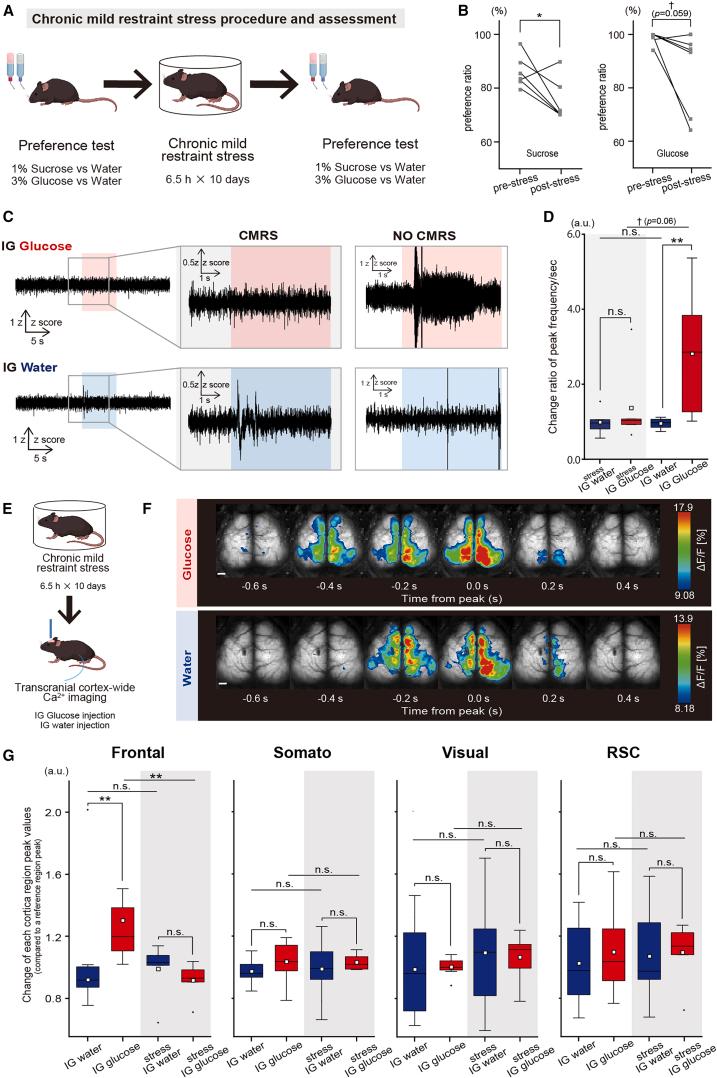
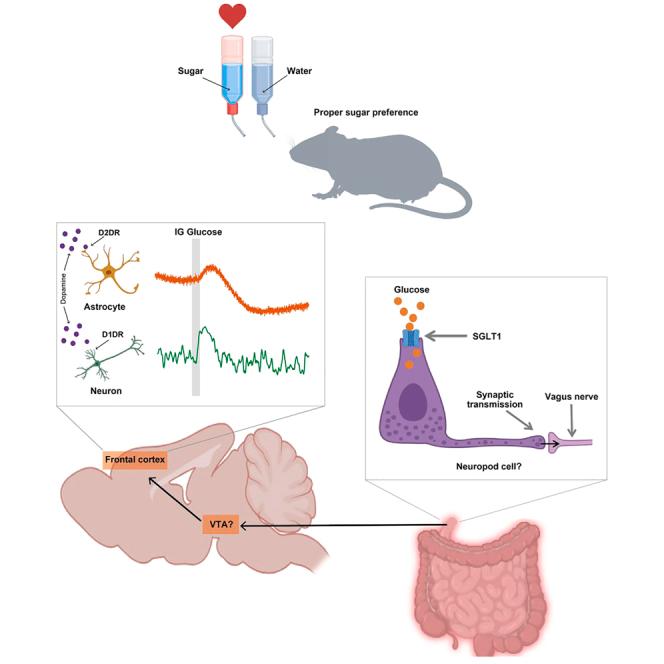
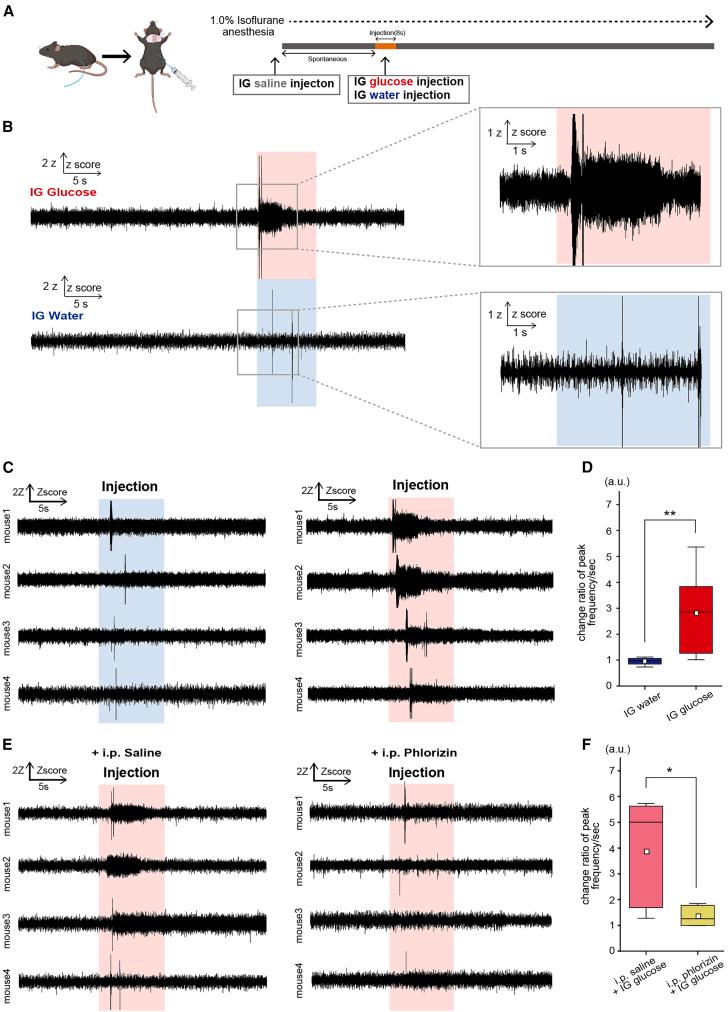
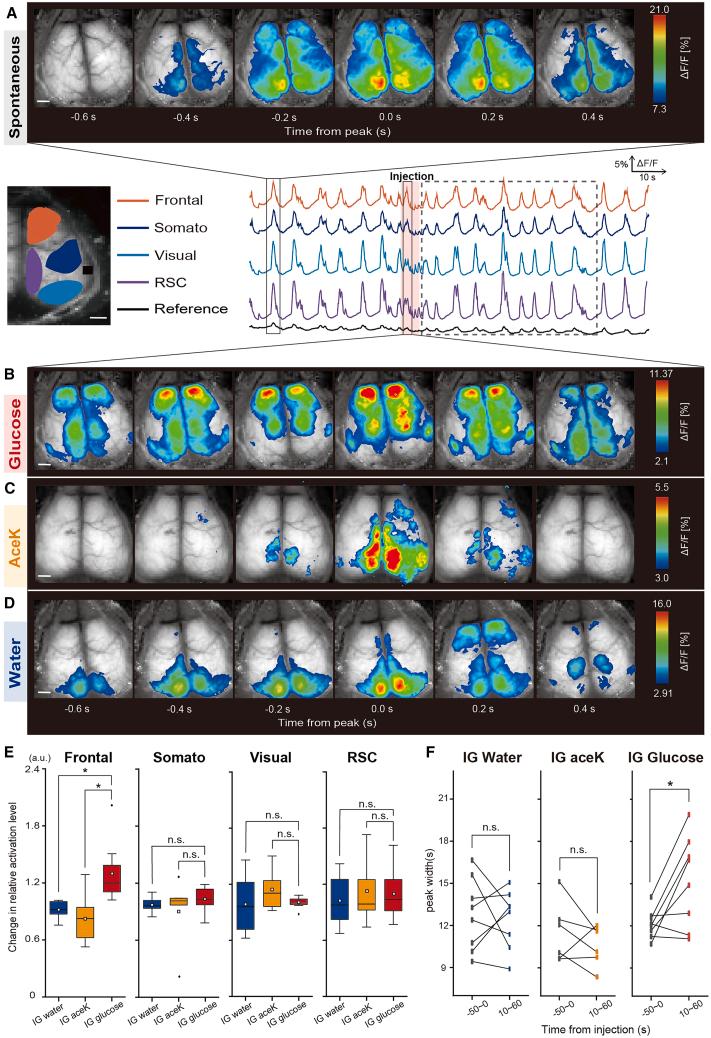
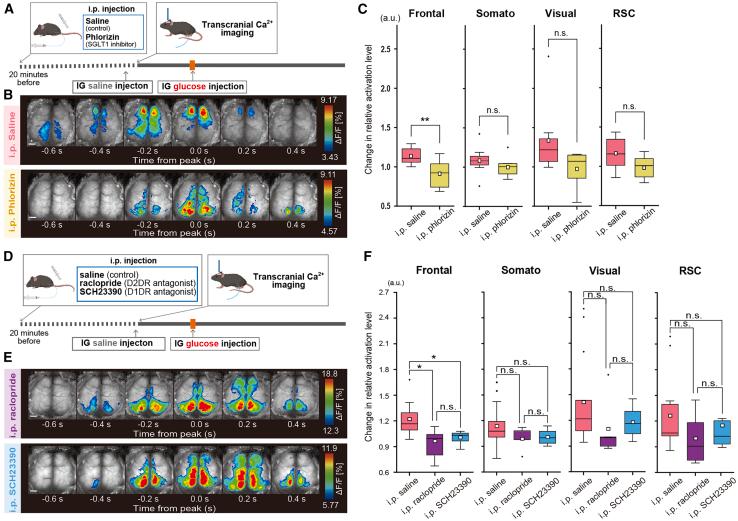
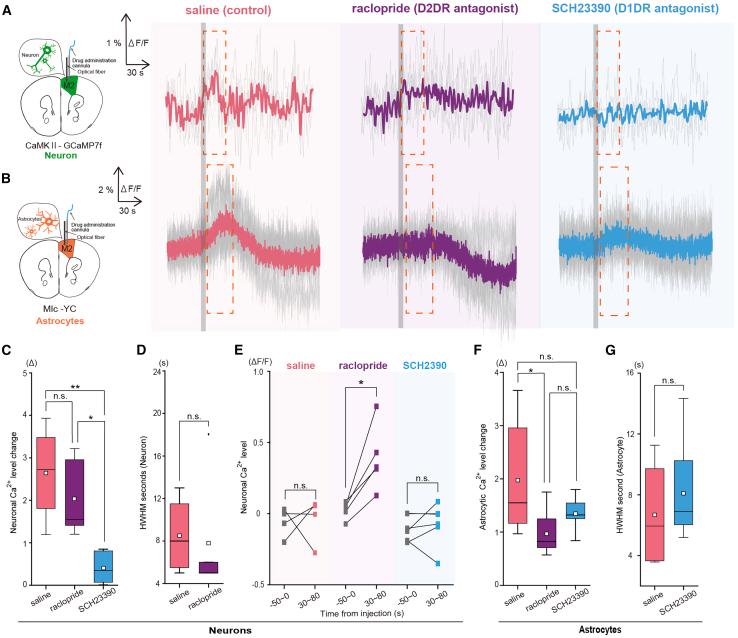
Sucrose consumption is influenced by certain gut-brain signaling mechanisms. One possible pathway could be the interaction between the vagus nerve and the central nervous system, mediated by neuropod cells forming synaptic connections with vagus nerves, which immediately activate the central dopaminergic pathways. In this study, we demonstrated that intestinal glucose administration activates the frontal cortex via the vagus nerve and central dopamine signaling. The immediate activation of both the vagus nerve and the frontal cortex was mediated by the sodium-glucose cotransporter 1 (SGLT1). Furthermore, Ca signal activation in both astrocytes and neurons in the frontal cortex was mediated by D2 and D1 receptors, respectively. Finally, we showed that psychological stress, which causes a sucrose preference reduction, significantly diminished the activation levels of both the vagus nerve and the frontal cortex. These findings highlight the role of a comprehensive gut-brain network via vagus nerves in modulating sucrose preference.
蔗糖的消耗受某些肠-脑信号传导机制的影响。一种可能的途径可能是迷走神经与中枢神经系统之间的相互作用,由与迷走神经形成突触连接的神经足细胞介导,这会立即激活中枢多巴胺能途径。在本研究中,我们证明肠道给予葡萄糖通过迷走神经和中枢多巴胺信号激活额叶皮质。迷走神经和额叶皮质的立即激活由钠-葡萄糖协同转运蛋白1(SGLT1)介导。此外,额叶皮质中星形胶质细胞和神经元的钙信号激活分别由D2和D1受体介导。最后,我们表明导致蔗糖偏好降低的心理应激显著降低了迷走神经和额叶皮质的激活水平。这些发现突出了通过迷走神经的综合肠-脑网络在调节蔗糖偏好中的作用。

 Zotero 插件