
聚苯乙烯纳米塑料通过细胞外囊泡传递的微小RNA改变细菌与宿主的相互作用,从而破坏肠道微环境。
Polystyrene nanoplastics disrupt the intestinal microenvironment by altering bacteria-host interactions through extracellular vesicle-delivered microRNAs.
作者信息
Hsu Wei-Hsuan, Chen You-Zuo, Chiang Yi-Ting, Chang Yi-Tsen, Wang Yi-Wen, Hsu Kung-Ting, Hsu Yi-Yun, Wu Pei-Ting, Lee Bao-Hong
机构信息
Department of Food Safety/Hygiene and Risk Management, College of Medicine, National Cheng Kung University, Tainan, Taiwan.
Institute of Basic Medical Sciences, National Cheng Kung University, Tainan, Taiwan.
出版信息
Nat Commun. 2025 Jun 10;16(1):5026. doi: 10.1038/s41467-025-59884-y.
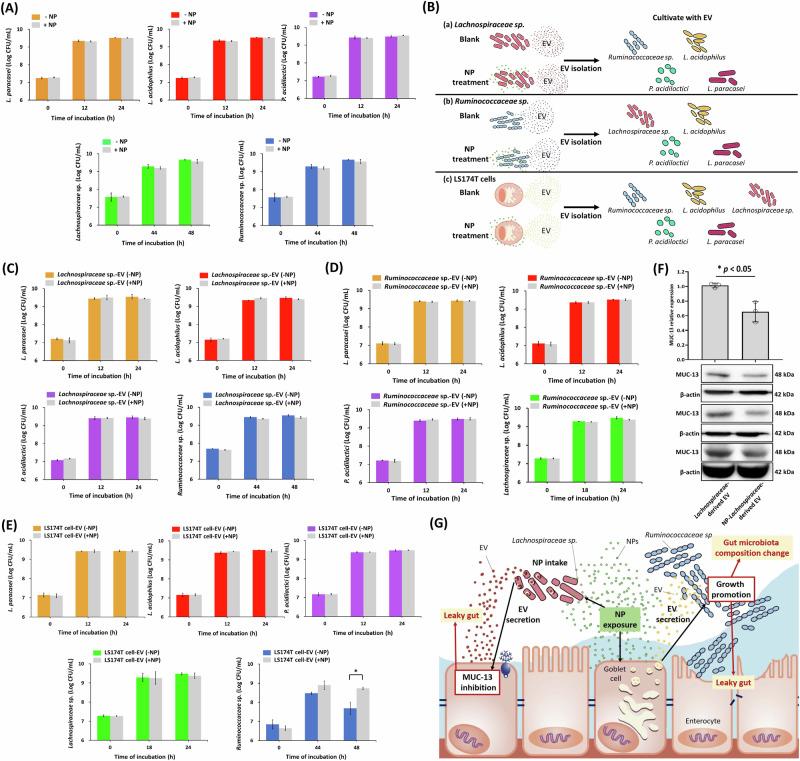
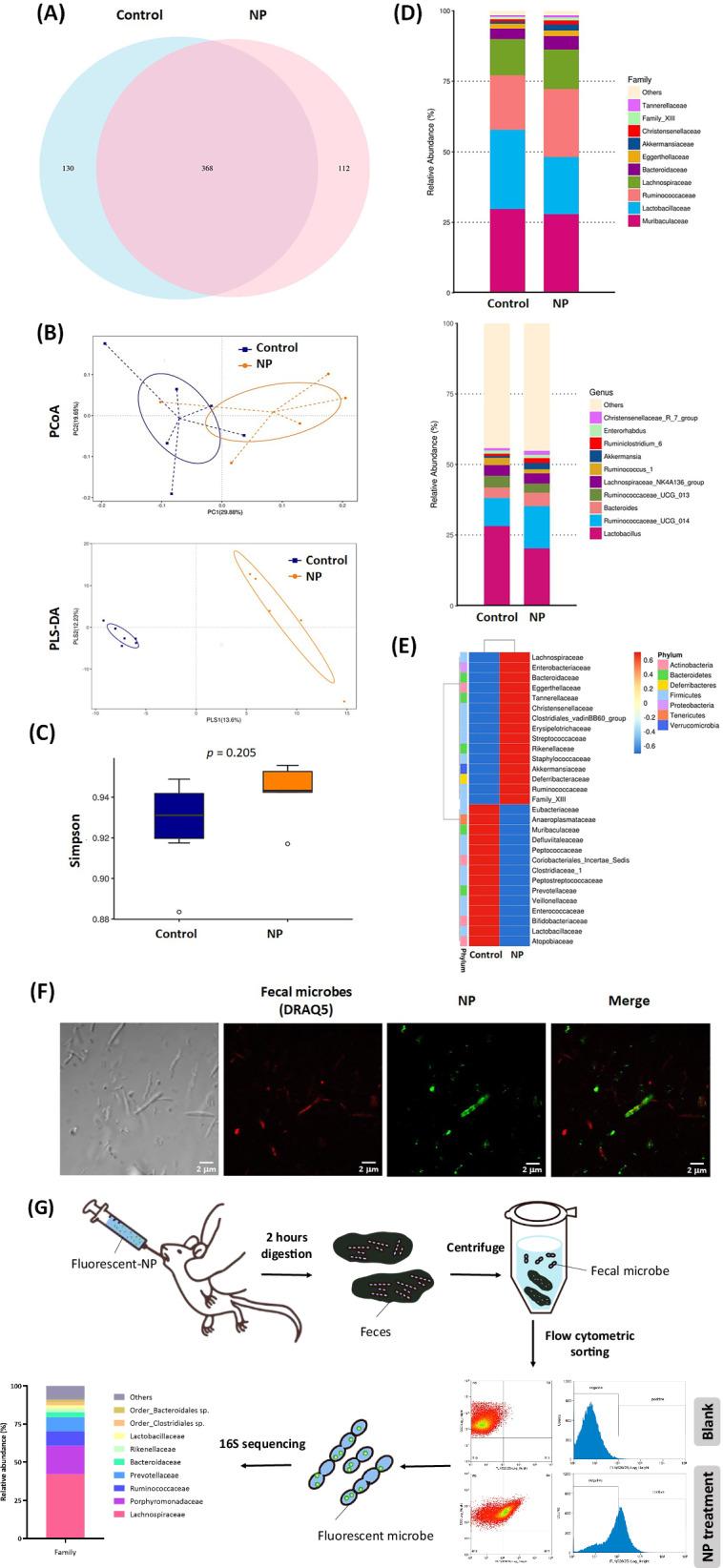
Nanoplastics (NP) are emerging environmental pollutants with potential risks to human health. This study investigates how polystyrene-NP exposure disrupts the intestinal microenvironment and barrier function through bacteria-host interactions. Using in vivo models and bacterial sorting technology, we show that NP accumulation in the mouse intestine alters the expression of intestinal miR-501-3p and miR-700-5p, compromising tight junction protein ZO-1 and mucin (MUC)-13 expression, thereby increasing intestinal permeability. NP increases miR-98-3p, miR-548z, miR-548h-3o, miR-548d-3p, miR-548az-5p, miR-12136, and miR-101-3p levels in extracellular vesicles (EVs) derived from goblet-like cells, which can interfere with ZO-1 expression. NP also induces gut microbiota dysbiosis, characterized by elevated Ruminococcaceae abundance and altered EV characteristics from goblet cells. Lachnospiraceae internalize NP, and their EVs suppress MUC-13 expression. These findings reveal a mechanism by which NP compromises intestinal integrity and indirectly alters intestinal microbiota composition, potentially leading to adverse health outcomes.
纳米塑料(NP)是新出现的环境污染物,对人类健康具有潜在风险。本研究调查了聚苯乙烯纳米塑料暴露如何通过细菌与宿主的相互作用破坏肠道微环境和屏障功能。利用体内模型和细菌分选技术,我们发现纳米塑料在小鼠肠道中的积累会改变肠道miR-501-3p和miR-700-5p的表达,损害紧密连接蛋白ZO-1和粘蛋白(MUC)-13的表达,从而增加肠道通透性。纳米塑料会增加杯状样细胞衍生的细胞外囊泡(EV)中miR-98-3p、miR-548z、miR-548h-3o、miR-548d-3p、miR-548az-5p、miR-12136和miR-101-3p的水平,这些会干扰ZO-1的表达。纳米塑料还会诱导肠道微生物群失调,其特征是瘤胃球菌科丰度升高以及杯状细胞的细胞外囊泡特征改变。毛螺菌科会内化纳米塑料,其细胞外囊泡会抑制MUC-13的表达。这些发现揭示了一种机制,即纳米塑料会损害肠道完整性并间接改变肠道微生物群组成,可能导致不良健康后果。


 Zotero 插件