
评估韩国野猪非洲猪瘟病毒分离株的环境抵抗力
Assessing Environment Resistance of the Korean Wild Boar ASFV Isolates "".
作者信息
Gu Hyunji, Lee Gun-Hee, Kim Yongkwan, Kim Dae-Min, Lee Eun-Gyeong, Lee Sang-Hyun, Kim Ji-Soo, Kim Garam, Kim So-Jeong, Kim Wonjun, Kim Youngsik, Oem Jae-Ku, Cho Ho-Seong, Jheong Weonhwa, Tark Dongseob
机构信息
Laboratory for Infectious Disease Prevention, Korea Zoonosis Research Institute, Jeonbuk National University, Iksan 54531, Republic of Korea.
Wildlife Disease Response Team, National Institute of Wildlife Disease Control and Prevention, Gwangju 62407, Republic of Korea.
出版信息
Transbound Emerg Dis. 2025 Jun 3;2025:4032319. doi: 10.1155/tbed/4032319. eCollection 2025.
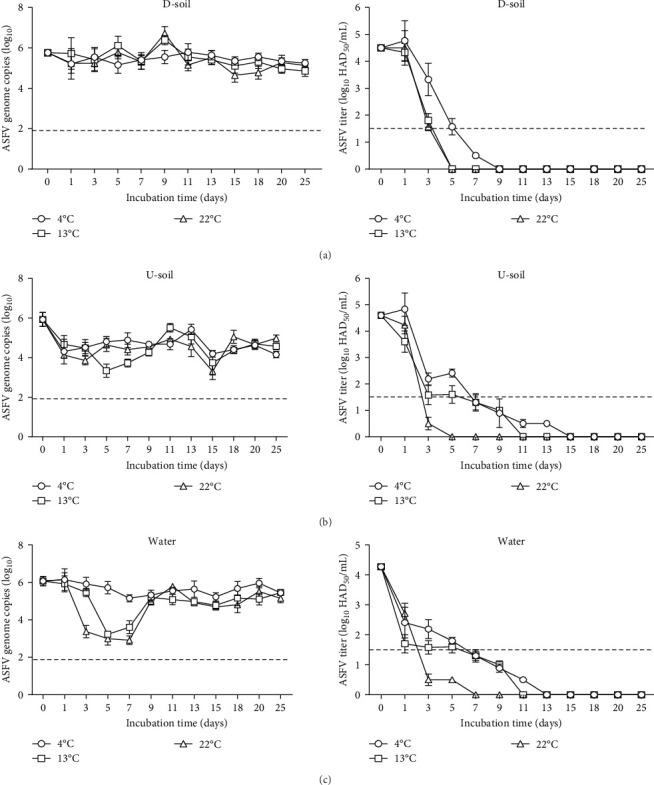
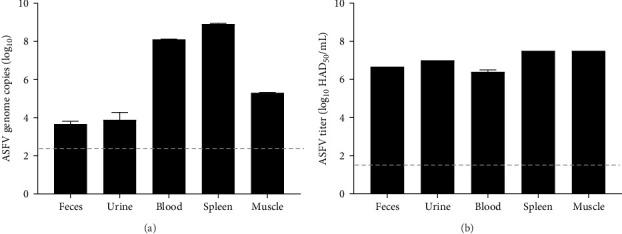
African swine fever (ASF) is a disease characterized by high mortality and severe hemorrhagic damage in swine breeds, leading to significant economic losses for domestic pig farm operations. Although the introduction route of ASF in South Korea remains unclear, the primary transmission is believed to be through contamination of environmental fomites by migrating ASF-positive wild boar. Therefore, understanding the persistence of African swine fever virus (ASFV) under various environmental conditions in South Korea is crucial. In this study, we assessed the stability and infectivity of the isolate under different experimental conditions, including variations in temperature and environmental matrices. Our results indicate that most infectious samples, except for excretions, maintained ASFV infectivity for 36-48 weeks, particularly at low temperatures. In contrast, excretion samples, such as feces and urine rapidly inactivate ASFV infectivity within 15 days, even when stored at low temperatures. Environmental matrices spiked with infectious blood samples showed rapid decrease in hemadsorption (HAD) titers within 9-15 days. However, the ASFV infectivity remained in most samples, which were previously deemed HAD negative. These findings suggest the need for caution when assessing virus inactivation and provide insight into the environmental persistence of ASFV in various matrices.
非洲猪瘟(ASF)是一种以猪品种高死亡率和严重出血性损伤为特征的疾病,给国内养猪场经营造成重大经济损失。尽管ASF在韩国的传入途径尚不清楚,但主要传播方式被认为是通过迁徙的ASF阳性野猪污染环境污染物。因此,了解韩国各种环境条件下非洲猪瘟病毒(ASFV)的持久性至关重要。在本研究中,我们评估了该分离株在不同实验条件下的稳定性和感染性,包括温度和环境基质的变化。我们的结果表明,除排泄物外,大多数感染性样本在36至48周内保持ASFV感染性,特别是在低温下。相比之下,粪便和尿液等排泄样本即使在低温储存时,也会在15天内迅速使ASFV感染性失活。接种感染性血液样本的环境基质在9至15天内血吸附(HAD)滴度迅速下降。然而,ASFV感染性仍存在于大多数先前被认为HAD阴性的样本中。这些发现表明在评估病毒失活时需要谨慎,并为ASFV在各种基质中的环境持久性提供了见解。



 Zotero 插件