
探索肺癌中的细胞可塑性和耐药机制:创新与新兴疗法
Exploring cellular plasticity and resistance mechanisms in lung cancer: Innovations and emerging therapies.
作者信息
Jiang Caiyu, Xie Shenglong, Jia Kegang, Feng Gang, Ren Xudong, Wang Youyu
机构信息
Department of Pulmonary and Critical Care Medicine, Sichuan Provincial People's Hospital, School of Medicine, University of Electronic Science and Technology of China, Chengdu, 610072, China.
Department of Thoracic Surgery, Sichuan Provincial People's Hospital, School of Medicine, University of Electronic Science and Technology of China, Chengdu, 610072, China.
出版信息
J Pharm Anal. 2025 May;15(5):101179. doi: 10.1016/j.jpha.2024.101179. Epub 2025 Jan 3.
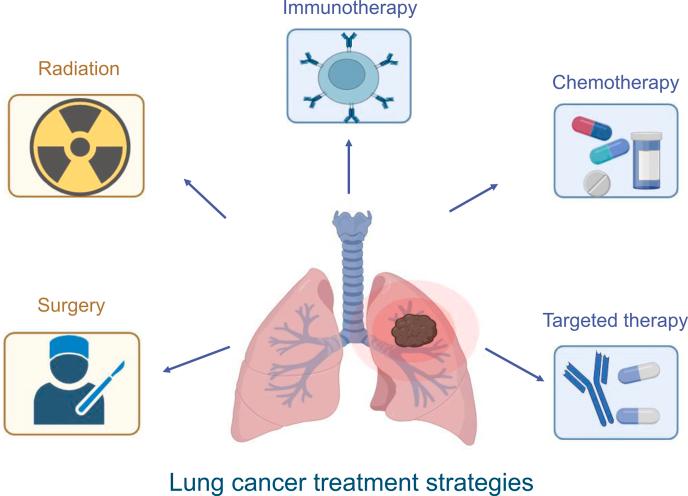
Non-small cell lung cancer (NSCLC) accounts for the majority of lung cancer cases and remains the leading cause of cancer-related mortality worldwide. Firstly, this review explores the limitations of conventional therapies, chemotherapy, radiotherapy, and surgery, focusing on the development of drug resistance and significant toxicity that often hinder their efficacy. Thereafter, advancements in targeted therapies, such as immune checkpoint inhibitors (ICIs) and tyrosine kinase inhibitors (TKIs), are discussed, highlighting their impact on improving outcomes for patients with specific genetic mutations, including c-ros oncogene 1 receptor tyrosine kinase (ROS1), anaplastic lymphoma kinase (ALK), and epidermal growth factor receptor (EGFR). Additionally, the emergence of novel immunotherapies and phytochemicals is examined, emphasizing their potential to overcome therapeutic resistance, particularly in advanced-stage diseases. The review also delves into the role of next-generation sequencing (NGS) in enabling personalized treatment approaches and explores the clinical potential of innovative agents, such as bispecific T-cell engagers (BiTEs) and antibody-drug conjugates (ADCs). Finally, we address the socioeconomic barriers that limit the accessibility of these therapies in low-resource settings and propose future research directions aimed at improving the long-term efficacy and accessibility of these treatments.
非小细胞肺癌(NSCLC)占肺癌病例的大多数,仍然是全球癌症相关死亡的主要原因。首先,本综述探讨了传统疗法(化疗、放疗和手术)的局限性,重点关注常常阻碍其疗效的耐药性发展和显著毒性。此后,讨论了靶向疗法的进展,如免疫检查点抑制剂(ICI)和酪氨酸激酶抑制剂(TKI),强调了它们对改善特定基因突变患者(包括c-ros癌基因1受体酪氨酸激酶(ROS1)、间变性淋巴瘤激酶(ALK)和表皮生长因子受体(EGFR))预后的影响。此外,还研究了新型免疫疗法和植物化学物质的出现,强调了它们克服治疗耐药性的潜力,特别是在晚期疾病中。该综述还深入探讨了下一代测序(NGS)在实现个性化治疗方法方面的作用,并探索了双特异性T细胞衔接器(BiTE)和抗体药物偶联物(ADC)等创新药物的临床潜力。最后,我们讨论了限制这些疗法在资源匮乏地区可及性的社会经济障碍,并提出了旨在提高这些治疗的长期疗效和可及性的未来研究方向。

 Zotero 插件