
木犀草素减轻丙酸诱导的啮齿动物自闭症模型中的氧化应激和多器官损伤。
Luteolin mitigates oxidative stress and multi-organ impairment in a propionic acid-induced rodent model of autism.
作者信息
Khayyat Arwa Ishaq Abdulmalik, Alabdali Altaf N, Alonazi Mona, Alzahrani Areej Ali, Al-Shehri Eman, Ben Bacha Abir
机构信息
Department of Biochemistry, College of Science, King Saud University, Riyadh, Saudi Arabia.
出版信息
Front Nutr. 2025 May 27;12:1583119. doi: 10.3389/fnut.2025.1583119. eCollection 2025.
BACKGROUND/OBJECTIVES: Oxidative stress, organ impairments, and gastrointestinal abnormalities are the most common systemic dysfunctions that accompanied the neurodevelopmental condition, Autism Spectrum Disorder (ASD). Emerging evidence suggests that increased propionic acid (PPA) levels contribute to ASD pathophysiology through oxidative stress, neuroinflammation and disruption of the gut-liver-brain axis. Thanks to its strong anti-inflammatory and antioxidant potencies, luteolin, has shown to be promising in alleviating these effects. This study investigated the therapeutic and protective effects of luteolin in a PPA-induced rodent model of ASD by assessing oxidative stress, intestinal permeability, and liver and kidney dysfunction biomarkers.
METHODS
Fifty young male albino rats were divided into five groups: control, PPA-treated, luteolin-treated, therapeutic (PPA followed by luteolin), and protective (luteolin followed by PPA). Oxidative stress markers (GSH, lipid peroxides, GST, SOD, and catalase), serum zonulin, liver enzymes (ALT, AST, ALP) and renal function markers (urea nitrogen, creatinine) were investigated. ROC analysis evaluated the diagnostic potential of these biomarkers, while Spearman correlation analysis explored interrelationships among parameters.
RESULTS
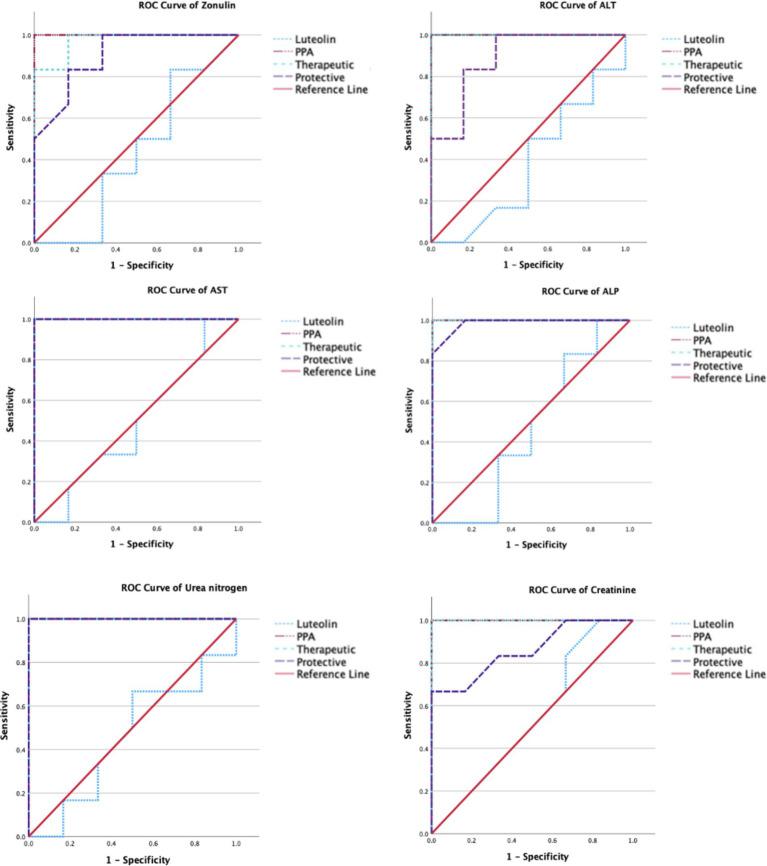
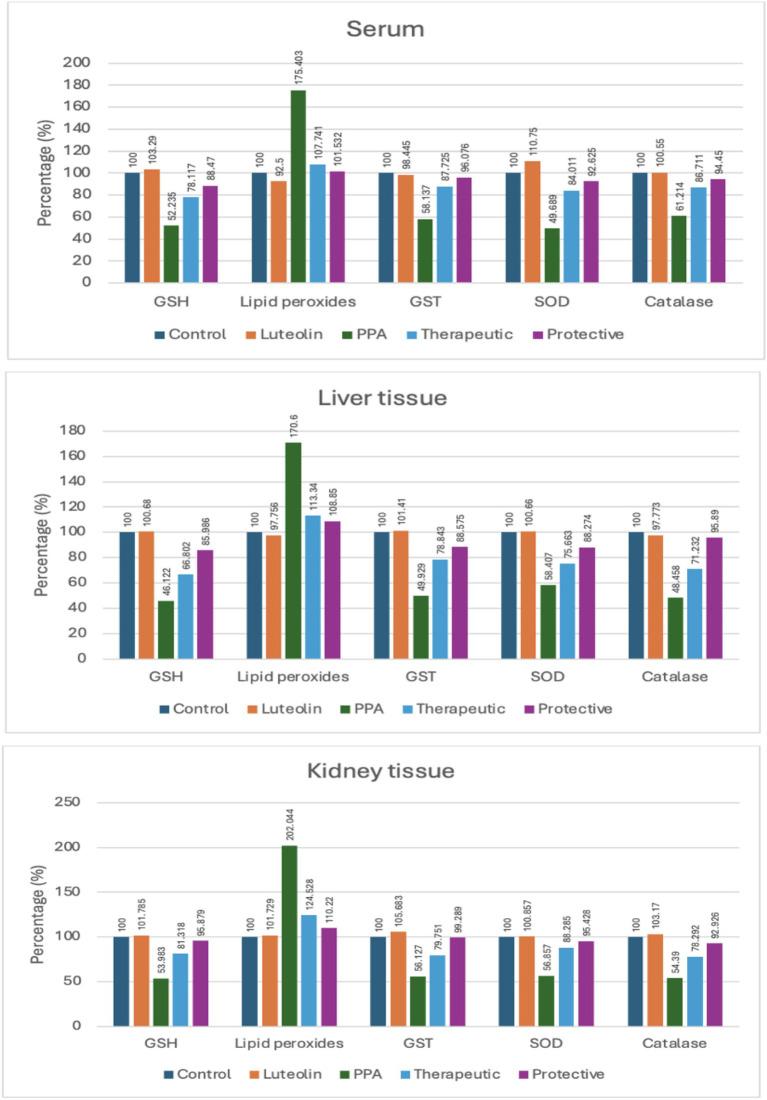
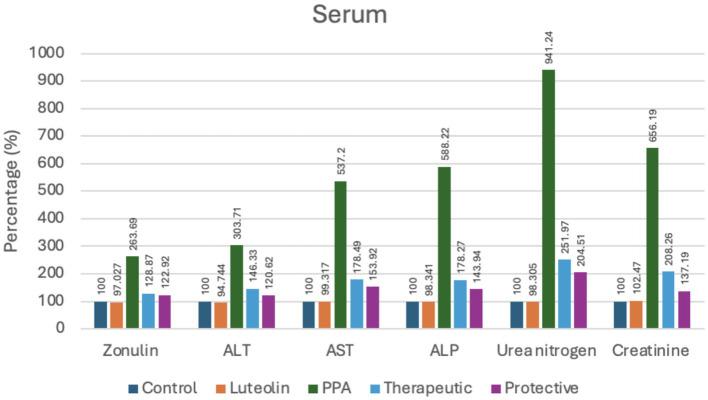
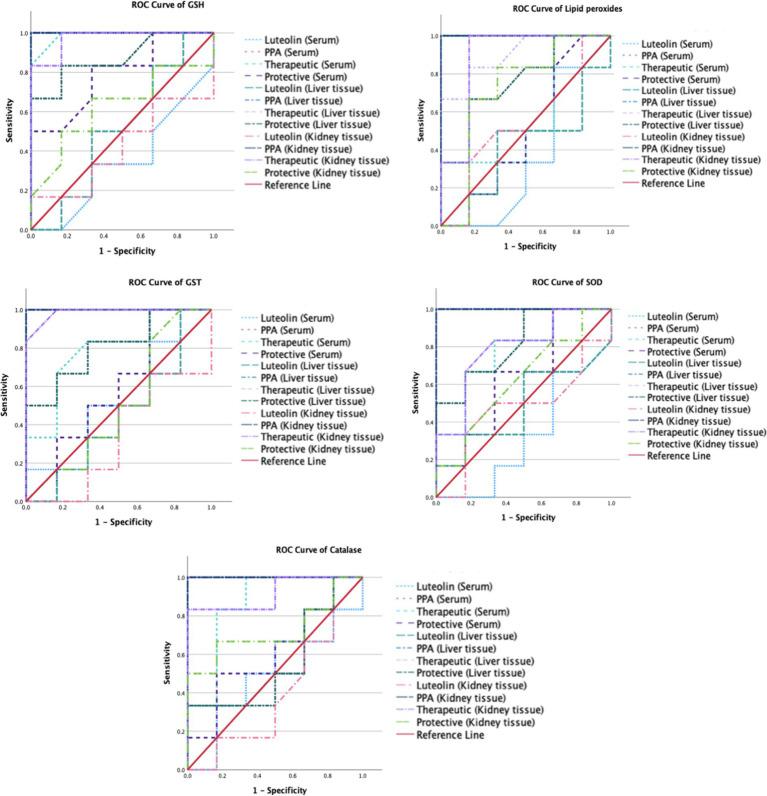
PPA administration significantly reduced antioxidant defenses, including GSH, GST, SOD, and catalase, while increasing lipid peroxidation and inducing hepatic and renal dysfunction, as evidenced by elevated ALT, AST, ALP, urea nitrogen, and creatinine levels, along with increased zonulin levels. Luteolin intervention effectively reversed these alterations by restoring antioxidant capacity, lowering zonulin levels, and improving liver and kidney function. ROC analysis demonstrated high diagnostic accuracy (AUC = 1.000) for oxidative stress and organ dysfunction markers in the PPA-treated group, while luteolin treatment significantly enhanced biomarker sensitivity and specificity. Spearman correlation analysis revealed strong negative correlations between antioxidants and oxidative stress markers ( < 0.001) and positive correlations between zonulin and liver/kidney dysfunction indicators ( < 0.001), further confirming the systemic impact of PPA.
CONCLUSION
Luteolin effectively alleviated oxidative stress, restored antioxidant defenses, and enhanced liver, kidney, and intestinal barrier functions in a PPA-induced ASD model. These findings underscored its therapeutic potential as a natural intervention for ASD-related systemic dysfunctions. Further clinical studies are needed to evaluate its translational applicability in ASD management.
背景/目的:氧化应激、器官损伤和胃肠道异常是伴随神经发育疾病自闭症谱系障碍(ASD)最常见的全身性功能障碍。新出现的证据表明,丙酸(PPA)水平升高通过氧化应激、神经炎症和肠-肝-脑轴的破坏导致ASD的病理生理过程。由于木犀草素具有强大的抗炎和抗氧化能力,已显示出缓解这些影响的潜力。本研究通过评估氧化应激、肠道通透性以及肝脏和肾脏功能障碍生物标志物,研究了木犀草素在PPA诱导的ASD啮齿动物模型中的治疗和保护作用。
方法
将50只年轻雄性白化大鼠分为五组:对照组、PPA处理组、木犀草素处理组、治疗组(先给予PPA后给予木犀草素)和保护组(先给予木犀草素后给予PPA)。研究了氧化应激标志物(谷胱甘肽、脂质过氧化物、谷胱甘肽S-转移酶、超氧化物歧化酶和过氧化氢酶)、血清连蛋白、肝酶(谷丙转氨酶、谷草转氨酶、碱性磷酸酶)和肾功能标志物(尿素氮、肌酐)。ROC分析评估了这些生物标志物的诊断潜力,而Spearman相关性分析探讨了参数之间的相互关系。
结果
给予PPA显著降低了抗氧化防御能力,包括谷胱甘肽、谷胱甘肽S-转移酶、超氧化物歧化酶和过氧化氢酶,同时增加了脂质过氧化,并导致肝肾功能障碍,谷丙转氨酶、谷草转氨酶、碱性磷酸酶、尿素氮和肌酐水平升高以及连蛋白水平增加证明了这一点。木犀草素干预通过恢复抗氧化能力、降低连蛋白水平和改善肝肾功能有效地逆转了这些改变。ROC分析表明,PPA处理组中氧化应激和器官功能障碍标志物具有较高的诊断准确性(AUC = 1.000),而木犀草素治疗显著提高了生物标志物的敏感性和特异性。Spearman相关性分析显示抗氧化剂与氧化应激标志物之间存在强负相关(<0.001),连蛋白与肝/肾功能障碍指标之间存在正相关(<0.001),进一步证实了PPA的全身影响。
结论
木犀草素有效减轻了PPA诱导的ASD模型中的氧化应激,恢复了抗氧化防御能力,并增强了肝脏、肾脏和肠道屏障功能。这些发现强调了其作为ASD相关全身性功能障碍自然干预措施的治疗潜力。需要进一步的临床研究来评估其在ASD管理中的转化适用性。
 Zotero 插件