
通过纳米颗粒介导的STING激动剂协同作用增强放疗诱导的抗肿瘤免疫力。
Enhancing radiotherapy-induced anti-tumor immunity via nanoparticle-mediated STING agonist synergy.
作者信息
Zeng Qian, Liu Min, Wang Ziqi, Zhou Rongrong, Ai Kelong
机构信息
Department of Oncology, Xiangya Hospital, Central South University, Changsha, 410008, China.
Xiangya School of Pharmaceutical Sciences, Central South University, Changsha, 410013, China.
出版信息
Mol Cancer. 2025 Jun 11;24(1):176. doi: 10.1186/s12943-025-02366-y.
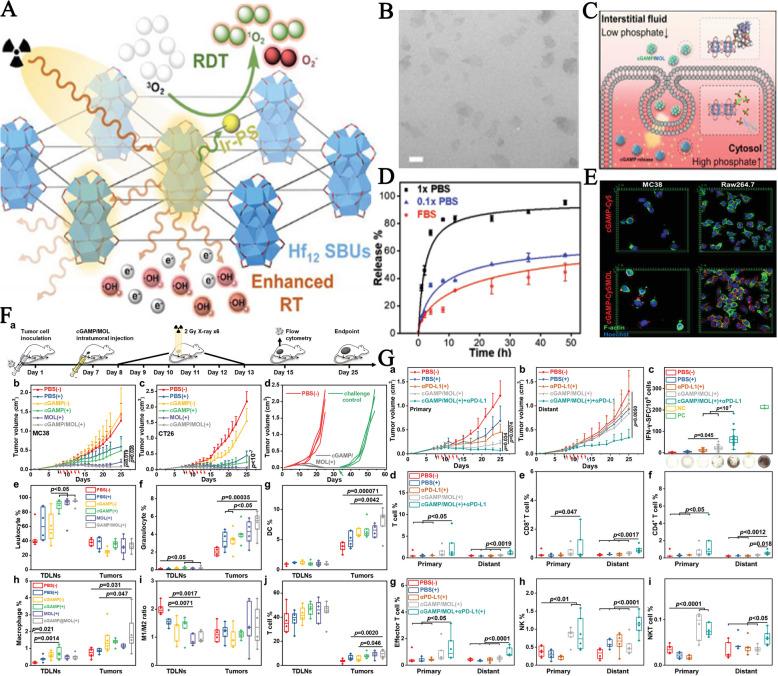
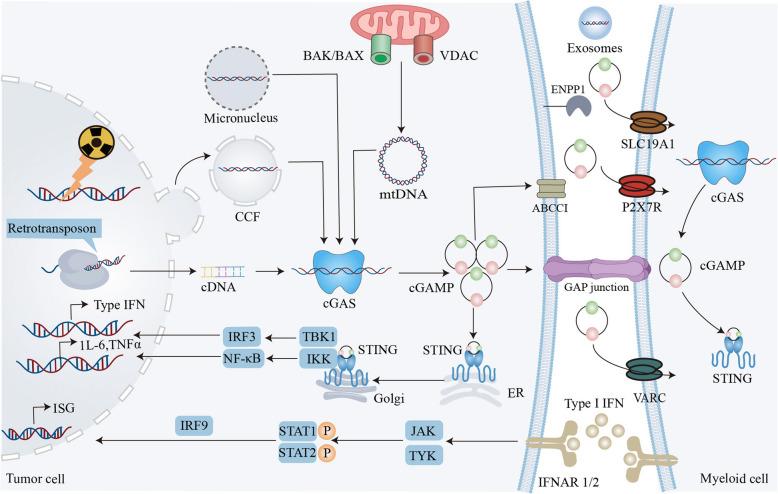
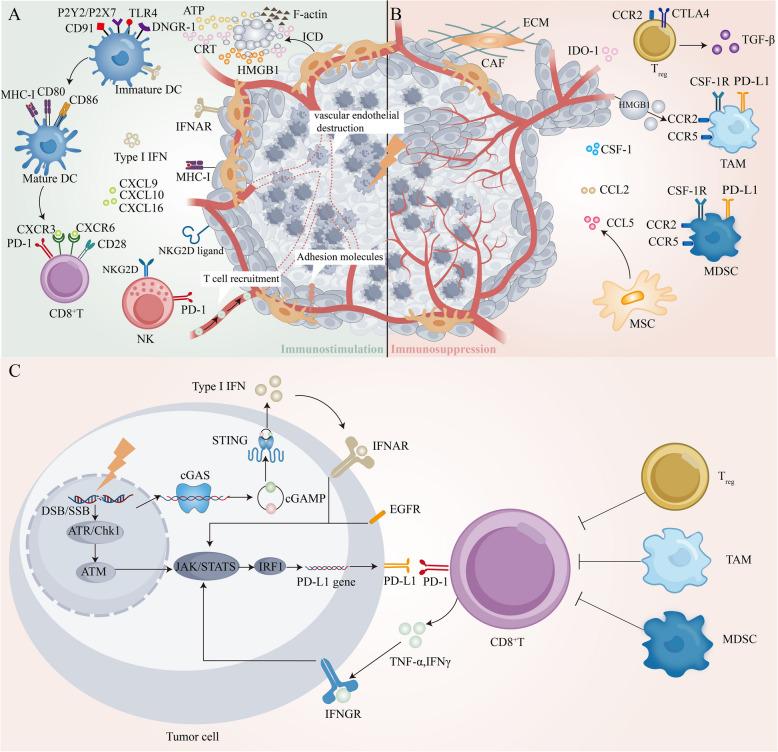
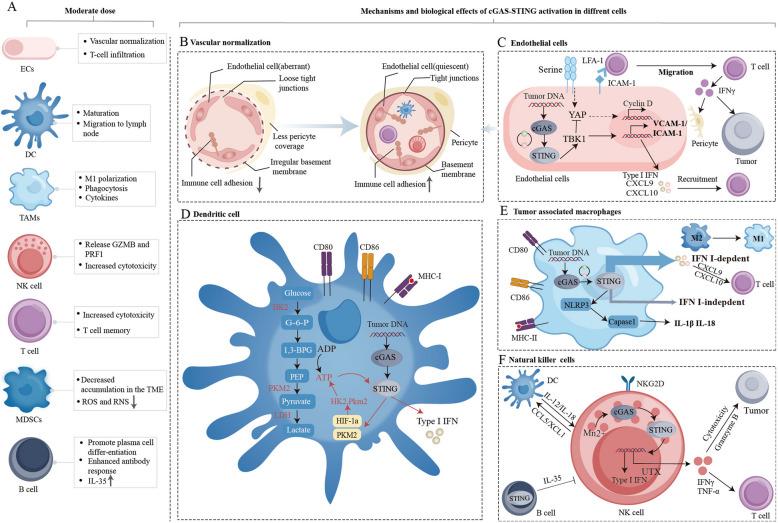
Radiotherapy (RT) remains a cornerstone treatment for over 50% of cancer patients, primarily via ionizing radiation-induced DNA damage to exert therapeutic effects. Notably, emerging studies have revealed its additional capacity to activate systemic anti-tumor immune responses through inducing immunogenic cell death (ICD) and activating the cGAS-STING pathway, further expanding its therapeutic potential. However, its efficacy is often limited by immunosuppressive tumor microenvironment (TME). Additionally, while RT can activate the cGAS-STING pathway, this activation remains transient and suboptimal, failing to sustain robust anti-tumor immunity. Therefore, combining RT with STING agonists may benefit traditional therapy by amplifing tumor immunogenicity and counteracting immune evasion. Despite promising results, challenges such as off-target toxicity, poor cell membrane permeability and poor bioavailability, remain obstacles to clinical translation of conventional STING agonists. Nanomedicine offers a promising approach by enabling targeted delivery of STING agonists and amplifying RT-induced DNA damage through nanoscale radiosensitizers. In this review, we provide a detailed discussion of the immune-stimulatory and immune-suppressive effects of RT, as well as the mechanisms and biological effects of selectively activating the cGAS-STING pathway in key TME components. On this basis, we further explore recent advancements in nano-STING agonists-mediated anti-tumor immunity in synergy with RT. This combinatorial approach achieves dual radiosensitization and immunostimulation, ultimately driving immune memory formation and TME reprogramming. Finally, the application prospects and challenges of nano-STING agonists-based immunotherapy are also discussed from the perspective of clinical translation.
放射疗法(RT)仍然是超过50%癌症患者的基石性治疗方法,主要通过电离辐射诱导的DNA损伤来发挥治疗作用。值得注意的是,新兴研究揭示了其通过诱导免疫原性细胞死亡(ICD)和激活cGAS-STING途径来激活全身抗肿瘤免疫反应的额外能力,进一步扩展了其治疗潜力。然而,其疗效常常受到免疫抑制性肿瘤微环境(TME)的限制。此外,虽然RT可以激活cGAS-STING途径,但这种激活仍然是短暂的且未达到最佳状态,无法维持强大的抗肿瘤免疫力。因此,将RT与STING激动剂联合使用可能通过增强肿瘤免疫原性和对抗免疫逃逸而使传统治疗受益。尽管取得了有前景的结果,但诸如脱靶毒性、细胞膜通透性差和生物利用度低等挑战,仍然是传统STING激动剂临床转化的障碍。纳米医学提供了一种有前景的方法,通过实现STING激动剂的靶向递送以及通过纳米级放射增敏剂增强RT诱导的DNA损伤。在这篇综述中,我们详细讨论了RT的免疫刺激和免疫抑制作用,以及在关键TME成分中选择性激活cGAS-STING途径的机制和生物学效应。在此基础上,我们进一步探索了纳米STING激动剂介导的与RT协同的抗肿瘤免疫的最新进展。这种联合方法实现了双重放射增敏和免疫刺激,最终驱动免疫记忆形成和TME重编程。最后,还从临床转化的角度讨论了基于纳米STING激动剂的免疫疗法的应用前景和挑战。





 Zotero 插件