
裸鼹鼠(Heterocephalus glaber)和达马拉兰鼹鼠(Fukomys damarensis)次最大运动的代谢消耗。
Metabolic expenditure of submaximal locomotion in naked mole-rats (Heterocephalus glaber) and Damaraland mole-rats (Fukomys damarensis).
作者信息
Thirkell Jack E, Bennett Nigel C, Hart Daniel W, Faulkes Chris G, Daley Monica A, Portugal Steven J
机构信息
Department of Biological Sciences, School of Life and Environmental Sciences, Royal Holloway University of London, Egham, Surrey TW20 0EX, UK.
Mammal Research Institute, University of Pretoria, Hatfield 0028, South Africa.
出版信息
J Exp Biol. 2025 Jun 15;228(12). doi: 10.1242/jeb.249875. Epub 2025 Jun 25.
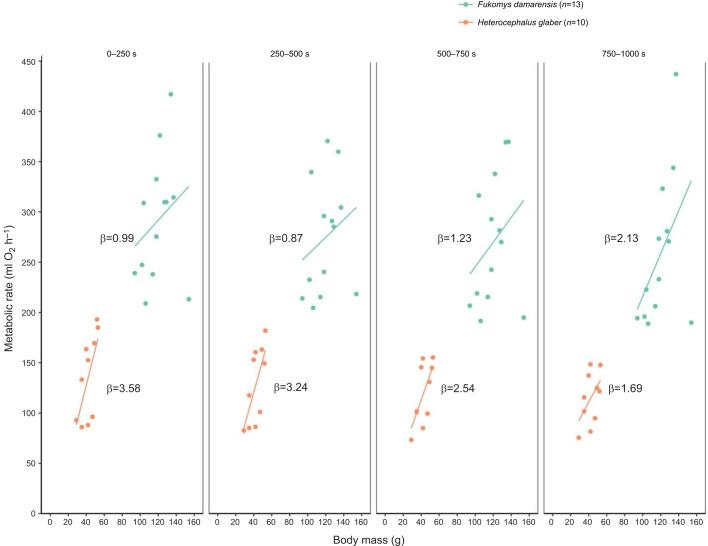
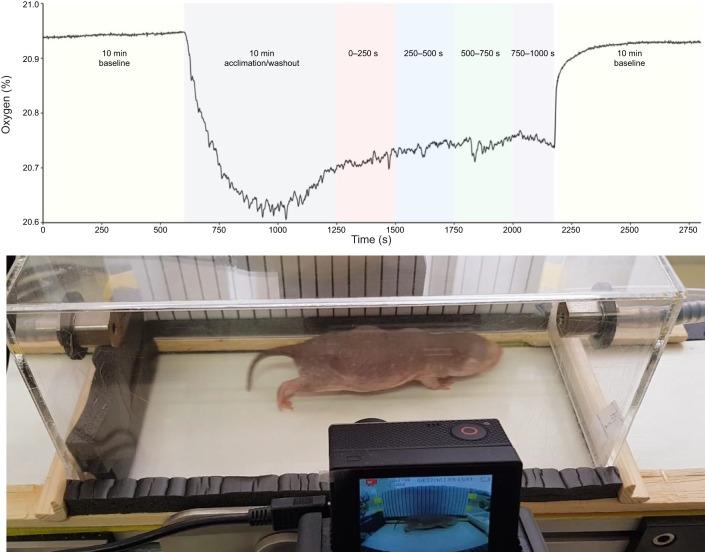
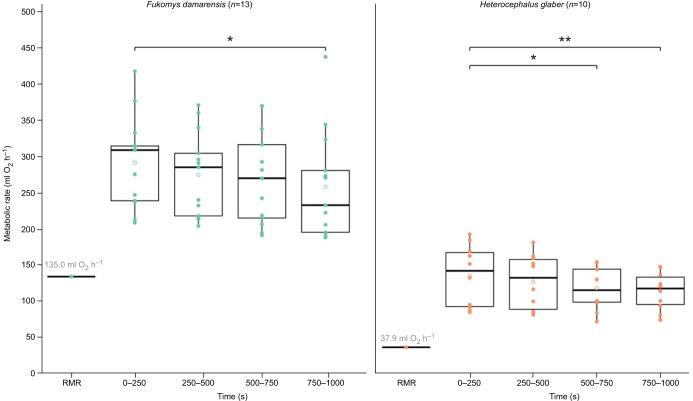
Despite extensive studies on the physiology of subterranean rodents, there is comparatively little work documenting the energetics specifically associated with their locomotory energetics. The energetic cost associated with burrowing is great and, in part, explains why subterranean species often maintain their burrows and tunnels across generations. Indeed, the digging metabolic rate of five African mole-rats has been determined to be between three and five times higher than their respective resting metabolic rate, yet the energetic cost of non-digging locomotion (i.e. walking) has not been recorded. Digging in most subterranean species tends to lead to specialisation of the forelimbs and teeth, which may significantly affect the energetic cost associated with non-digging locomotion. Unlike many comparably sized burrowing and tunnelling mammals, African mole-rats appear, superficially at least, to have almost identical forelimbs and hindlimbs. This study explored the locomotory energetics associated with sustained submaximal locomotion (i.e. fast walking; 10 cm s-1) in two African mole-rat species (Fukomys damarensis and Heterocephalus glaber), utilising open-flow respirometry and a small animal treadmill. The mean locomotory energetic rate for F. damarensis was a near 1-fold increase (91.4%) above resting metabolic rate and a 2-fold increase (203.2%) for H. glaber. Net cost of transport was higher overall for H. glaber (2.9±0.6 ml O2 kg-1 m-1) than for F. damarensis (2.4±0.5 ml O2 kg-1 m-1). A trade-off likely exists between limb specialisation for digging and economic locomotion, and thus for most obligately subterranean species, locomotion represents an energetic investment.
尽管对地下啮齿动物的生理学进行了广泛研究,但专门记录与其运动能量学相关的能量学研究相对较少。与挖掘洞穴相关的能量消耗很大,这在一定程度上解释了为什么地下物种通常会代代维持它们的洞穴和隧道。事实上,已确定五种非洲鼹形鼠的挖掘代谢率比它们各自的静息代谢率高两到四倍,然而非挖掘运动(即行走)的能量消耗尚未记录。在大多数地下物种中,挖掘往往会导致前肢和牙齿的特化,这可能会显著影响与非挖掘运动相关的能量消耗。与许多体型相当的挖掘洞穴和隧道的哺乳动物不同,非洲鼹形鼠至少从表面上看,其前肢和后肢几乎相同。本研究利用开放式流动呼吸测定法和小型动物跑步机,探索了两种非洲鼹形鼠(达马拉粗尾鼠和裸鼹鼠)持续亚最大运动(即快走;10厘米/秒)时的运动能量学。达马拉粗尾鼠的平均运动能量率比静息代谢率高出近1倍(91.4%),裸鼹鼠则高出2倍(203.2%)。裸鼹鼠的总体净运输成本(2.9±0.6毫升氧气·千克⁻¹·米⁻¹)高于达马拉粗尾鼠(2.4±0.5毫升氧气·千克⁻¹·米⁻¹)。在挖掘所需的肢体特化和经济运动之间可能存在权衡,因此对于大多数专性地下物种来说,运动是一种能量投资。
 Zotero 插件