
常见儿科疾病中的早期肠道微生物群:作用及治疗意义
The early-life gut microbiome in common pediatric diseases: roles and therapeutic implications.
作者信息
Bankole Taiwo, Li Yuanyuan
机构信息
Department of Nutrition and Food Science, University of Maryland, College Park, MD, United States.
出版信息
Front Nutr. 2025 May 29;12:1597206. doi: 10.3389/fnut.2025.1597206. eCollection 2025.
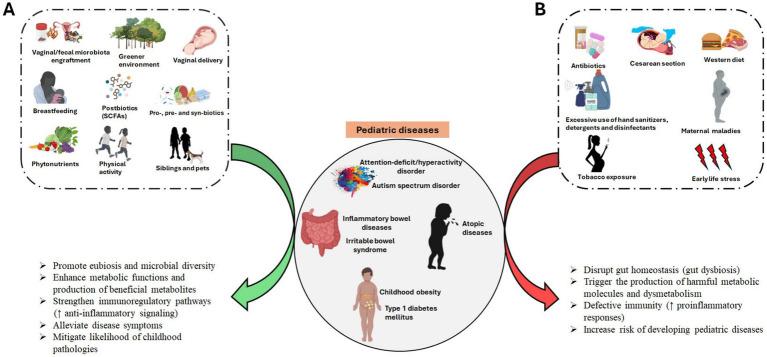
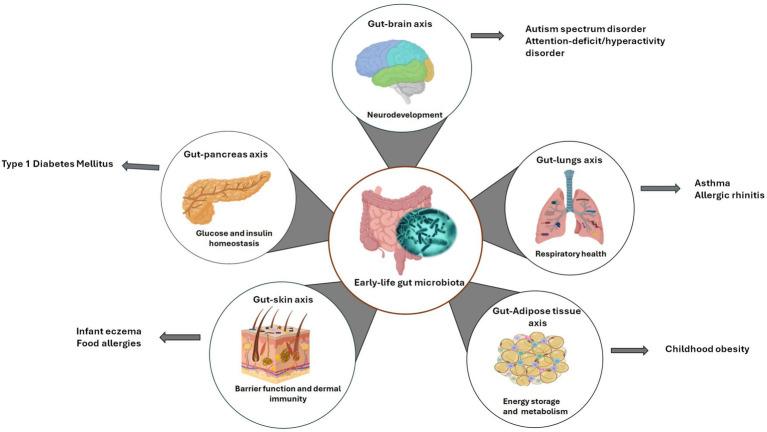
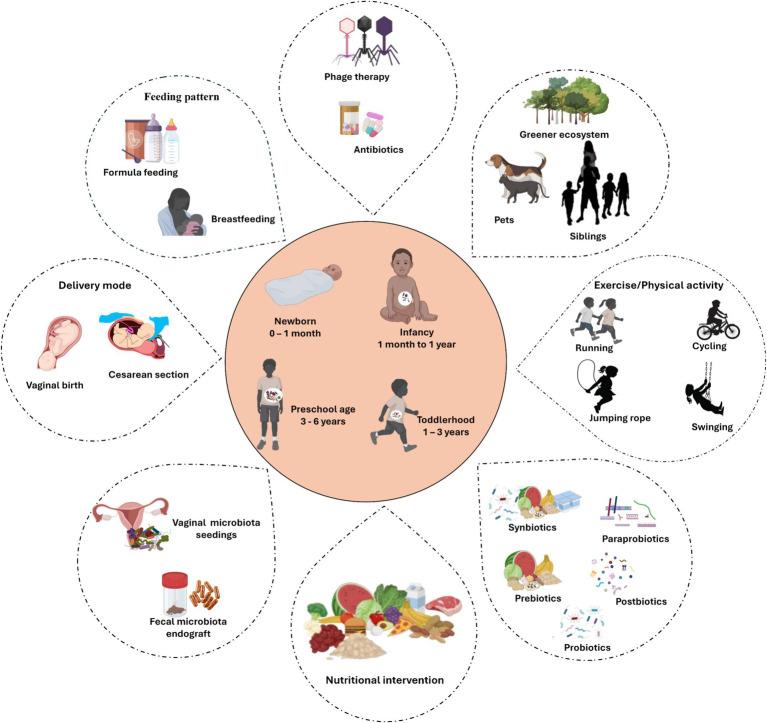
The early-life gut microbiome has been increasingly recognized as a contributing factor for pediatric health and diseases. Studies have reported that the human gut microbiota colonization commences at birth and progresses over the course of the first three years of life, until it reaches a mature and stable diversity and composition. During this critical window, the gut microbiome is vulnerably subjected to environmental factors, leading to transient microbial reprogramming and functional changes. The dynamic early-life intestinal microbiota is frequently manipulated by environmental factors, which impact the composition and function of the gut microflora, hence confer to short-and/or long-term health outcomes extending to adulthood. Evidence has shown that the imbalanced gut microbial community early in life is associated with several childhood diseases and disorders, such as inflammatory bowel diseases, allergies, attention-deficit/hyperactivity disorder and pediatric obesity. Manipulating the early-life intestinal microbes can either ameliorate or impair host's immunological and metabolic responses, impacting overall health conditions later in life. This narrative review article discusses the recent understanding and implications of the early-life gut microbiome in common pediatric diseases and potential intervention approaches.
早期生命阶段的肠道微生物群已日益被视为影响儿童健康与疾病的一个因素。研究报告称,人类肠道微生物群的定殖始于出生,并在生命的头三年中不断发展,直至达到成熟且稳定的多样性和组成。在这个关键时期,肠道微生物群极易受到环境因素的影响,从而导致微生物的短暂重新编程和功能变化。早期生命阶段动态变化的肠道微生物群经常受到环境因素的影响,这些因素会影响肠道微生物群落的组成和功能,进而对延伸至成年期的短期和/或长期健康结果产生影响。有证据表明,生命早期肠道微生物群落失衡与多种儿童疾病和病症有关,如炎症性肠病、过敏、注意力缺陷多动障碍和儿童肥胖症。操控早期生命阶段的肠道微生物,既可能改善也可能损害宿主的免疫和代谢反应,从而影响日后的整体健康状况。这篇叙述性综述文章讨论了近期关于早期生命阶段肠道微生物群在常见儿童疾病中的理解及影响,以及潜在的干预方法。

 Zotero 插件