
中国吉林生乳分离株的基因组流行病学与特征分析:感染阳性、阳性和阳性菌株及人畜传播的证据
Genomic epidemiology and characterization of isolates from raw milk in Jilin, China: evidence of contamination with -positive, -positive, and -positive strains and human-livestock transmission.
作者信息
Liu Qianhong, Ma Pengming, Gu Qiaoyi, Yang Wen, Li Chunhua
机构信息
College of Animal Science, Xichang University, Xichang, China.
Key Laboratory of Animal Epidemic Disease Detection and Prevention in Panxi District, Sichuan, China.
出版信息
Front Microbiol. 2025 May 29;16:1547283. doi: 10.3389/fmicb.2025.1547283. eCollection 2025.
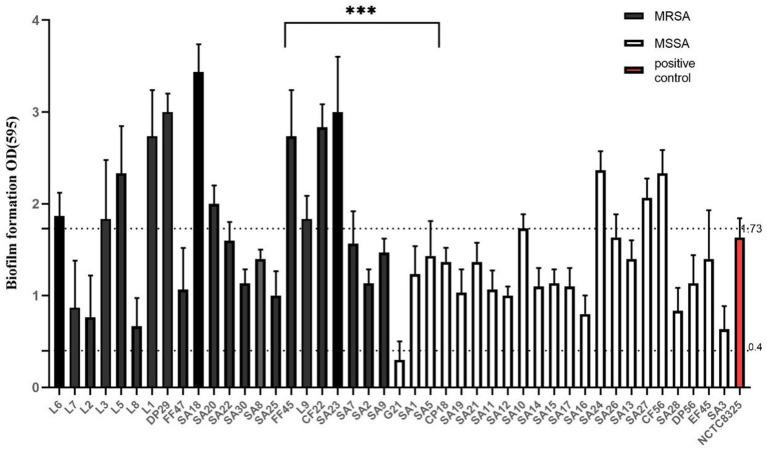
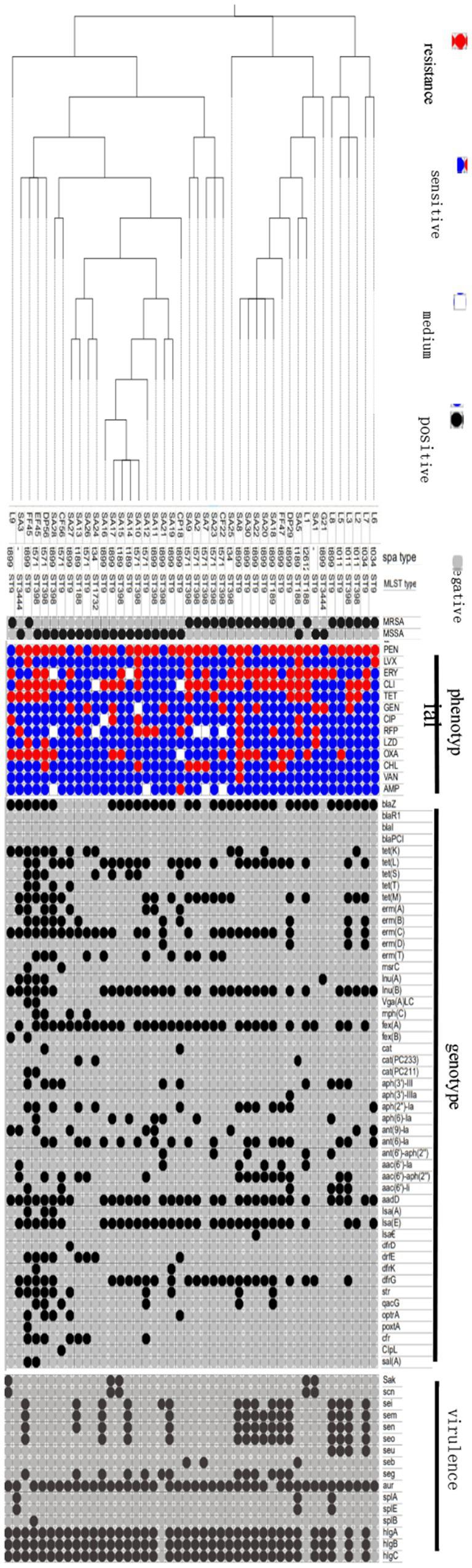
Jilin province is the primary region for dairy cow and milk production in China. However, there are few reports on the genetic characteristics, antibiotic resistance, and prevalence of () in raw milk. Between 2021 and 2022, researchers identified 214 strains, with a prevalence rate of 42.8% in cattle farms across Jilin province. Among the 214 strains, 22 isolates of methicillin-resistant (MRSA) were identified, with 13 exhibiting prevalent antibiotic resistance. Penicillin exhibited the highest resistance rate (145/214, 67.76%). The profiles of drug resistance, pathogenicity, genetic traits, and biofilm formation were examined through whole genome sequencing (WGS) of 44 isolates, comprising 22 MRSA strains and 22 methicillin-sensitive (MSSA) strains. Of the 44 isolates, 25 (56.82%) exhibited multiple resistance, while 31 (70.45%) demonstrated drug resistance characteristics. We identified 12 distinct types of drug resistance genes, including those associated with tetracycline, quaternary ammonium salt disinfection, and -lactam. Six strains were found to carry genes conferring resistance to linezolid. The and virulence genes were identified in at least 90% of the strains, with ST9-t899 emerging as the predominant type. Human-livestock transmission may be present, as indicated by the single-nucleotide polymorphism (SNP) and WGS data. The isolates also exhibited increased resistance. Moreover, strong biofilm formation was observed among the MRSA strains compared to the MSSA strains. The isolates exhibited multi-drug resistance, a broad spectrum of drug resistance, and various drug resistance phenotypes. CC398 and CC9 demonstrated potential for human-to-livestock transmission, as evidenced by the identification of 22 CC9 and 15 CC15 strains among the 44 isolates. and genes were identified in five, seven, and one strains, respectively, indicating contamination within the population. Given that raw milk is a fundamental food source, it is essential to monitor the molecular characteristics and antimicrobial resistance (AMR) of to ensure food safety and hygiene. From a One Health perspective, controlling antimicrobial resistance (AMR) is crucial as it can be transmitted from food-producing animals to humans, thus impacting public health.
吉林省是中国奶牛养殖和牛奶生产的主要地区。然而,关于生牛奶中()的遗传特征、抗生素耐药性和流行情况的报道较少。在2021年至2022年期间,研究人员鉴定出214株()菌株,吉林省各奶牛场的流行率为42.8%。在这214株菌株中,鉴定出22株耐甲氧西林(MRSA)分离株,其中13株表现出普遍的抗生素耐药性。青霉素的耐药率最高(145/214,67.76%)。通过对44株分离株进行全基因组测序(WGS),检测了其耐药性、致病性、遗传特征和生物膜形成情况,其中包括22株MRSA菌株和22株甲氧西林敏感(MSSA)菌株。在44株分离株中,25株(56.82%)表现出多重耐药性,31株(70.45%)表现出耐药特征。我们鉴定出12种不同类型的耐药基因,包括与四环素、季铵盐消毒和β-内酰胺相关的基因。发现6株携带对利奈唑胺耐药的基因。至少90%的菌株中鉴定出()和()毒力基因,ST9-t899成为主要类型。单核苷酸多态性(SNP)和WGS数据表明可能存在人畜传播。这些分离株还表现出耐药性增加。此外,与MSSA菌株相比,MRSA菌株中观察到强烈的生物膜形成。这些分离株表现出多重耐药性、广泛的耐药谱和各种耐药表型。在44株分离株中鉴定出22株CC9和15株CC15菌株,证明CC398和CC9具有人畜传播的潜力。分别在5株、7株和1株菌株中鉴定出()和()基因,表明群体内存在污染。鉴于生牛奶是一种基本食物来源,监测()的分子特征和抗菌药物耐药性(AMR)对于确保食品安全和卫生至关重要。从“同一个健康”的角度来看,控制抗菌药物耐药性(AMR)至关重要,因为它可以从食用动物传播给人类,从而影响公众健康。

 Zotero 插件