
癌症表观基因组学中的人工智能:泛癌检测与精准医学进展综述
Artificial Intelligence in cancer epigenomics: a review on advances in pan-cancer detection and precision medicine.
作者信息
Sahoo Karishma, Lingasamy Prakash, Khatun Masuma, Sudhakaran Sajitha Lulu, Salumets Andres, Sundararajan Vino, Modhukur Vijayachitra
机构信息
Integrative Multiomics Lab, School of Bio Sciences and Technology, Vellore Institute of Technology, Vellore, 632014, Tamil Nadu, India.
Department of Obstetrics and Gynecology, Institute of Clinical Medicine, University of Tartu, L. Puusepa 8, 50406, Tartu, Estonia.
出版信息
Epigenetics Chromatin. 2025 Jun 14;18(1):35. doi: 10.1186/s13072-025-00595-5.
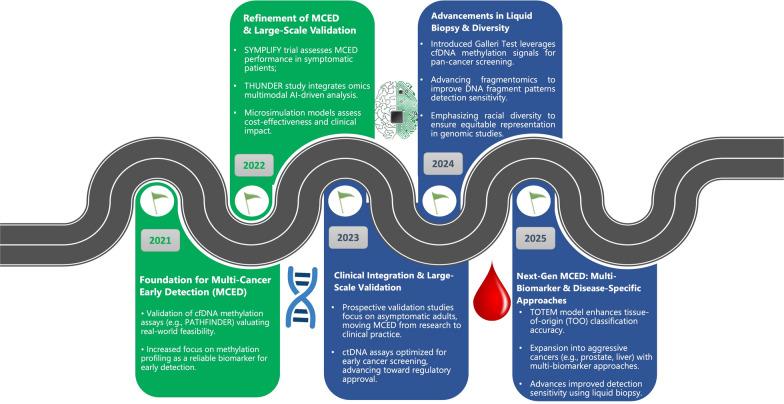
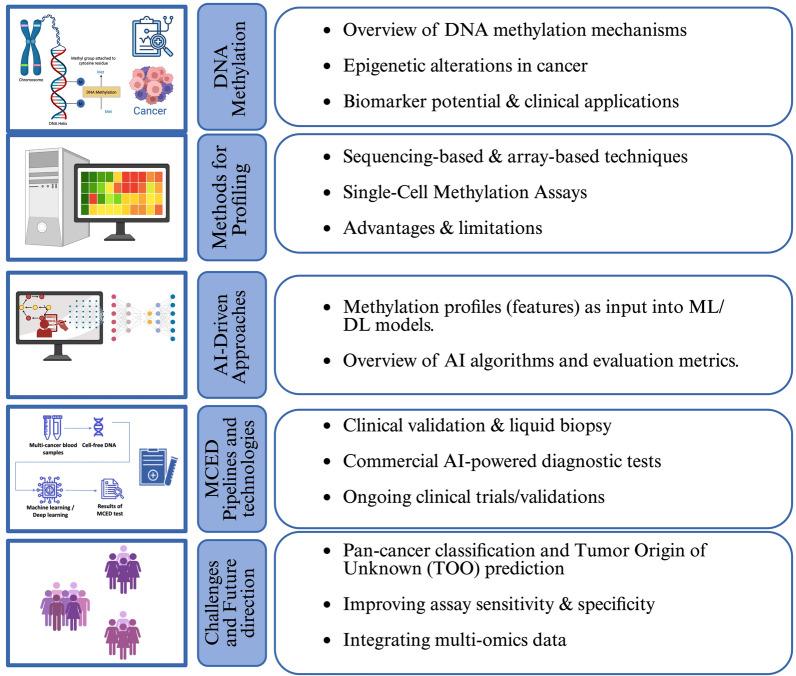
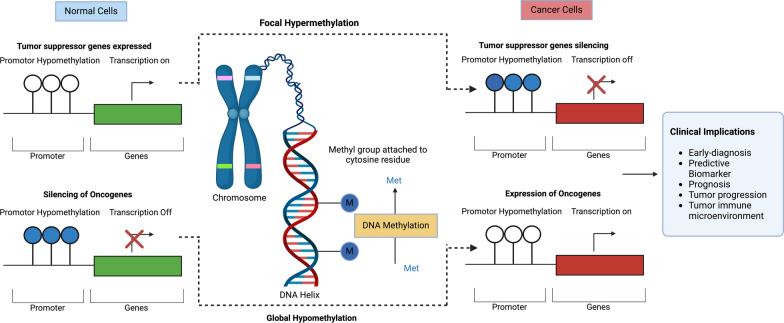
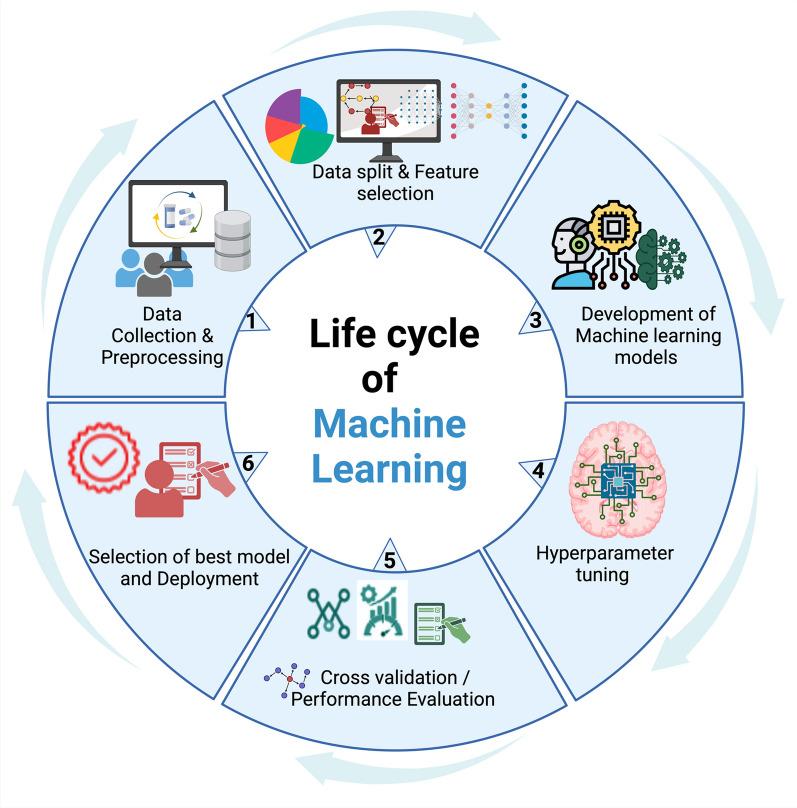
DNA methylation is a fundamental epigenetic modification that regulates gene expression and maintains genomic stability. Consequently, DNA methylation remains a key biomarker in cancer research, playing a vital role in diagnosis, prognosis, and tailored treatment strategies. Aberrant methylation patterns enable early cancer detection and therapeutic stratification; however, their complex patterns necessitates advanced analytical tools. Recent advances in artificial intelligence (AI) and machine learning (ML), including deep learning networks and graph-based models, have revolutionized cancer epigenomics by enabling rapid, high-resolution analysis of DNA methylation profiles. Moreover, these technologies are accelerating the development of Multi-Cancer Early Detection (MCED) tests, such as GRAIL's Galleri and CancerSEEK, which improve diagnostic accuracy across diverse cancer types. In this review, we explore the synergy between AI and DNA methylation profiling to advance precision oncology. We first examine the role of DNA methylation as a biomarker in cancer, followed by an overview of DNA profiling technologies. We then assess how AI-driven approaches transform clinical practice by enabling early detection and accurate classification. Despite their promise, challenges remain, including limited sensitivity for early-stage cancers, the black-box nature of many AI algorithms, and the need for validation across diverse populations to ensure equitable implementation. Future directions include integrating multi-omics data, developing explainable AI frameworks, and addressing ethical concerns, such as data privacy and algorithmic bias. By overcoming these gaps, AI-powered epigenetic diagnostics can enable earlier detection, more effective treatments, and improved patient outcomes, globally. In summary, this review synthesizes current advancements in the field and envisions a future where AI and epigenomics converge to redefine cancer diagnostics and therapy.
DNA甲基化是一种基本的表观遗传修饰,可调节基因表达并维持基因组稳定性。因此,DNA甲基化仍然是癌症研究中的关键生物标志物,在诊断、预后和个性化治疗策略中发挥着至关重要的作用。异常的甲基化模式有助于早期癌症检测和治疗分层;然而,其复杂的模式需要先进的分析工具。人工智能(AI)和机器学习(ML)的最新进展,包括深度学习网络和基于图的模型,通过能够对DNA甲基化谱进行快速、高分辨率分析,彻底改变了癌症表观基因组学。此外,这些技术正在加速多癌早期检测(MCED)测试的开发,如GRAIL的Galleri和CancerSEEK,这些测试提高了对多种癌症类型的诊断准确性。在这篇综述中,我们探讨了AI与DNA甲基化分析之间的协同作用,以推动精准肿瘤学的发展。我们首先研究DNA甲基化作为癌症生物标志物的作用,然后概述DNA分析技术。接着,我们评估AI驱动的方法如何通过实现早期检测和准确分类来改变临床实践。尽管它们前景广阔,但挑战依然存在,包括对早期癌症的敏感性有限、许多AI算法的黑箱性质,以及需要在不同人群中进行验证以确保公平实施。未来的方向包括整合多组学数据(multi-omics data)、开发可解释的AI框架,以及解决伦理问题,如数据隐私和算法偏差。通过克服这些差距,人工智能驱动的表观遗传诊断可以在全球范围内实现更早的检测、更有效的治疗和更好的患者预后。总之,这篇综述综合了该领域的当前进展,并设想了一个AI与表观基因组学融合以重新定义癌症诊断和治疗的未来。

 Zotero 插件