
橙皮素治疗代谢功能障碍相关脂肪性肝病的机制:网络药理学与实验研究
Mechanisms of hesperetin in treating metabolic dysfunction-associated steatosis liver disease network pharmacology and experiments.
作者信息
Wu Yi, Lin Ying, Xu Shan, Su Dan, Yang Hao, Tang Lidan
机构信息
Department of Pharmacy, The Second People's Hospital of Changzhou, The Third Affiliated Hospital of Nanjing Medical University, Changzhou, Jiangsu, 213164, China.
Department of Pharmacy, The Second People's Hospital of Changzhou, The Third Affiliated Hospital of Nanjing Medical University, No. 68. Gehu Middle Road, Changzhou, Jiangsu, 213164, China.
出版信息
Open Med (Wars). 2025 Jun 9;20(1):20251215. doi: 10.1515/med-2025-1215. eCollection 2025.
PURPOSE
Metabolic dysfunction-associated steatosic liver disease (MASLD) poses a global health challenge with limited therapeutic options. Hesperetin, a flavonoid extracted from citrus, exhibits multiple pharmacological properties, but its mechanisms in MASLD-associated lipid metabolism remain unclear. This study aimed to explore the mechanism of hesperetin for treating MASLD.
METHODS
Network pharmacology identified the therapeutic targets for MASLD. Key targets were selected based on network topology analysis. Subsequently, Kyoto Encyclopedia of genes and genomes (KEGG) pathways and gene ontology enrichment were conducted. Molecular docking was performed to evaluate the binding affinity between hesperetin and the identified key targets. validation included lipid accumulation assays and verification of core target modulation western blotting.
RESULTS
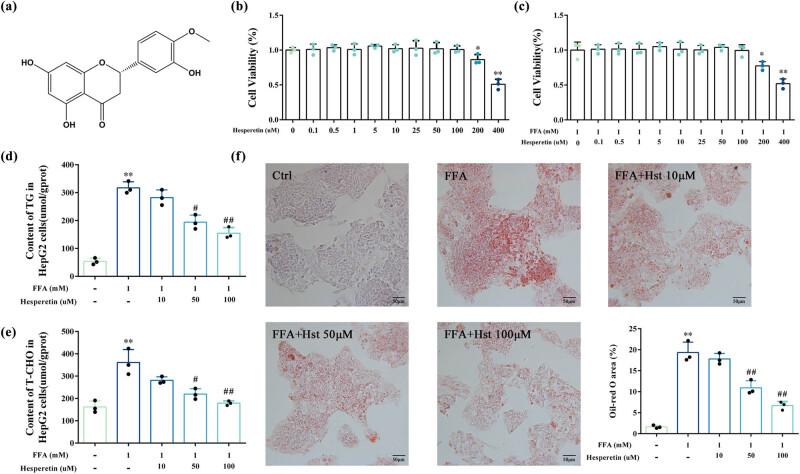
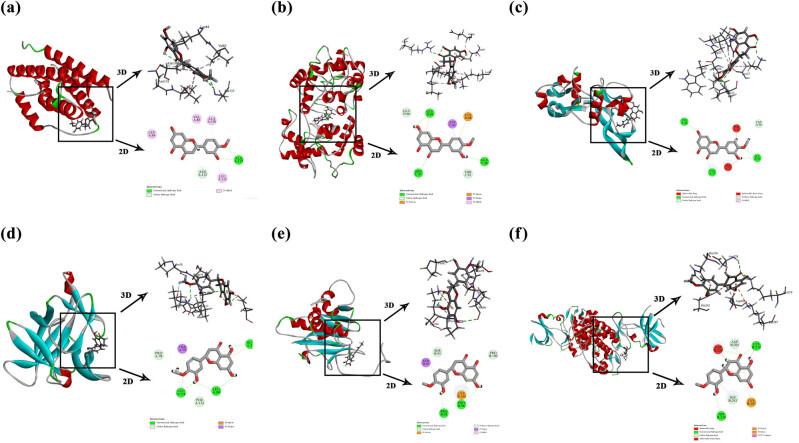
Hesperetin significantly attenuated lipid accumulation in free fatty acid -induced HepG2 cells. Forty core targets of hesperetin for MASLD mitigation were identified. Notably, MYC, IL-6, IL1B, and PTGS2 had high network association values. KEGG analysis revealed predominant involvement in cancer-related pathways, non-alcoholic fatty liver disease, and JAK/STAT signaling. Biological processes included inflammatory response regulation and cytokine activity. Molecular docking confirmed strong hesperetin-IL-6 binding. Experimental data suggested that hesperetin may ameliorate lipid accumulation by modulating the IL-6-mediated STAT3-SOCS3 signaling pathway.
CONCLUSION
Hesperetin may ameliorate MASLD by targeting the IL-6-STAT3-SOCS3 axis, underscoring its therapeutic potential.
目的
代谢功能障碍相关脂肪性肝病(MASLD)对全球健康构成挑战,治疗选择有限。橙皮素是一种从柑橘中提取的类黄酮,具有多种药理特性,但其在MASLD相关脂质代谢中的机制尚不清楚。本研究旨在探讨橙皮素治疗MASLD的机制。
方法
网络药理学确定了MASLD的治疗靶点。基于网络拓扑分析选择关键靶点。随后,进行了京都基因与基因组百科全书(KEGG)通路和基因本体富集分析。进行分子对接以评估橙皮素与已鉴定的关键靶点之间的结合亲和力。验证包括脂质积累测定和通过蛋白质免疫印迹法验证核心靶点调节。
结果
橙皮素显著减轻了游离脂肪酸诱导的HepG2细胞中的脂质积累。确定了40个橙皮素减轻MASLD的核心靶点。值得注意的是,MYC、IL-6、IL1B和PTGS2具有较高的网络关联值。KEGG分析显示主要参与癌症相关通路、非酒精性脂肪性肝病和JAK/STAT信号传导。生物学过程包括炎症反应调节和细胞因子活性。分子对接证实橙皮素与IL-6有很强的结合。实验数据表明,橙皮素可能通过调节IL-6介导的STAT3-SOCS3信号通路改善脂质积累。
结论
橙皮素可能通过靶向IL-6-STAT3-SOCS3轴改善MASLD,突出了其治疗潜力。




 Zotero 插件