
从牙源性干细胞中提取外泌体的分离方法。
Isolation methods of exosomes derived from dental stem cells.
作者信息
Ahmad Paras, Estrin Nathan, Farshidfar Nima, Zhang Yufeng, Miron Richard J
机构信息
Department of Research, Advanced PRF Education, Bradenton, FL, USA.
Lake Erie College of Osteopathic Medicine School of Dental Medicine, Bradenton, FL, USA.
出版信息
Int J Oral Sci. 2025 Jun 16;17(1):50. doi: 10.1038/s41368-025-00370-y.
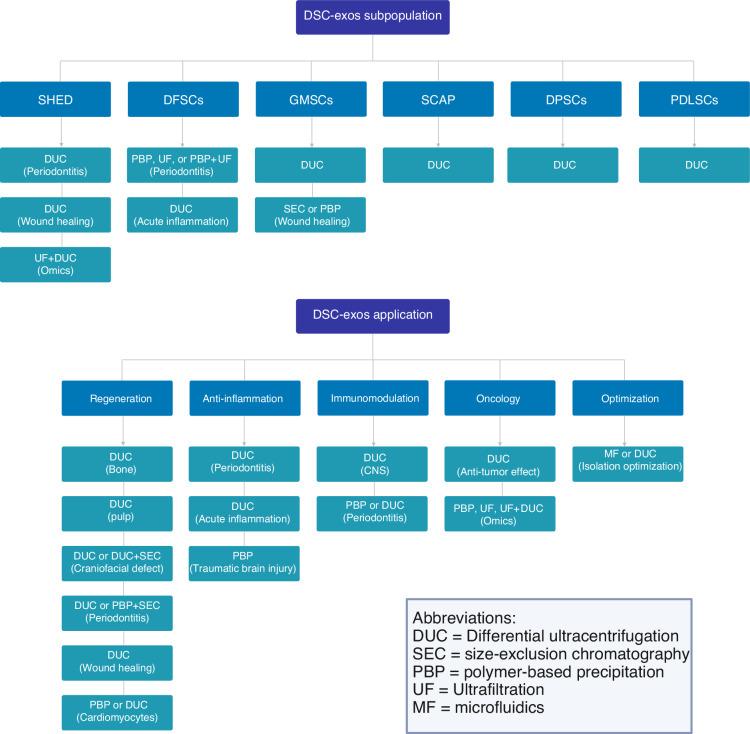
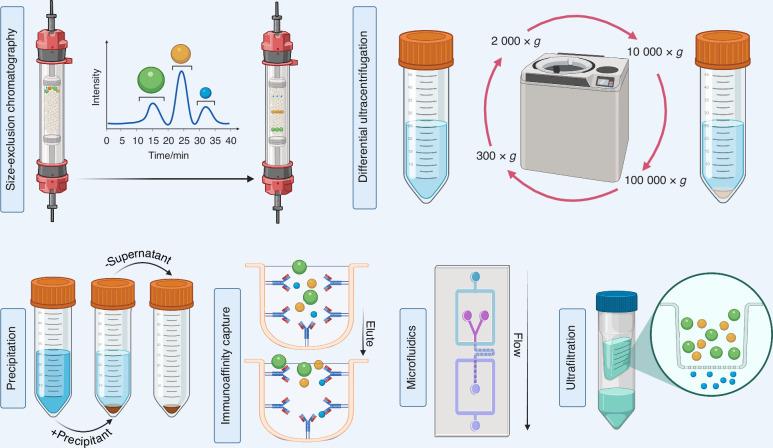
Mesenchymal stem cells are highly regarded for their potential in tissue repair and regenerative medicine due to their multipotency and self-renewal abilities. Recently, mesenchymal stem cells have been redefined as "medical signaling cells," with their primary biological effects mediated through exosome secretion. These exosomes, which contain lipids, proteins, RNA, and metabolites, are crucial in regulating various biological processes and enhancing regenerative therapies. Exosomes replicate the effects of their parent cells while offering benefits such as reduced side effects, low immunogenicity, excellent biocompatibility, and high drug-loading capacity. Dental stem cells, including those from apical papilla, gingiva, dental pulp, and other sources, are key contributors to exosome-mediated regenerative effects, such as tumor cell apoptosis, neuroprotection, angiogenesis, osteogenesis, and immune modulation. Despite their promise, clinical application of exosomes is limited by challenges in isolation techniques. Current methods face issues of complexity, inefficiency, and insufficient purity, hindering detailed analysis. Recent advancements, such as micro-electromechanical systems, alternating current electroosmosis, and serum-free three-dimensional cell cultures, have improved exosome isolation efficacy. This review synthesizes nearly 200 studies on dental stem cell-derived exosomes, highlighting their potential in treating a wide range of conditions, including periodontal diseases, cancer, neurodegenerative disorders, diabetes, and more. Optimized isolation methods offer a path forward for overcoming current limitations and advancing the clinical use of exosome-based therapies.
间充质干细胞因其多能性和自我更新能力,在组织修复和再生医学中的潜力备受关注。最近,间充质干细胞被重新定义为“医学信号细胞”,其主要生物学效应通过外泌体分泌介导。这些外泌体包含脂质、蛋白质、RNA和代谢物,在调节各种生物学过程和增强再生治疗中起着关键作用。外泌体复制其亲本细胞的作用,同时具有副作用减少、免疫原性低、生物相容性好和药物负载能力高等优点。牙源性干细胞,包括来自根尖乳头、牙龈、牙髓等来源的干细胞,是外泌体介导的再生效应(如肿瘤细胞凋亡、神经保护、血管生成、成骨和免疫调节)的关键贡献者。尽管前景广阔,但外泌体的临床应用受到分离技术挑战的限制。目前的方法面临复杂性、效率低下和纯度不足等问题,阻碍了详细分析。微机电系统、交流电电渗和无血清三维细胞培养等最新进展提高了外泌体的分离效率。这篇综述综合了近200项关于牙源性干细胞衍生外泌体的研究,强调了它们在治疗多种疾病(包括牙周疾病、癌症、神经退行性疾病、糖尿病等)中的潜力。优化的分离方法为克服当前限制和推进基于外泌体的治疗的临床应用提供了一条前进的道路。


 Zotero 插件