
高脂饮食诱导的脂肪组织驻留巨噬细胞、T细胞和树突状细胞在肥胖期间调节慢性炎症和脂肪生成。
High-fat diet-induced adipose tissue-resident macrophages, T cells, and dendritic cells modulate chronic inflammation and adipogenesis during obesity.
作者信息
Mandal Mousumi, Mamun Md Abdullah Al, Rakib Ahmed, Singh Udai P
机构信息
Department of Pharmaceutical Sciences, College of Pharmacy, The University of Tennessee Health Science Center, Memphis, TN, United States.
出版信息
Front Immunol. 2025 Jun 3;16:1524544. doi: 10.3389/fimmu.2025.1524544. eCollection 2025.
BACKGROUND
Obesity is one of the major healthcare challenges and socio-economic liabilities worldwide and is rapidly reaching pandemic proportions. Characterized by low-grade chronic inflammation in adipose tissue (AT), the development of obesity is influenced by genetic, neurologic, and metabolic factors, immune activation, and behavioral activities. During obesity, AT macrophages play a central role in inflammation, lipid metabolism, and mitochondrial function in adipocytes. In this study, we investigated how AT resident macrophages, T cells, and dendritic cells (DCs) communicate to coordinate and regulate AT inflammation during obesity.
METHODS
We performed contact mode co-culture of different combinations of AT resident immune cells from mice fed with high-fat diet (HFD) and normal diet (ND) and also 3T3-L1 adipocytes with macrophages, T cells, and DCs isolated from AT of mice fed HFD. We analyzed the expression of adiposity-associated genes, inflammatory markers, and levels of cytokines and chemokine in conditioned culture medium. We also analyzed adipogenesis and performed Oil Red O staining of co-cultured adipocytes to visualize lipid accumulation under these conditions.
RESULTS
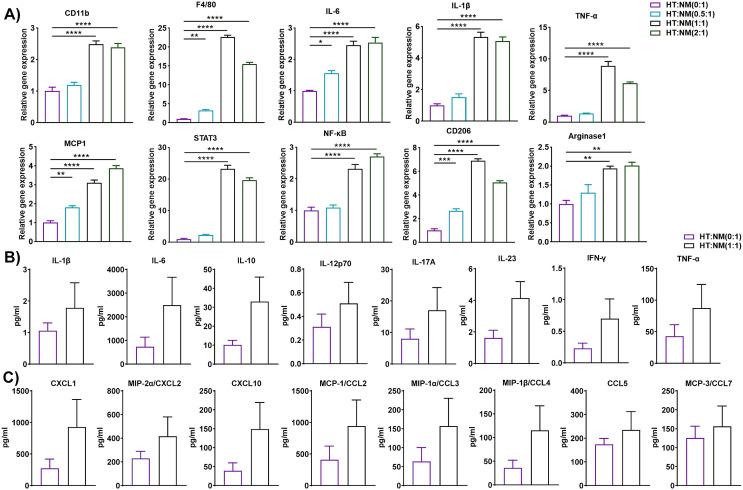
We found that macrophages from AT derived from HFD-fed mice fueled adipogenesis and inflammation in 3T3-L1 adipocytes and stromal vascular fraction cells derived from ND AT. Macrophages from HFD AT also promoted the expression in ND-derived T cells of chemokines including CCL5 and CXCL10 and inflammatory cytokines including TNF-α, IL-1β, IFN-γ, and IL-17A. Interestingly, T cells from HFD AT also induced expression of inflammatory genes in ND macrophages and lipid accumulation and expression of inflammatory proteins like CXCL2, CCL3, and CCL4 in 3T3-L1 adipocytes. DCs also stimulated adipocyte differentiation, and expression of chemokines and inflammatory cytokines like CCL5, MCP-3, and TNF-α in 3T3-L1 adipocytes.
CONCLUSIONS
Our findings suggest that during obesity, macrophages work together in a coordinated fashion to modulate the activities of T cells, stimulating adipocyte differentiation, and thereby sustaining chronic inflammation. Thus, macrophages in AT might serve as druggable targets in combatting obesity.
背景
肥胖是全球主要的医疗保健挑战和社会经济负担之一,并且正迅速发展到流行程度。肥胖以脂肪组织(AT)中的低度慢性炎症为特征,其发展受遗传、神经和代谢因素、免疫激活及行为活动的影响。在肥胖期间,AT巨噬细胞在脂肪细胞的炎症、脂质代谢和线粒体功能中起核心作用。在本研究中,我们调查了AT驻留巨噬细胞、T细胞和树突状细胞(DC)如何在肥胖期间相互沟通以协调和调节AT炎症。
方法
我们对喂食高脂饮食(HFD)和正常饮食(ND)小鼠的AT驻留免疫细胞的不同组合进行接触模式共培养,并且对从喂食HFD小鼠的AT中分离出的巨噬细胞、T细胞和DC与3T3-L1脂肪细胞进行共培养。我们分析了肥胖相关基因、炎症标志物的表达以及条件培养基中细胞因子和趋化因子的水平。我们还分析了脂肪生成,并对共培养的脂肪细胞进行油红O染色,以观察这些条件下的脂质积累。
结果
我们发现,来自喂食HFD小鼠的AT巨噬细胞促进了3T3-L1脂肪细胞和来自ND AT的基质血管部分细胞的脂肪生成和炎症。来自HFD AT的巨噬细胞还促进了ND来源的T细胞中趋化因子(包括CCL5和CXCL10)以及炎症细胞因子(包括TNF-α、IL-1β、IFN-γ和IL-17A)的表达。有趣的是,来自HFD AT的T细胞还诱导了ND巨噬细胞中炎症基因的表达以及3T3-L1脂肪细胞中脂质积累和CXCL2、CCL3和CCL4等炎症蛋白的表达。DC也刺激了脂肪细胞分化以及3T3-L1脂肪细胞中趋化因子和炎症细胞因子(如CCL5、MCP-3和TNF-α)的表达。
结论
我们的研究结果表明,在肥胖期间,巨噬细胞以协调的方式共同调节T细胞的活性,刺激脂肪细胞分化,从而维持慢性炎症。因此,AT中的巨噬细胞可能是对抗肥胖的可药物作用靶点。



 Zotero 插件