
中药四神丸治疗肠易激综合征的疗效与安全性:随机对照试验的荟萃分析和序贯分析
Efficacy and safety of Chinese botanical drug Si Shen Wan in irritable bowel syndrome: a meta-analysis and trial sequential analysis of randomized controlled trials.
作者信息
Liu Qian, Shi Zongming, Jiang Yang, Zhang Tao, Du SiJing, Gao Yemei
机构信息
Beijing Jishuitan Hospital, Capital Medical University, Beijing, China.
Peking University First Hospital, Beijing, China.
出版信息
Front Pharmacol. 2025 Jun 2;16:1534904. doi: 10.3389/fphar.2025.1534904. eCollection 2025.
BACKGROUND AND OBJECTIVES
Irritable bowel syndrome (IBS) is one of the most common functional gastrointestinal disorders (FGIDs), characterized by complex pathogenesis, prolonged disease duration, frequent recurrence, and a significant impact on patients' quality of life. Si-Shen-Wan (SSW), a renowned traditional Chinese medicine formula, is widely recognized for its efficacy in managing gastrointestinal symptoms, particularly diarrhea, and is commonly used to treat diarrhea-predominant IBS (IBS-D). This study utilized a meta-analysis to evaluate the efficacy and safety of SSW in the treatment of IBS-D.
METHODS
A comprehensive search for randomized controlled trials (RCTs) was conducted across seven databases from their inception to 31 October 2024. The analysis included outcomes such as efficacy rate, overall symptom score, abdominal pain score, diarrhea score, abdominal distension score, loss of appetite score, recurrence rate, and adverse events. Meta-analyses were performed using either a random-effects or fixed-effects model. Trial sequential analysis (TSA) was applied to estimate the sample size and validate the robustness of the meta-analysis.
RESULTS
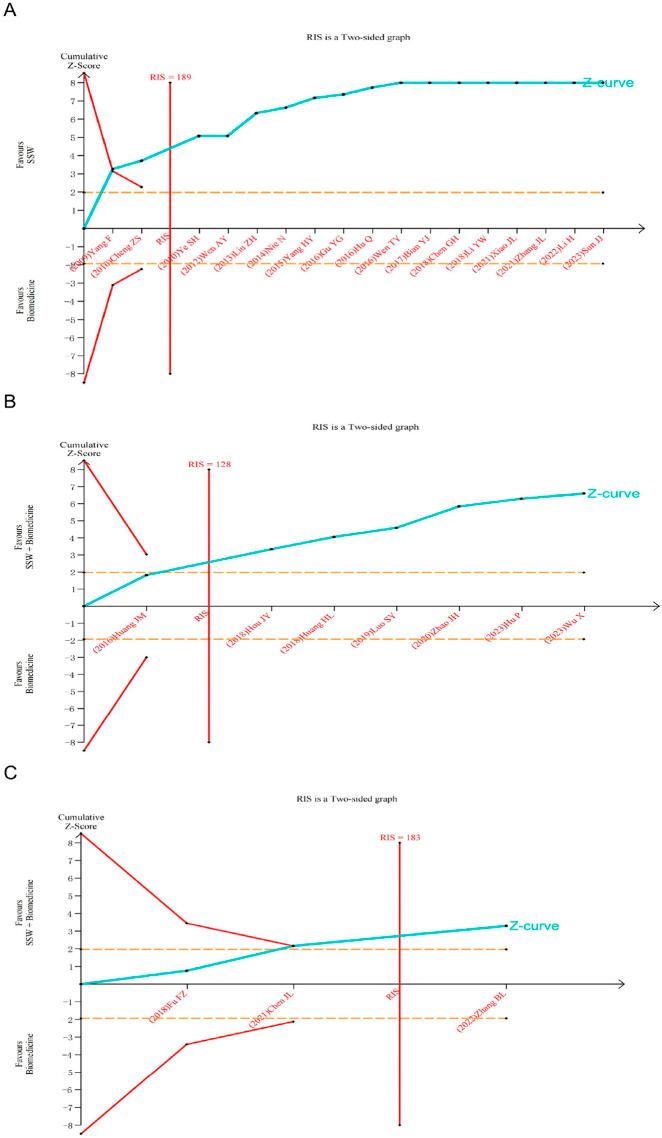
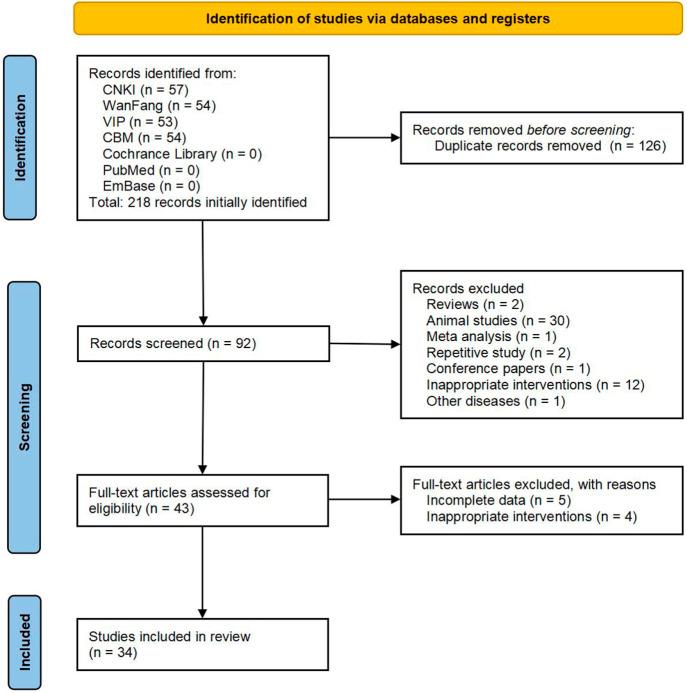
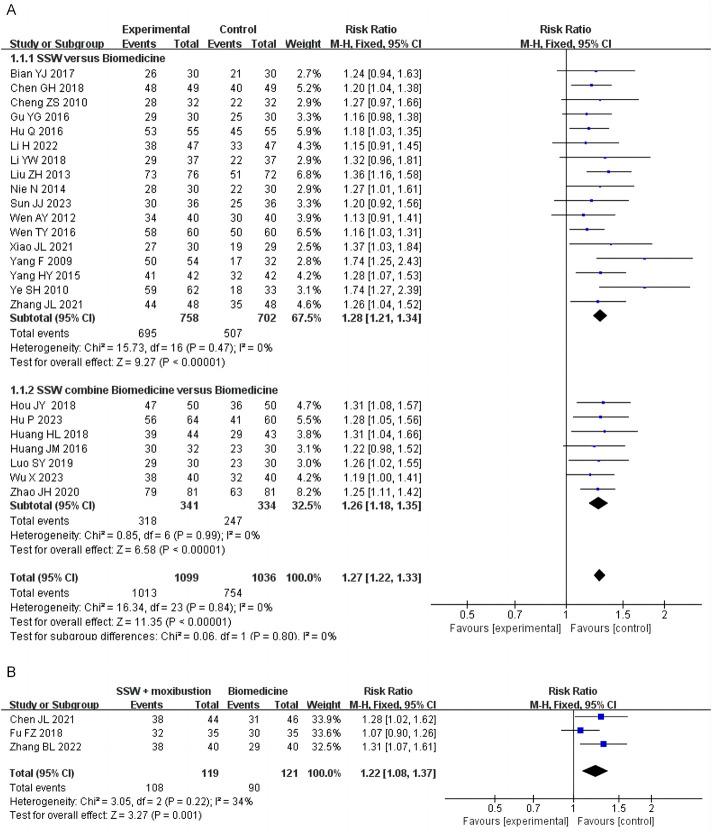
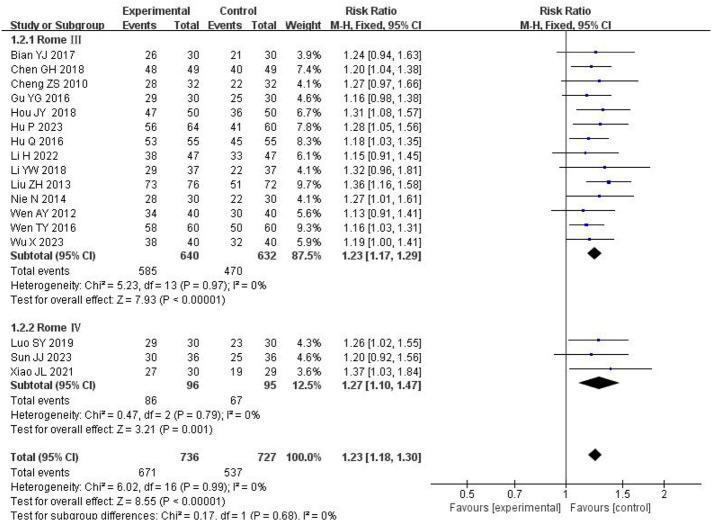
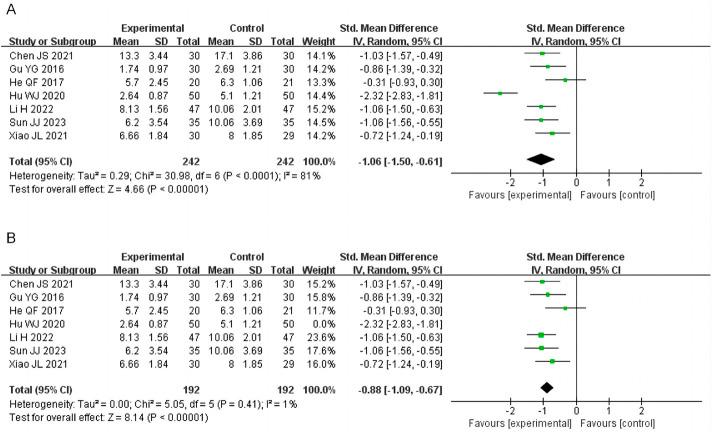
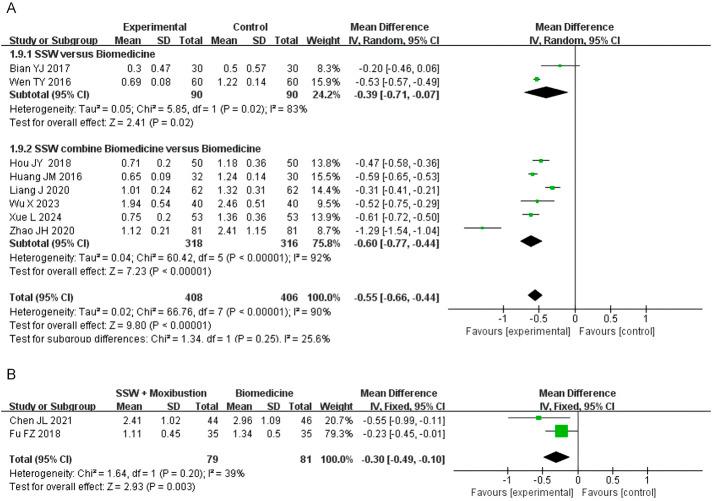
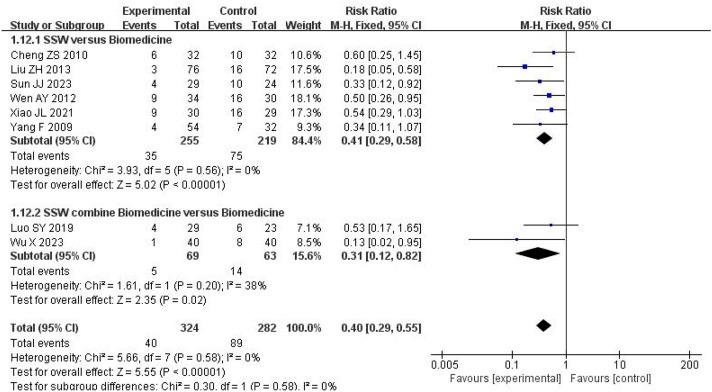
A total of 34 RCTs involving 2,976 participants met the inclusion criteria. The findings demonstrated that SSW alone (RR = 1.28; 95% CI: 1.21, 1.34; P < 0.00001) or combined with biomedicine (RR = 1.26; 95% CI: 1.18, 1.35; P < 0.00001) significantly improved treatment efficacy compared to biomedicine alone. SSW also reduced the overall symptom score (SMD = -1.06; 95% CI: -1.50, -0.61; Z = 4.66; P < 0.00001) and alleviated key symptoms, including abdominal pain (MD = -0.66; 95% CI: -0.76, -0.56; Z = 12.99; P < 0.00001), diarrhea (MD = -0.69; 95% CI: -0.81, -0.56; Z = 10.82; P < 0.00001), abdominal distension (MD = -0.65; 95% CI: -1.06, -0.24; Z = 3.13; P = 0.002), and loss of appetite (MD = -0.55; 95% CI: -0.66, -0.44; Z = 9.80; P < 0.00001). The recurrence rate was also significantly reduced (RR = 0.40; 95% CI: 0.29, 0.55; P < 0.00001). Additionally, SSW combined with moxibustion-a traditional Chinese medicine therapy integrating internal and external treatments-also further improved treatment outcomes (RR = 1.22; 95% CI: 1.08, 1.37; P = 0.0001). This combination effectively reduced abdominal pain (MD = -0.42; 95% CI: -0.81, -0.04; Z = 2.17; P = 0.03), diarrhea (MD = -0.41; 95% CI: -0.64, -0.17; Z = 3.41; P = 0.0006), abdominal distension (MD = -0.40; 95% CI: -0.69, -0.11; Z = 2.67; P = 0.008), and loss of appetite (MD = -0.30; 95% CI: -0.49, -0.10; Z = 2.93; P = 0.003). Safety analysis revealed a high level of safety for SSW and SSW combined with moxibustion, with no serious adverse events reported in any of the included trials. TSA confirmed an adequate sample size for the primary outcome, supporting the efficacy of SSW in IBS-D treatment.
CONCLUSION
SSW, either used alone or combined with moxibustion, is effective in alleviating IBS-D symptoms and reducing recurrence rates, making it a potentially beneficial intervention. However, certain limitations remain in the overall quality of the current studies, including relatively small sample sizes, insufficiently long follow-up periods, and the absence of a double-blind design. Future research should emphasize the design and implementation of high-quality, long-term, randomized, double-blind clinical trials to further enhance the reliability and external applicability of the research findings.
SYSTEMATIC REVIEW REGISTRATION
https://www.crd.york.ac.uk/PROSPERO/display_record.php?RecordID=597979, identifier CRD42024597979.
背景与目的
肠易激综合征(IBS)是最常见的功能性胃肠疾病(FGIDs)之一,其发病机制复杂,病程迁延,复发频繁,对患者生活质量有显著影响。四神丸(SSW)是一种著名的中药方剂,因其在管理胃肠道症状,尤其是腹泻方面的功效而被广泛认可,常用于治疗腹泻型肠易激综合征(IBS-D)。本研究采用荟萃分析来评估四神丸治疗IBS-D的疗效和安全性。
方法
对七个数据库从建库至2024年10月31日进行全面检索随机对照试验(RCT)。分析包括有效率、总体症状评分、腹痛评分、腹泻评分、腹胀评分、食欲减退评分、复发率和不良事件等结果。采用随机效应或固定效应模型进行荟萃分析。应用试验序贯分析(TSA)来估计样本量并验证荟萃分析的稳健性。
结果
共有34项涉及2976名参与者的RCT符合纳入标准。结果表明,单独使用四神丸(RR = 1.28;95%CI:1.21,1.34;P < 0.00001)或与生物医学联合使用(RR = 1.26;95%CI:1.18,1.35;P < 0.00001)与单独使用生物医学相比,显著提高了治疗效果。四神丸还降低了总体症状评分(SMD = -1.06;95%CI:-1.50,-0.61;Z = 4.66;P < 0.00001),并缓解了包括腹痛(MD = -0.66;95%CI:-0.76,-0.56;Z = 12.99;P < 0.00001)、腹泻(MD = -0.69;95%CI:-0.81,-0.56;Z = 10.82;P < 0.00001)、腹胀(MD = -0.65;95%CI:-1.06,-0.24;Z = 3.13;P = 0.002)和食欲减退(MD = -0.55;95%CI:-0.66,-0.44;Z = 9.80;P < 0.00001)在内的关键症状。复发率也显著降低(RR = 0.40;95%CI:0.29,0.55;P < 0.00001)。此外,四神丸联合艾灸——一种内外兼治的中医疗法——也进一步改善了治疗效果(RR = 1.22;95%CI:1.08,1.37;P = 0.0001)。这种联合有效地减轻了腹痛(MD = -0.42;95%CI:-0.81,-0.04;Z = 2.17;P = 0.03)、腹泻(MD = -0.41;95%CI:-0.64,-0.17;Z = 3.41;P = 0.0006)、腹胀(MD = -0.40;95%CI:-0.69,-0.11;Z = 2.67;P = 0.008)和食欲减退(MD = -0.3;95%CI:-0.49,-0.10;Z = 2.93;P = 0.003)。安全性分析显示四神丸及其联合艾灸具有高度安全性,纳入的任何试验均未报告严重不良事件。TSA证实主要结局的样本量充足,支持四神丸治疗IBS-D的疗效。
结论
单独使用或与艾灸联合使用的四神丸在缓解IBS-D症状和降低复发率方面是有效的,使其成为一种潜在的有益干预措施。然而,当前研究的整体质量仍存在一定局限性,包括样本量相对较小、随访期不够长以及缺乏双盲设计。未来研究应强调高质量、长期、随机、双盲临床试验的设计与实施,以进一步提高研究结果的可靠性和外部适用性。
系统评价注册
https://www.crd.york.ac.uk/PROSPERO/display_record.php?RecordID=597979,标识符CRD42024597979。


 Zotero 插件