
纳米仿生纤连蛋白/溶葡萄球菌酶共负载丝素蛋白敷料通过模仿细胞外基质的微结构和双重功能调节加速全层伤口愈合。
Nano-Biomimetic Fibronectin/Lysostaphin-Co-Loaded Silk Fibroin Dressing Accelerates Full-Thickness Wound Healing via ECM-Mimicking Microarchitecture and Dual-Function Modulation.
作者信息
Liu Chen-Ting, Huang Li-Dan, Liu Kai, Pang Ke-Fan, Tang Hao, Li Ting, Huang Yang-Pei, Zhang Wei-Qin, Wang Jun-Juan, Yin Guo-Li, Hua Kou-Zhen
机构信息
School of Clinical Medicine, Hangzhou Medical College, Hangzhou, Zhejiang, 310053, People's Republic of China.
Laboratory Medicine, Yiwu Blood Station, Yiwu, Zhejiang, 322000, People's Republic of China.
出版信息
Int J Nanomedicine. 2025 Jun 12;20:7469-7487. doi: 10.2147/IJN.S521956. eCollection 2025.
PURPOSE
In cases of large-area skin defects, the absence of extracellular matrix can lead to difficulties in fibroblast migration, thereby hindering wound healing. This study aimed to address the challenges in treating skin defects by developing a biomimetic nano-dressing that both has antibacterial properties and promotes healing by mimicking the extracellular matrix.
PATIENTS AND METHODS
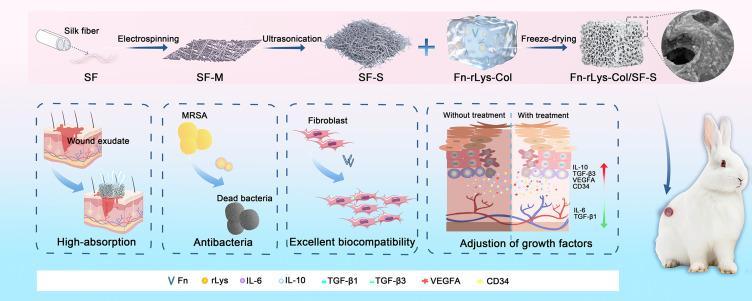
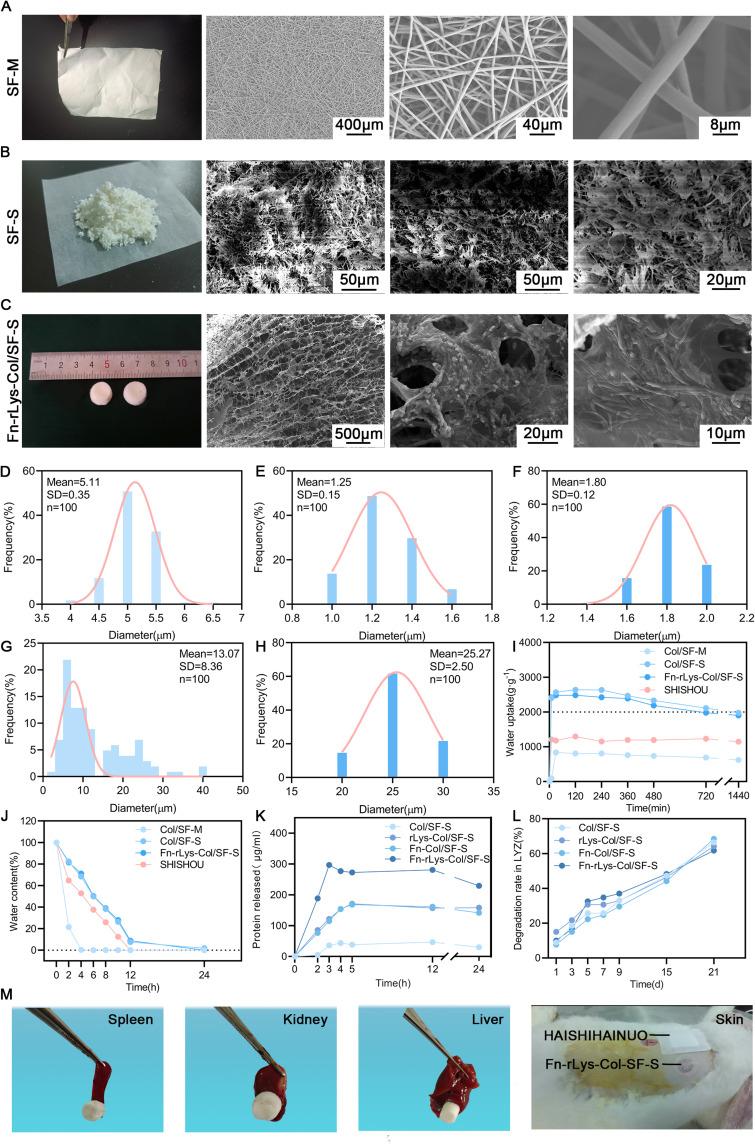
The electrospun silk protein nanofibers were ultrasonically fragmented into staple fibers. These were then coated and modified by adding a collagen (Col) solution loaded with recombinant lysostaphin (rLys) and fibronectin (Fn), ultimately constructing a biomimetic nanosponge (Fn-rLys-Col/SF-S).
RESULTS
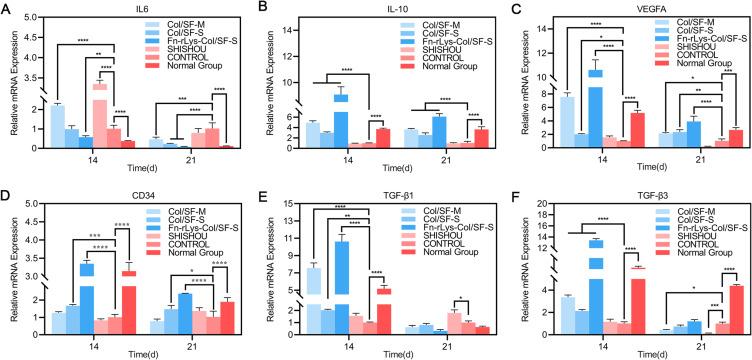
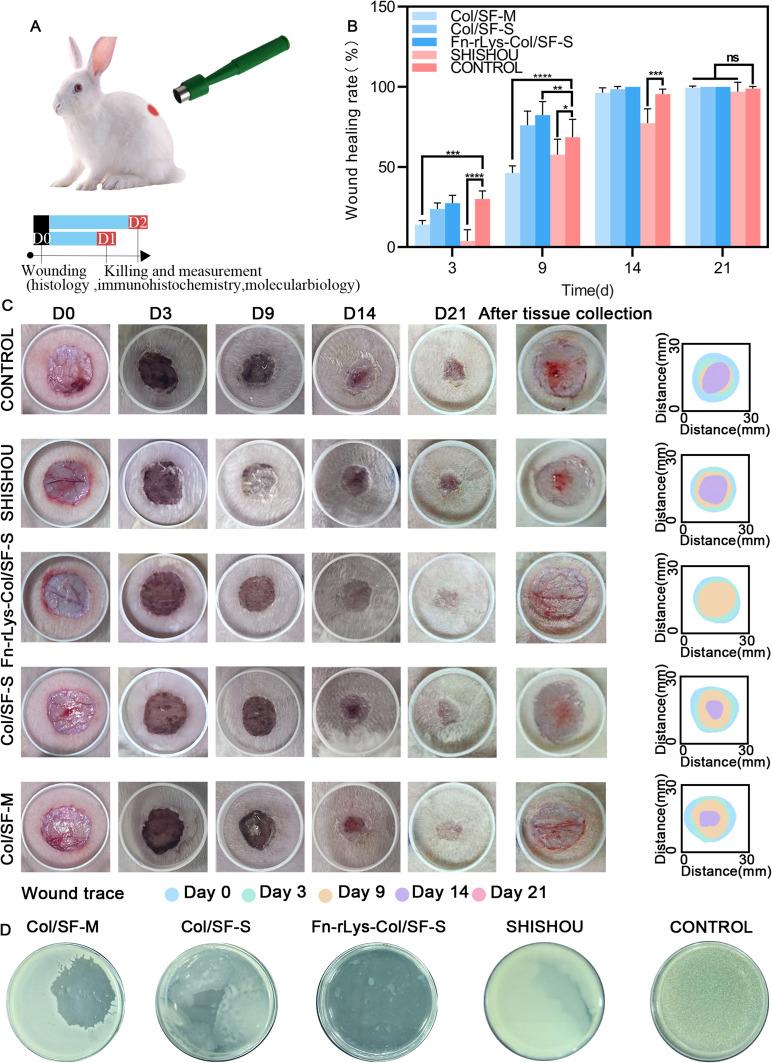
In vitro studies have shown that Fn-rLys-Col/SF-S possesses good water vapor balance and antibacterial properties, is non-toxic to cells, and can promote cell proliferation and migration. In vivo experimental results indicated that Fn-rLys-Col/SF-S healed a week earlier than the control group, with the structure of the newly formed skin resembling normal skin at 21 days. Further immunohistochemistry and qRT-PCR results demonstrated that Fn-rLys-Col/SF-S effectively promotes the healing of skin defect wounds by reducing inflammation, promoting angiogenesis, enhancing collagen deposition, and regulating the degree of fibrosis.
CONCLUSION
In conclusion, the Fn-rLys-Col/SF-S biomimetic sponge dressing can promote the repair of skin defects by mimicking the extracellular matrix, providing a potential therapeutic strategy for clinical wound treatment.
目的
在大面积皮肤缺损的情况下,细胞外基质的缺失会导致成纤维细胞迁移困难,从而阻碍伤口愈合。本研究旨在通过开发一种具有抗菌特性并通过模拟细胞外基质促进愈合的仿生纳米敷料来应对治疗皮肤缺损的挑战。
患者和方法
将静电纺丝丝蛋白纳米纤维超声破碎成短纤维。然后通过添加负载重组溶葡萄球菌素(rLys)和纤连蛋白(Fn)的胶原蛋白(Col)溶液对其进行包被和修饰,最终构建仿生纳米海绵(Fn-rLys-Col/SF-S)。
结果
体外研究表明,Fn-rLys-Col/SF-S具有良好的水汽平衡和抗菌性能,对细胞无毒,并能促进细胞增殖和迁移。体内实验结果表明,Fn-rLys-Col/SF-S比对照组提前一周愈合,在21天时新形成皮肤的结构与正常皮肤相似。进一步的免疫组织化学和qRT-PCR结果表明,Fn-rLys-Col/SF-S通过减轻炎症、促进血管生成、增强胶原蛋白沉积和调节纤维化程度,有效促进皮肤缺损伤口的愈合。
结论
总之,Fn-rLys-Col/SF-S仿生海绵敷料可通过模拟细胞外基质促进皮肤缺损的修复,为临床伤口治疗提供了一种潜在的治疗策略。



 Zotero 插件