
不同来源外泌体治疗糖尿病伤口愈合的策略
Diverse-Origin Exosomes Therapeutic Strategies for Diabetic Wound Healing.
作者信息
Wang Fengyu, Yao Jinling, Zuo Huiling, Jiao Yuhang, Wu Junzi, Meng Zhuoran
机构信息
The Key Laboratory of Microcosmic Syndrome Differentiation, Yunnan University of Chinese Medicine, Kunming, Yunnan, 650500, People's Republic of China.
Yunnan Key Laboratory of Integrated Traditional Chinese and Western Medicine for Chronic Disease in Prevention and Treatment, Yunnan University of Chinese Medicine, Kunming, Yunnan, 650500, People's Republic of China.
出版信息
Int J Nanomedicine. 2025 Jun 12;20:7375-7402. doi: 10.2147/IJN.S519379. eCollection 2025.
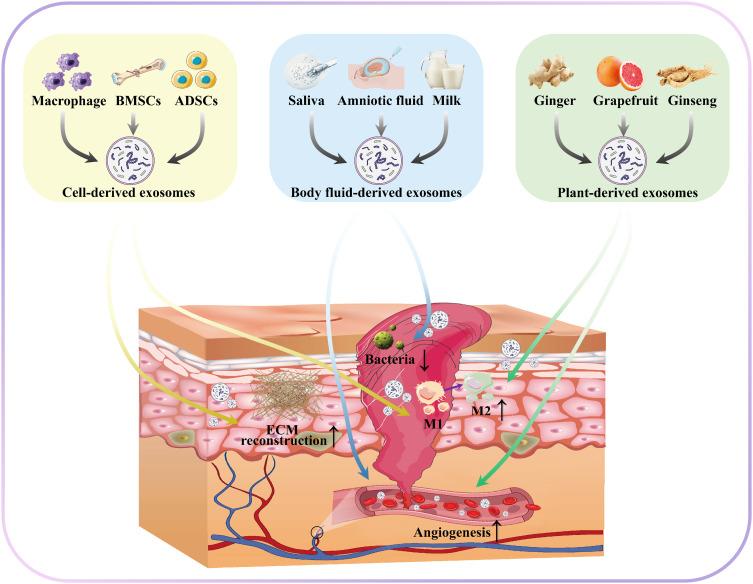
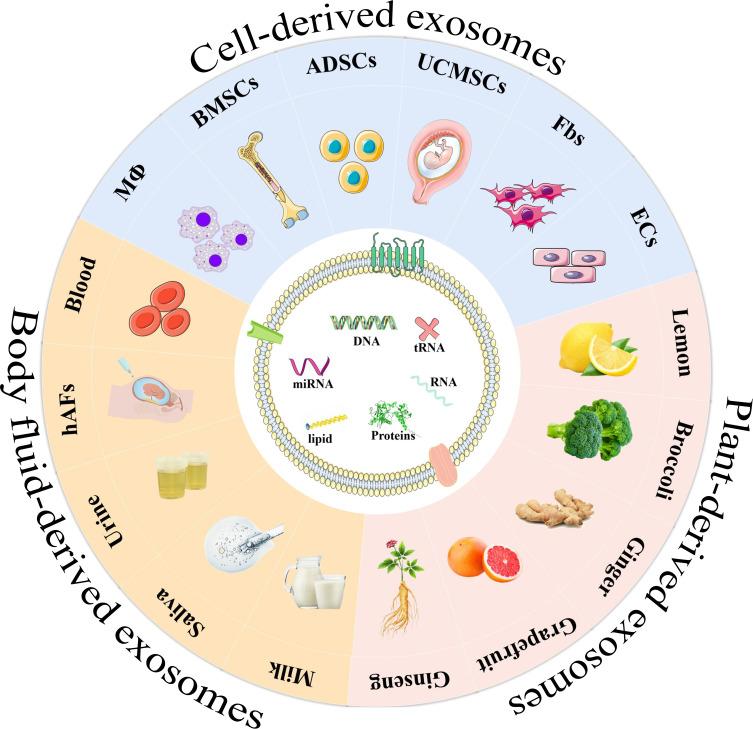
Diabetic wounds represent a pressing clinical challenge in the medical field. Compared to healthy individuals, patients with diabetes present with various complications, including abnormal blood sugar levels, microcirculation disorders, and impaired cellular function. Moreover, they are at a higher risk for skin damage and have a more difficult healing process. In recent years, exosome-based regenerative medicine has provided new strategies for diabetic wound treatment. The bioactive molecules contained in the exosomes, including functional proteins, bioactive lipids, and regulatory RNAs, allow them to suppress inflammation, enhance cell migration, and promote angiogenesis. As exosomes from different sources have different composition and function, the characteristics of their source must be considered when using them. Unlike traditional single source research, this review describes the mechanism of action of exosomes from different sources in diabetic wound-healing process, including mammalian cell-derived exosomes and plant-derived exosome-like nanoparticles. These findings not only provide a theoretical basis for the selection of exosome sources but also lay a foundation for the development of personalized, multimodal treatment plans.
糖尿病伤口是医学领域面临的一项紧迫临床挑战。与健康个体相比,糖尿病患者存在各种并发症,包括血糖水平异常、微循环障碍和细胞功能受损。此外,他们皮肤受损的风险更高,愈合过程也更加困难。近年来,基于外泌体的再生医学为糖尿病伤口治疗提供了新策略。外泌体中含有的生物活性分子,包括功能蛋白、生物活性脂质和调节性RNA,使其能够抑制炎症、增强细胞迁移并促进血管生成。由于不同来源的外泌体具有不同的组成和功能,在使用时必须考虑其来源特征。与传统的单一来源研究不同,本综述描述了不同来源的外泌体在糖尿病伤口愈合过程中的作用机制,包括哺乳动物细胞来源的外泌体和植物来源的外泌体样纳米颗粒。这些发现不仅为外泌体来源的选择提供了理论依据,也为制定个性化、多模式治疗方案奠定了基础。


 Zotero 插件