
70岁及以上人群中因细颗粒物污染导致的缺血性心脏病的全球、区域和国家负担:一项年龄-时期-队列建模与前沿分析研究
Global, regional, and national burden of IHD attributable to PM pollution aged 70 and above: an age-period-cohort modeling and frontiers analysis study.
作者信息
He Ke-Jie, Wang Haitao, Liu Xu, Yang Rongying, Gong Guoyu
机构信息
The Quzhou Affiliated Hospital of Wenzhou Medical University, Quzhou People's Hospital, Quzhou, Zhejiang, China.
The School of Clinical Medical Sciences, Southwest Medical University, Luzhou, Sichuan, China.
出版信息
Front Public Health. 2025 Jun 4;13:1573599. doi: 10.3389/fpubh.2025.1573599. eCollection 2025.
BACKGROUND
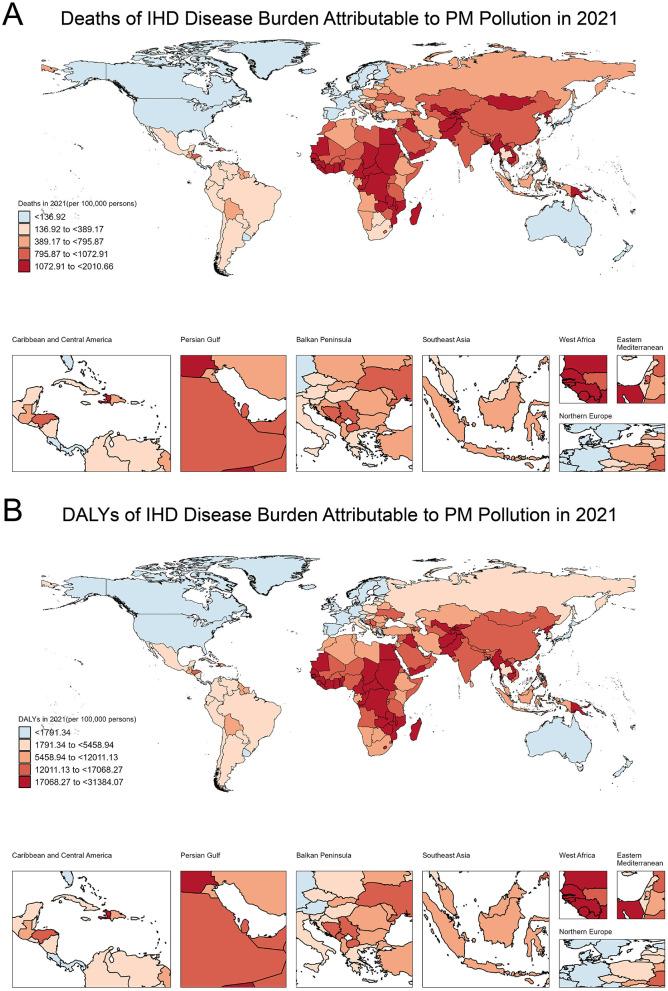
Particulate matter (PM) pollution is a significant risk factor for ischemic heart disease (IHD). This study evaluates the global, regional, and national burden of IHD attributable to PM pollution from 1990 to 2021, quantifies key contributing factors, and projects trends to 2044, with a focus on regional disparities and population aging.
METHODS
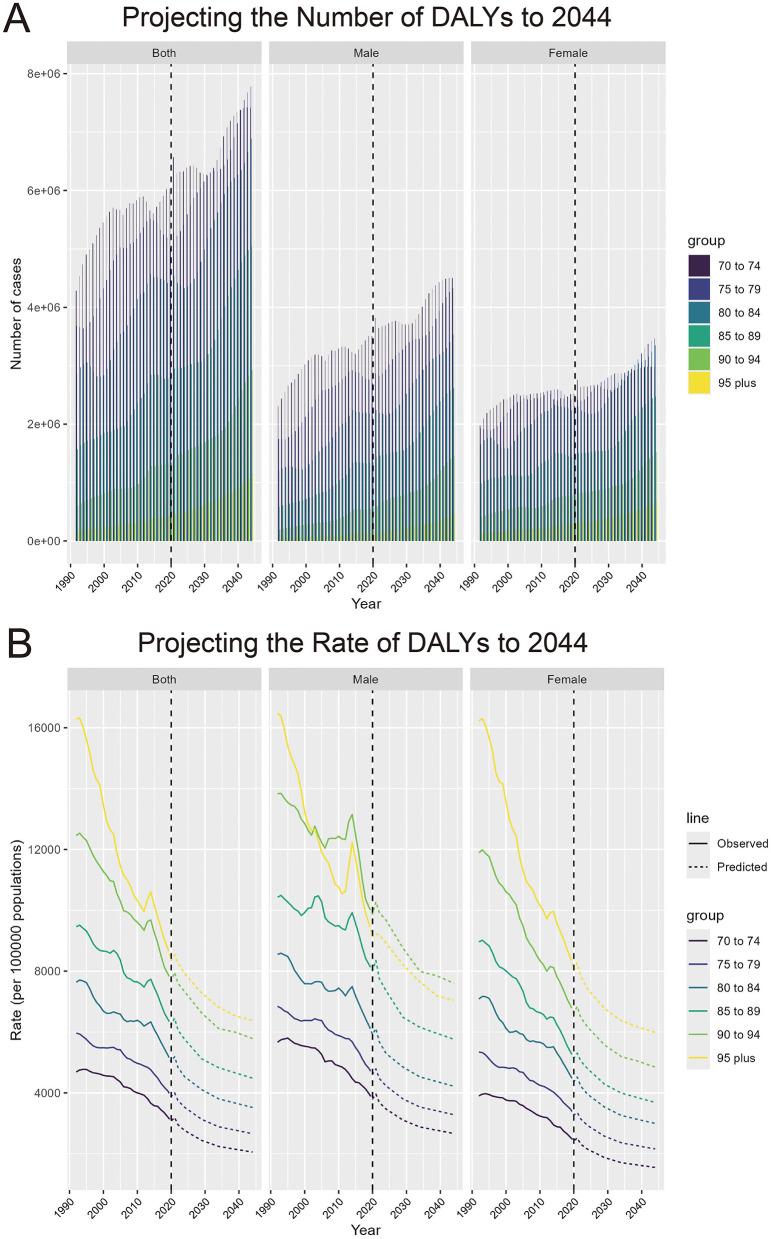
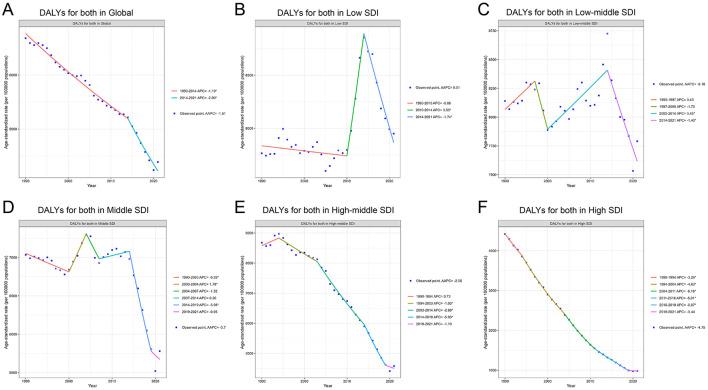
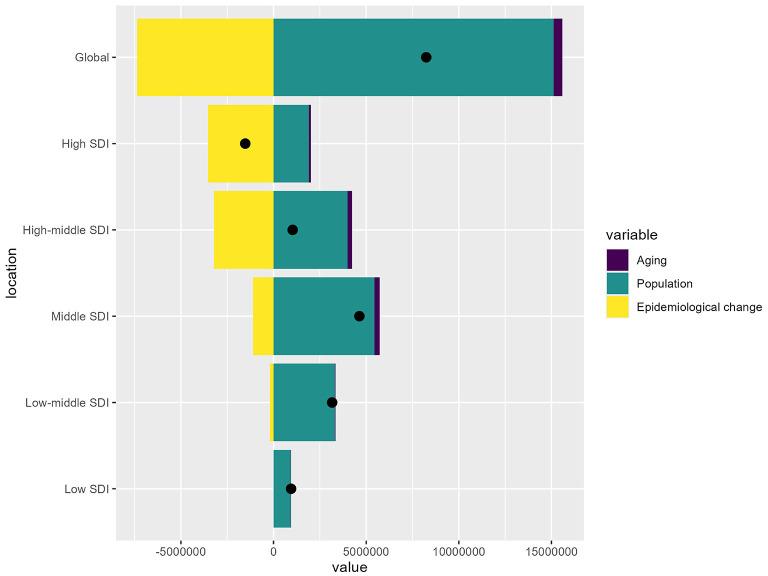
Using data from the Global Burden of Disease (GBD) 2021 study, we analyzed trends in IHD-related disability-adjusted life years (DALYs) and mortality attributable to PM pollution. Joinpoint regression assessed long-term trends, Age-Period-Cohort modeling evaluated demographic drivers, and decomposition analysis identified the contributions of population growth, aging, and epidemiological changes. Frontier analysis compared observed DALY rates with the lowest achievable rates based on socio-demographic index (SDI). Future trends were projected using the Nordpred model.
RESULTS
From 1990 to 2021, global age-standardized DALY rates for IHD attributable to PM pollution decreased by -1.51% annually, but absolute DALYs increased due to population aging and growth. High SDI regions saw significant declines in DALY rates (-4.75% annually), while Low SDI regions experienced negligible change (0.01%). Population growth contributed to a 183.57% increase in global DALYs, but epidemiological improvements reduced the burden by 89.29%. Frontier analysis revealed substantial unrealized potential for reducing the IHD burden, particularly in Middle SDI regions. Projections to 2044 indicate that while DALY rates will decline, total DALYs will increase among individuals aged over 70, especially in Low and Low-middle SDI regions.
CONCLUSIONS
This study highlights substantial progress in reducing the IHD burden attributable to PM pollution, particularly in High SDI regions. However, disparities remain, especially in Low and Low-middle SDI regions, where the aging population and insufficient healthcare infrastructure exacerbate the burden. The rising IHD burden among the older adult underscores the need for targeted interventions, including stricter air quality regulations, enhanced healthcare access, and policies that specifically address vulnerable populations. Strengthening healthcare systems and air pollution controls in these regions is critical to mitigating the growing IHD burden in the coming decades.
背景
颗粒物(PM)污染是缺血性心脏病(IHD)的一个重要风险因素。本研究评估了1990年至2021年全球、区域和国家层面因PM污染导致的IHD负担,量化了关键促成因素,并预测了到2044年的趋势,重点关注区域差异和人口老龄化。
方法
利用全球疾病负担(GBD)2021研究的数据,我们分析了与IHD相关的残疾调整生命年(DALYs)以及因PM污染导致的死亡率趋势。Joinpoint回归评估长期趋势,年龄-时期-队列模型评估人口统计学驱动因素,分解分析确定人口增长、老龄化和流行病学变化的贡献。前沿分析将观察到的DALY率与基于社会人口指数(SDI)的可实现最低率进行比较。使用Nordpred模型预测未来趋势。
结果
1990年至2021年,全球因PM污染导致的IHD年龄标准化DALY率每年下降-1.51%,但由于人口老龄化和增长,绝对DALYs有所增加。高SDI地区的DALY率显著下降(每年-4.75%),而低SDI地区的变化可忽略不计(0.01%)。人口增长使全球DALYs增加了183.57%,但流行病学的改善使负担减轻了89.29%。前沿分析表明,在减轻IHD负担方面存在大量未实现的潜力,特别是在中等SDI地区。到2044年的预测表明,虽然DALY率将下降,但70岁以上人群的总DALYs将增加,特别是在低和中低SDI地区。
结论
本研究突出了在减轻因PM污染导致的IHD负担方面取得的重大进展,特别是在高SDI地区。然而,差异仍然存在,特别是在低和中低SDI地区,那里的人口老龄化和医疗保健基础设施不足加剧了负担。老年人中IHD负担的上升凸显了有针对性干预措施的必要性,包括更严格的空气质量法规、改善医疗保健可及性以及专门针对弱势群体的政策。在这些地区加强医疗保健系统和空气污染控制对于减轻未来几十年不断增加的IHD负担至关重要。



 Zotero 插件