
一种用于比色测定铅(II)离子的新型偶氮染料。
A new azo dye for colorimetric determination of lead(ii) ions.
作者信息
Olaleye Sefiu Olalekan, Bibi Uzma
机构信息
Department of Pharmaceutical Chemistry, Faculty of Pharmacy, University of Ibadan, Orita UI Ibadan 200284 Nigeria
Department of Pharmaceutical and Medicinal Chemistry, Faculty of Pharmacy, Federal University Oye-Ekiti Ekiti Nigeria.
出版信息
RSC Adv. 2025 Jun 19;15(26):20770-20780. doi: 10.1039/d5ra02486b. eCollection 2025 Jun 16.
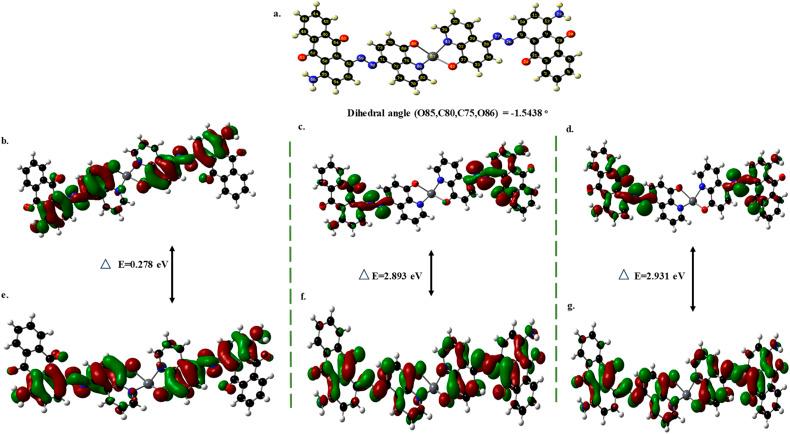
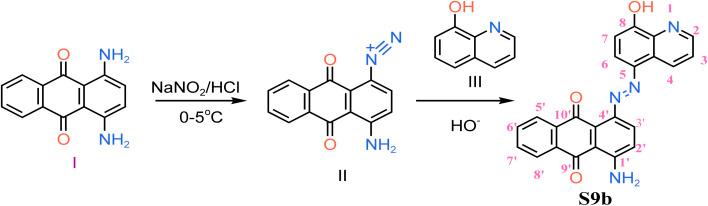
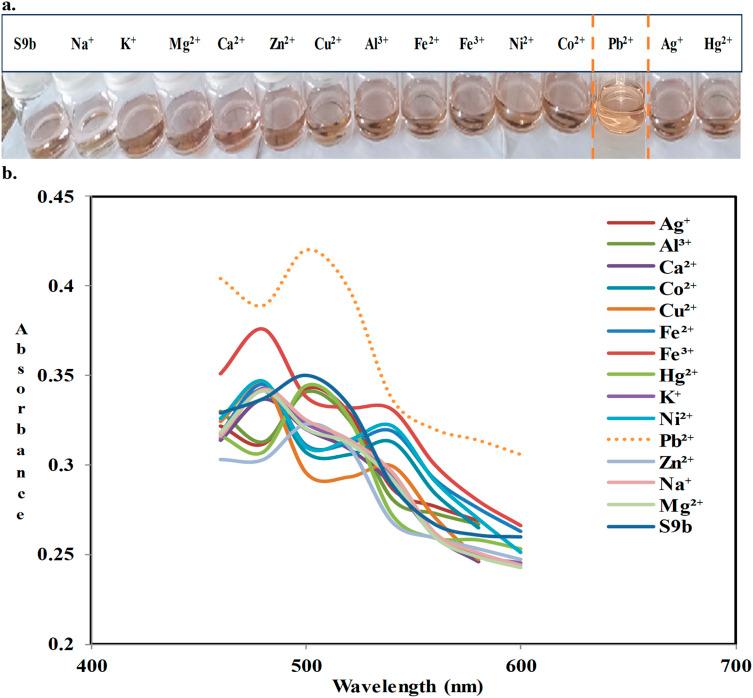
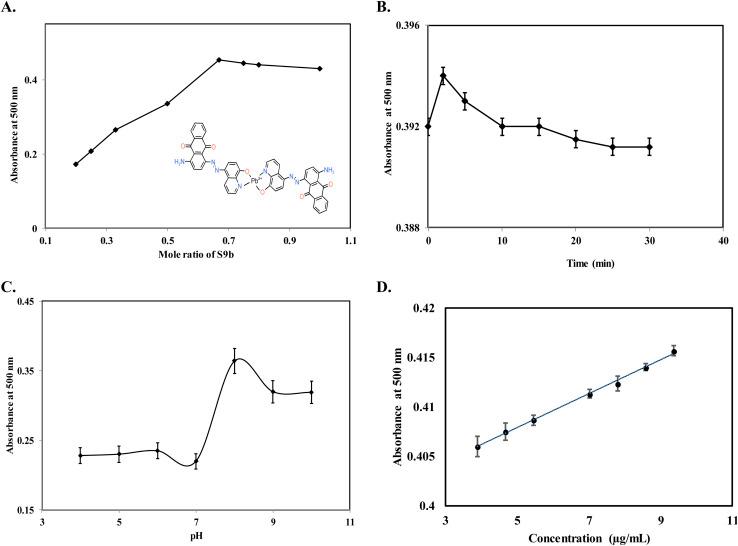
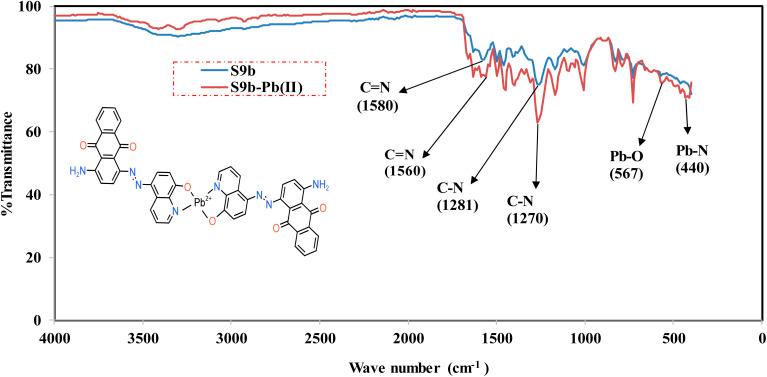
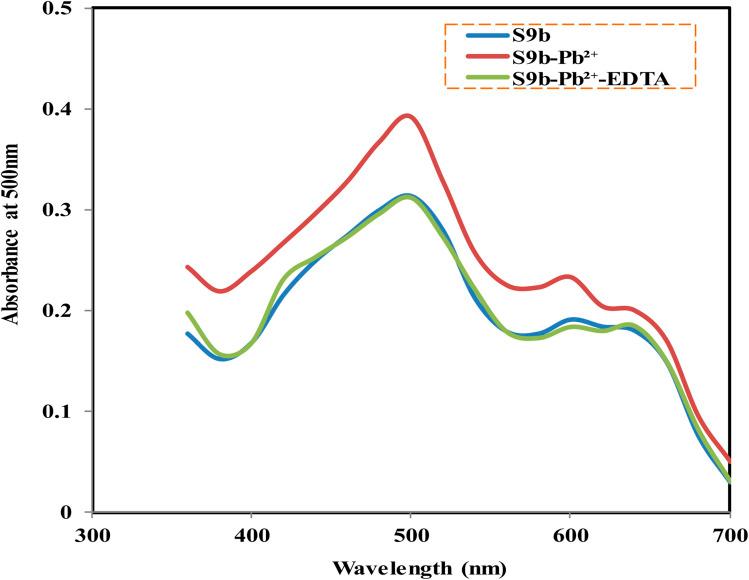
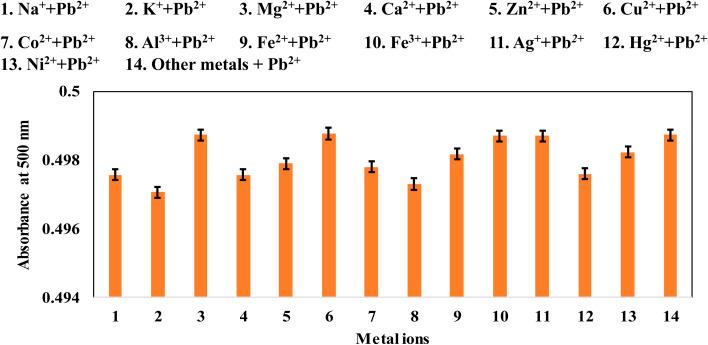
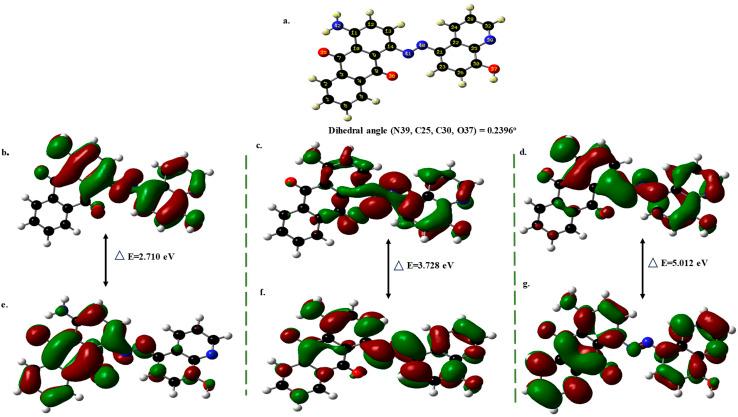
A new azo dye, S9b (1-amino-4-[()-2-(8-hydroxyquinolin-5-yl)diazen-1-yl]-9,10-dihydroanthracene-9,10-dione), was developed and evaluated as a colorimetric chemosensor for lead(ii) ions. Upon Pb addition, the S9b solution color changed from rosy-brown to sandy-brown. The UV-vis spectrum of the S9b-Pb complex exhibited a hyperchromic shift compared to free S9b and a bathochromic shift relative to S9b complexes with other metal ions. Optimized conditions comprised an ethanol solvent system, pH 6.0, a reaction time of 2 min, and a 2 : 1 molar ratio of S9b to Pb.The response of S9b was linear at Pb concentrations of 3.90-9.36 μg mL. The calculated detection limit, quantitation limit and binding constant were 1.55 μg mL, 4.71 μg mL and 3.07 × 10 L g, respectively. Determination of Pb was not significantly affected by other interfering cations (Ag, Co, Cu, Fe, Fe, Na, K, Ni, Hg, Ca, Zn, Mg, and Al). The S9b-based method demonstrated recoveries of 100.03-103.11% and relative standard deviations (RSDs) of 0.06-2.07% for Pb in spiked water samples, with accuracy and precision comparable to atomic absorption spectroscopy (AAS). FTIR studies and DFT calculations indicated that Pb binding to S9b occurs the heterocyclic nitrogen and phenolic hydroxyl groups of the azo dye. The sensor demonstrated reusability following regeneration with EDTA, which dissociated the Pb complex. This study highlights the potential of the anthracene-9,10-dione-based azo dye as a simple, eco-friendly, and rapid chemosensor for Pb detection in aqueous systems.
一种新型偶氮染料S9b(1-氨基-4-[()-2-(8-羟基喹啉-5-基)重氮-1-基]-9,10-二氢蒽-9,10-二酮)被开发并评估为一种用于检测铅(II)离子的比色化学传感器。加入铅后,S9b溶液颜色从玫瑰棕色变为沙棕色。与游离的S9b相比,S9b - Pb络合物的紫外可见光谱呈现增色位移,相对于S9b与其他金属离子形成的络合物呈现红移。优化条件包括乙醇溶剂体系、pH值6.0、反应时间2分钟以及S9b与铅的摩尔比为2∶1。在铅浓度为3.90 - 9.36μg/mL时,S9b的响应呈线性。计算得到的检测限、定量限和结合常数分别为1.55μg/mL、4.71μg/mL和3.07×10⁴L/mol。其他干扰阳离子(银、钴、铜、铁、铁、钠、钾、镍、汞、钙、锌、镁和铝)对铅的测定没有显著影响。基于S9b的方法对加标水样中铅的回收率为100.03 - 103.11%,相对标准偏差(RSD)为0.06 - 2.07%,其准确度和精密度与原子吸收光谱法(AAS)相当。傅里叶变换红外光谱(FTIR)研究和密度泛函理论(DFT)计算表明,铅与S9b的结合发生在偶氮染料的杂环氮和酚羟基上。该传感器在用乙二胺四乙酸(EDTA)再生后可重复使用,EDTA能使铅络合物解离。本研究突出了基于蒽-9,10-二酮的偶氮染料作为一种用于水体系中检测铅的简单、环保且快速的化学传感器的潜力。
 Zotero 插件