
子宫内膜异位症中蜕膜功能障碍与不孕的机制:前列腺素和衰老相关分泌表型的作用
Mechanisms of Decidual Dysfunction and Infertility in Endometriosis: Roles of Prostaglandins and SASP.
作者信息
Tamura Kazuhiro, Yoshie Mikihiro, Kusama Kazuya, Tsuru Atsuya
机构信息
Department of Endocrine Pharmacology Tokyo University of Pharmacy and Life Sciences Tokyo Japan.
出版信息
Reprod Med Biol. 2025 Jun 19;24(1):e12663. doi: 10.1002/rmb2.12663. eCollection 2025 Jan-Dec.
BACKGROUND
Endometriosis is a challenging disease to treat and one of the leading causes of infertility. Impaired endometrial receptivity, and particularly inadequate decidualization of endometrial stromal cells (ESCs), is a crucial component. Multiple inflammatory factors disrupt decidualization.
METHODS
A comprehensive search of PubMed and Google Scholar (peer-reviewed journals only from 2000 to 2025) was performed in April 2025. The keyword "decidualization" was combined with "endometriosis", "infertility", and "inflammation". We summarize recent findings regarding the mechanisms of endometrial receptivity, focusing on the decidualization of ESCs, and discuss the impact of endometriosis, particularly in relation to PG metabolism and the senescence-associated secretory phenotype (SASP).
MAIN FINDINGS
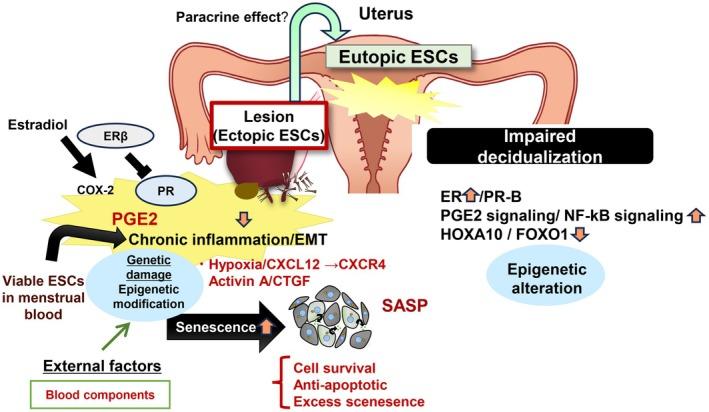
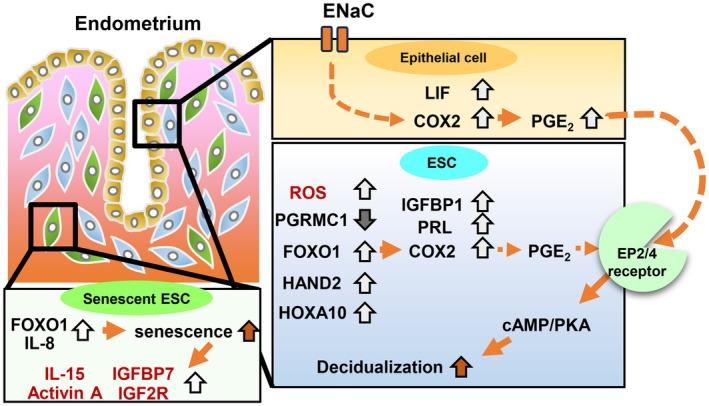
Endometriotic lesions demonstrate progesterone (P4) resistance and heightened inflammation due to elevated local estrogen levels and feedback loops involving PGE and steroidogenic enzymes. Oxidative stress secondary to inflammation and menstrual blood in ectopic locations promotes lesion growth. Excessive numbers of senescent cells with SASP contribute to fibrosis in the lesions. Impaired decidualization also occurs in eutopic ESCs, which show epigenetic dysregulation and inflammation, and these have effects through P4 and PGE signaling.
CONCLUSION
Both endometriotic lesions and eutopic endometrium in endometriosis patients exhibit changes that contribute to infertility, with abnormal inflammation and epigenetic modifications leading to impaired decidualization.
背景
子宫内膜异位症是一种难以治疗的疾病,也是导致不孕的主要原因之一。子宫内膜容受性受损,尤其是子宫内膜基质细胞(ESCs)蜕膜化不足,是一个关键因素。多种炎症因子会破坏蜕膜化过程。
方法
2025年4月对PubMed和谷歌学术(仅2000年至2025年的同行评审期刊)进行了全面检索。关键词“蜕膜化”与“子宫内膜异位症”、“不孕”和“炎症”相结合。我们总结了关于子宫内膜容受性机制的最新研究结果,重点关注ESCs的蜕膜化,并讨论子宫内膜异位症的影响,特别是与前列腺素代谢和衰老相关分泌表型(SASP)的关系。
主要发现
由于局部雌激素水平升高以及涉及前列腺素E和类固醇生成酶的反馈回路,子宫内膜异位病变表现出对孕酮(P4)的抵抗和炎症加剧。异位部位炎症和经血继发的氧化应激促进病变生长。大量具有SASP的衰老细胞导致病变纤维化。在位ESCs也会出现蜕膜化受损,表现为表观遗传失调和炎症,这些通过P4和前列腺素E信号传导产生影响。
结论
子宫内膜异位症患者的异位病变和在位子宫内膜均表现出导致不孕的变化,异常炎症和表观遗传修饰导致蜕膜化受损。

 Zotero 插件