
缺铁会导致CD8 T细胞中对天冬氨酸敏感的功能障碍。
Iron deficiency causes aspartate-sensitive dysfunction in CD8 T cells.
作者信息
Teh Megan R, Gudgeon Nancy, Frost Joe N, Sinclair Linda V, Smith Alastair L, Millington Christopher L, Kronsteiner Barbara, Roberts Jennie, Marzullo Bryan P, Murray Hannah, Preston Alexandra E, Stavrou Victoria, Rehwinkel Jan, Milne Thomas A, Tennant Daniel A, Dunachie Susanna J, Armitage Andrew E, Dimeloe Sarah, Drakesmith Hal
机构信息
MRC Translational Immune Discovery Unit, Radcliffe Department of Medicine, MRC Weatherall Institute of Molecular Medicine, University of Oxford, Oxford, UK.
CeMM-Research Center for Molecular Medicine of the Austrian Academy of Sciences, Vienna, Austria.
出版信息
Nat Commun. 2025 Jun 20;16(1):5355. doi: 10.1038/s41467-025-60204-7.
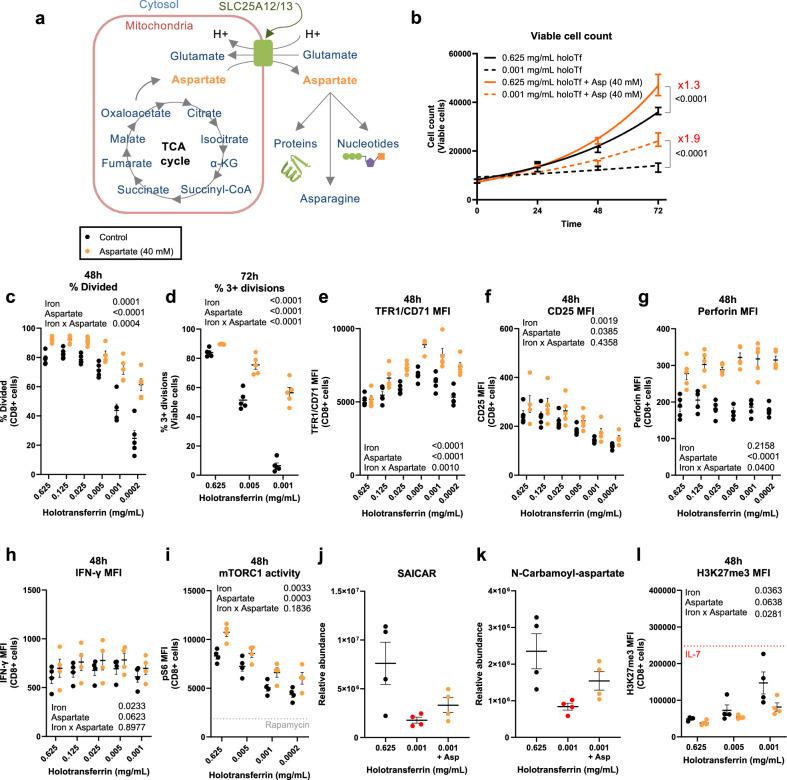
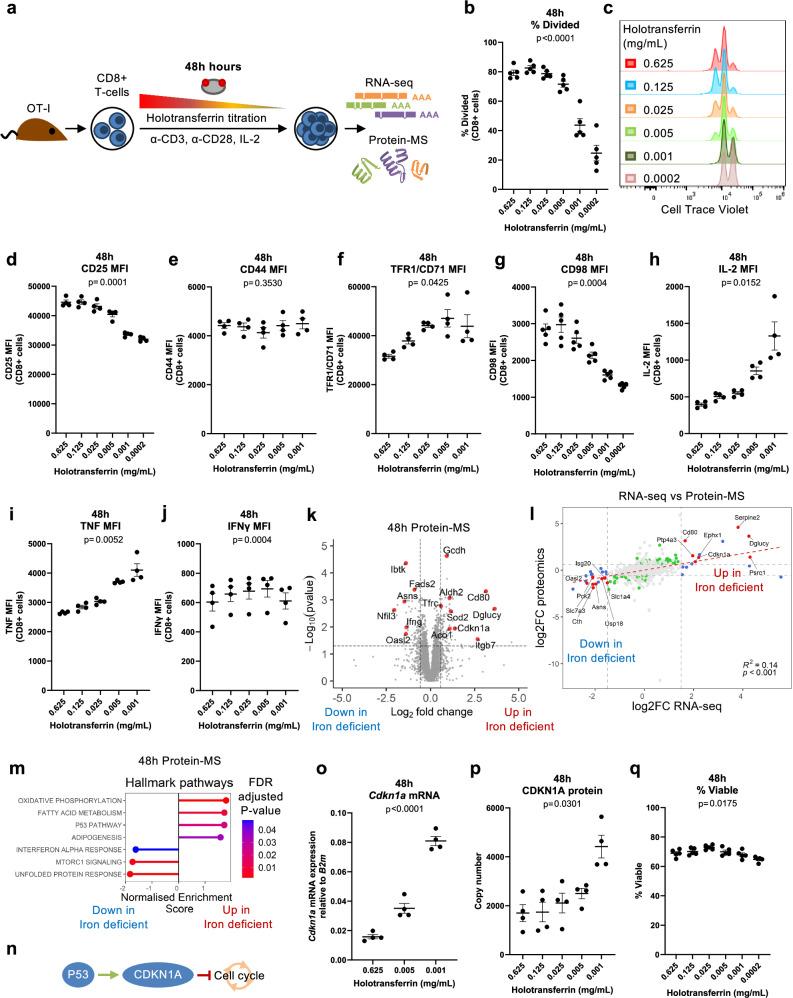
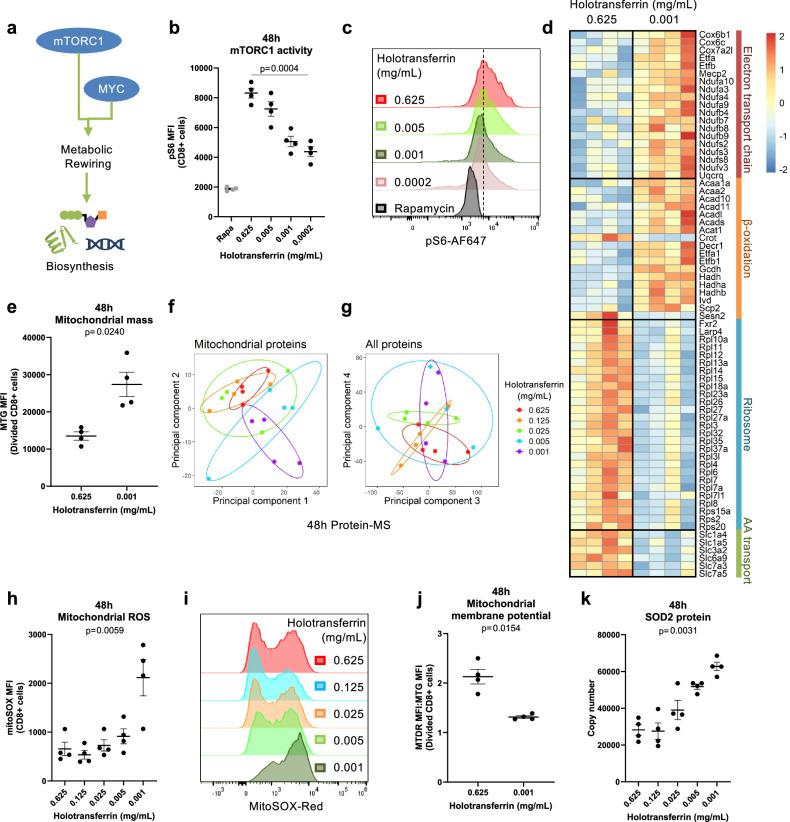
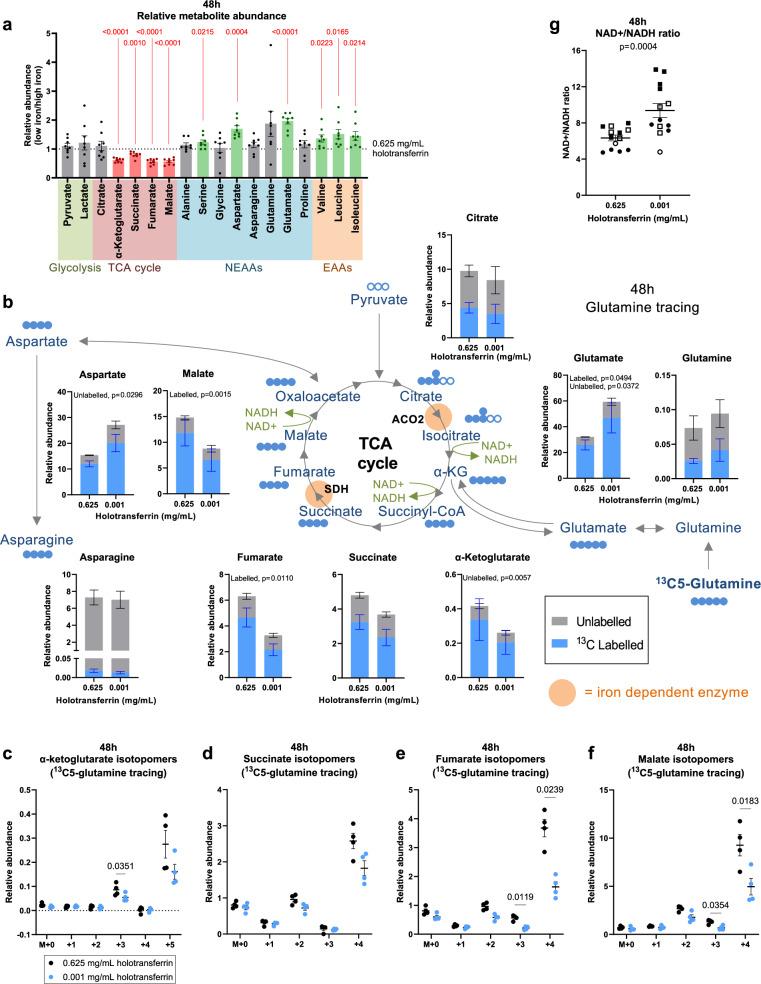
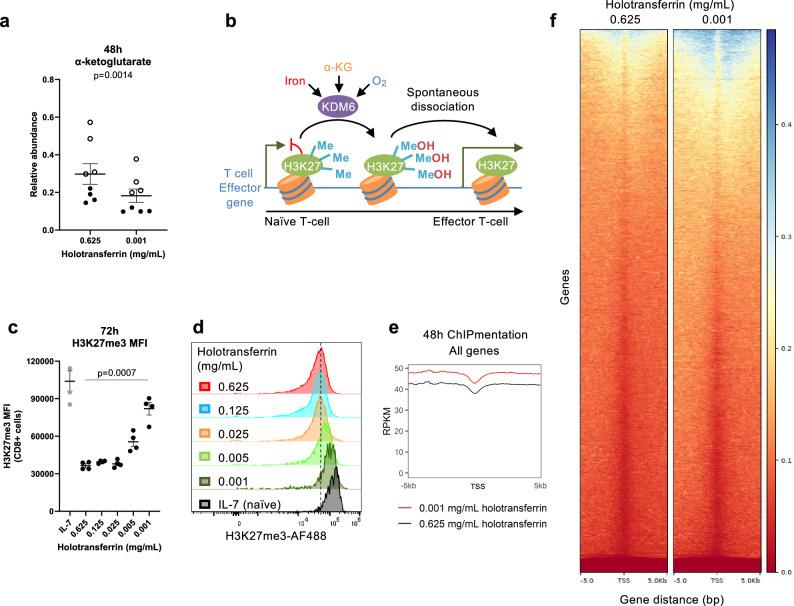
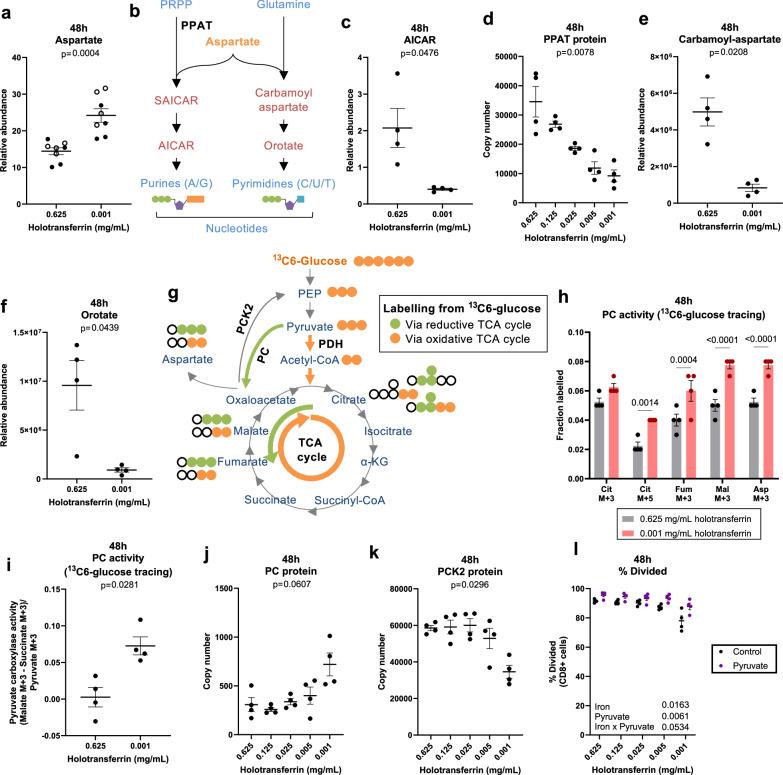
Iron is an irreplaceable co-factor for metabolism. Iron deficiency affects >1 billion people and decreased iron availability impairs immunity. Nevertheless, how iron deprivation impacts immune cell function remains poorly characterised. We interrogate how physiologically low iron availability affects CD8 T cell metabolism and function, using multi-omic and metabolic labelling approaches. Iron limitation does not substantially alter initial post-activation increases in cell size and CD25 upregulation. However, low iron profoundly stalls proliferation (without influencing cell viability), alters histone methylation status, gene expression, and disrupts mitochondrial membrane potential. Glucose and glutamine metabolism in the TCA cycle is limited and partially reverses to a reductive trajectory. Previous studies identified mitochondria-derived aspartate as crucial for proliferation of transformed cells. Despite aberrant TCA cycling, aspartate is increased in stalled iron deficient CD8 T cells but is not utilised for nucleotide synthesis, likely due to trapping within depolarised mitochondria. Exogenous aspartate markedly rescues expansion and some functions of severely iron-deficient CD8 T cells. Overall, iron scarcity creates a mitochondrial-located metabolic bottleneck, which is bypassed by supplying inhibited biochemical processes with aspartate. These findings reveal molecular consequences of iron deficiency for CD8 T cell function, providing mechanistic insight into the basis for immune impairment during iron deficiency.
铁是新陈代谢中不可替代的辅助因子。缺铁影响着超过10亿人,铁供应减少会损害免疫力。然而,铁缺乏如何影响免疫细胞功能仍不清楚。我们使用多组学和代谢标记方法,探究生理状态下铁供应不足如何影响CD8 T细胞的代谢和功能。铁限制不会显著改变激活后初始阶段细胞大小的增加和CD25的上调。然而,低铁严重阻碍增殖(不影响细胞活力),改变组蛋白甲基化状态、基因表达,并破坏线粒体膜电位。三羧酸循环中的葡萄糖和谷氨酰胺代谢受到限制,并部分逆转为还原途径。先前的研究表明线粒体衍生的天冬氨酸对转化细胞的增殖至关重要。尽管三羧酸循环异常,但停滞的缺铁CD8 T细胞中天冬氨酸增加,但未用于核苷酸合成,这可能是由于被困在去极化的线粒体中。外源性天冬氨酸显著挽救了严重缺铁CD8 T细胞的扩增和一些功能。总体而言,铁缺乏造成了线粒体定位的代谢瓶颈,通过向天冬氨酸供应受抑制的生化过程可以绕过这一瓶颈。这些发现揭示了缺铁对CD8 T细胞功能的分子影响,为缺铁期间免疫损伤的基础提供了机制性见解。
 Zotero 插件