
拓展我们对精神疾病中(不)适应性应激生理学的理解:实现类固醇和神经肽的单细胞特征分析
Expanding our understanding of (mal)adapted stress physiology in psychiatric disorders: achieving single-cell characterisation of steroids and neuropeptides.
作者信息
Edmond Katrina Z, Matosin Natalie
机构信息
School of Medical Sciences, The University of Sydney, NSW, 2050, Australia.
Charles Perkins Centre, The University of Sydney, NSW, 2050, Australia.
出版信息
Neurobiol Stress. 2025 Jun 6;37:100739. doi: 10.1016/j.ynstr.2025.100739. eCollection 2025 Jul.
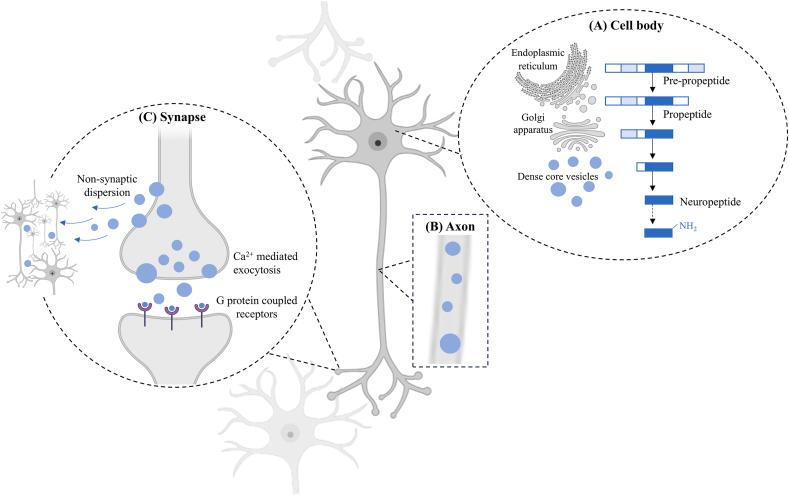
Steroid hormones and neurosteroids (collectively neuroactive steroids), alongside neuropeptides, are key modulators of the central nervous system. These signalling molecules integrate environmental cues into neurobiological responses by regulating gene and protein expression in a cell-type-specific manner. Specifically, neuroactive steroids and neuropeptides modulate the hypothalamic-pituitary-adrenal axis to influence excitatory/inhibitory balance in the brain and broadly impact mood, cognition, and memory. Despite their central role in brain function, these signalling systems remain historically understudied, exposing a major gap in our understanding of stress-related psychiatric disorders, and posing a valuable opportunity for therapeutic innovation. Foundational studies using histology, genetic manipulation, and bulk transcriptomic approaches, primarily in rodent models, have provided critical insights into their roles. However, these traditional methods lack the resolution to capture region- and cell-specific mechanisms, which are needed to develop precision medicine approaches. The emergence of single-cell and spatial technologies now offers unprecedented insight into the precise cellular, molecular and spatial context in which neuroactive steroid and neuropeptide signalling occurs. By moving beyond cell-type-averaged measures, these tools enable detailed mapping of transcriptional and proteomic changes across specific brain areas and cell-types, helping to identify the microenvironments in which these systems become dysregulated. This review synthesises current knowledge of neuroactive steroids and neuropeptides in stress biology and psychiatric illness and discusses how cutting-edge molecular profiling technologies are beginning to transform our ability to study, and therapeutically target, this complex and dynamic neuroendocrine network.
类固醇激素和神经甾体(统称为神经活性甾体)与神经肽一样,是中枢神经系统的关键调节因子。这些信号分子通过以细胞类型特异性的方式调节基因和蛋白质表达,将环境线索整合到神经生物学反应中。具体而言,神经活性甾体和神经肽调节下丘脑 - 垂体 - 肾上腺轴,以影响大脑中的兴奋/抑制平衡,并广泛影响情绪、认知和记忆。尽管它们在脑功能中起着核心作用,但这些信号系统在历史上一直未得到充分研究,这暴露了我们在理解与压力相关的精神疾病方面的重大差距,同时也为治疗创新提供了宝贵的机会。主要在啮齿动物模型中使用组织学、基因操作和大量转录组学方法进行的基础研究,为它们的作用提供了关键见解。然而,这些传统方法缺乏分辨率来捕捉区域和细胞特异性机制,而这些机制是开发精准医学方法所必需的。单细胞和空间技术的出现,现在为神经活性甾体和神经肽信号传导发生的精确细胞、分子和空间背景提供了前所未有的见解。通过超越细胞类型平均测量,这些工具能够详细绘制特定脑区和细胞类型的转录和蛋白质组变化图谱,有助于识别这些系统失调的微环境。本综述综合了应激生物学和精神疾病中神经活性甾体和神经肽的现有知识,并讨论了前沿分子分析技术如何开始改变我们研究和治疗靶向这个复杂且动态神经内分泌网络的能力。


 Zotero 插件