
伊立替康的安全性评估:2004年至2024年期间使用FAERS和JADER数据库进行的真实世界不成比例性分析。
Safety evaluation of irinotecan: a real-world disproportionality analysis using FAERS and JADER databases during the time period 2004-2024.
作者信息
Lou Siyu, Chen Huayou, Cui Zhiwei, Zhang Xiyuan, Zhu Chengyu, Zhou Linmei, Ou Yingyong, Zou Fan
机构信息
Department of Respiratory and Critical Care Medicine, Affiliated Hospital of Zunyi Medical University, Zunyi, China.
The Second Affiliated Hospital of Hainan Medical University, Haikou, China.
出版信息
Front Pharmacol. 2025 Jun 9;16:1516449. doi: 10.3389/fphar.2025.1516449. eCollection 2025.
INTRODUCTION
Irinotecan is a widely used chemotherapeutic agent for treating colorectal, pancreatic, and ovarian cancers. Despite its therapeutic efficacy, the safety profile of irinotecan necessitates continuous pharmacovigilance due to its association with severe adverse drug events (ADEs). Given its global use, cross-national signal detection may reveal region-specific risks or unrecognized adverse effects.
METHODS
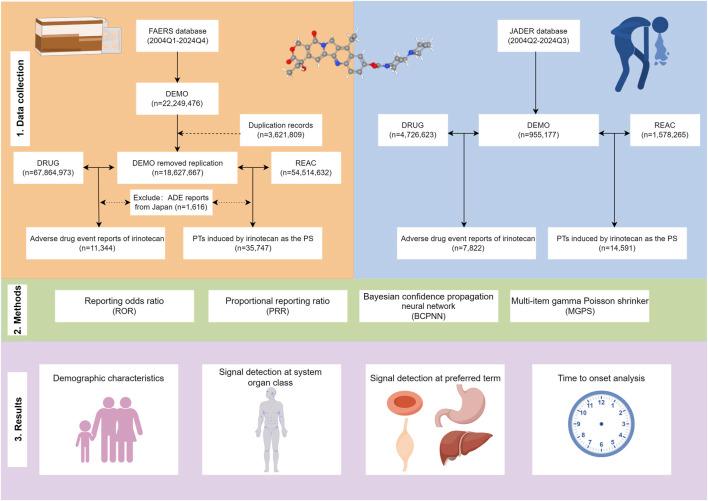
We conducted a retrospective pharmacovigilance analysis of irinotecan-associated ADEs using two large spontaneous reporting systems: the U.S. FDA Adverse Event Reporting System (FAERS) and the Japan Adverse Drug Event Report (JADER) database. ADE reports between 2004 and 2024 were extracted. Disproportionality analyses were performed using four methods: Reporting Odds Ratio (ROR), Proportional Reporting Ratio (PRR), Bayesian confidence propagation neural network (BCPNN), and Multi-item gamma Poisson shrinker (MGPS).
RESULTS
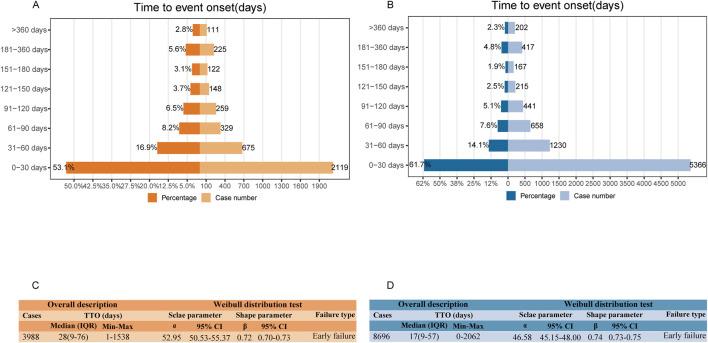
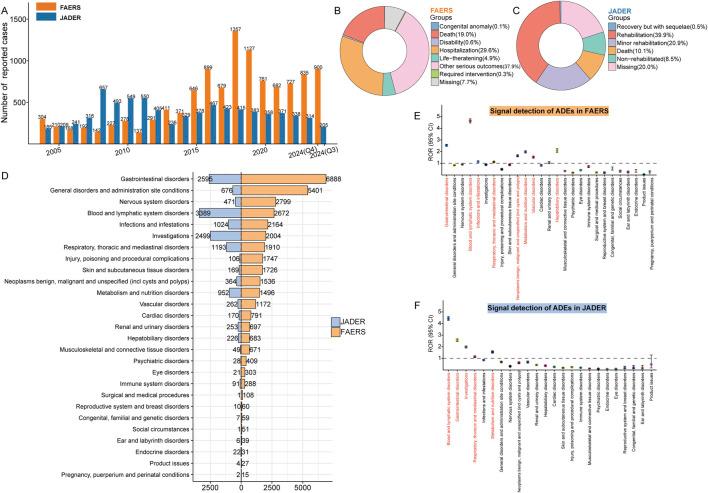
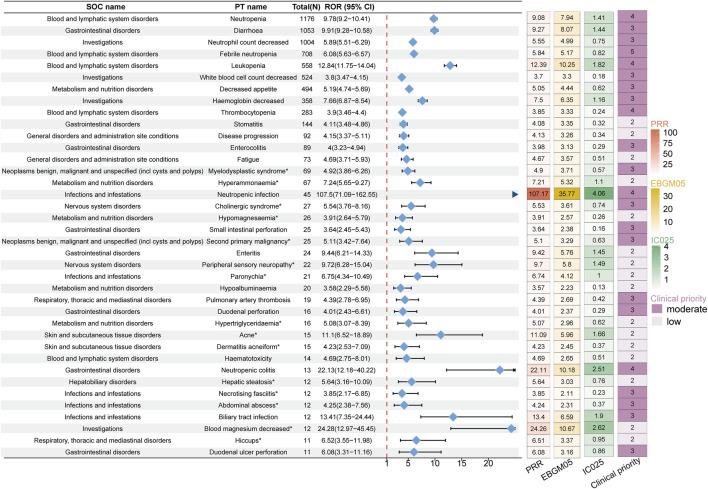
A total of 11,344 ADE reports from FAERS and 7,822 from JADER were identified. These reports involved 27 system organ classes (SOCs). In FAERS, the most frequently affected SOC was gastrointestinal disorders (n = 6,888), while in JADER it was blood and lymphatic system disorders (n = 3,389). Disproportionality analysis revealed 388 and 67 preferred terms (PTs) significantly associated with irinotecan in FAERS and JADER, respectively, with 38 overlapping signals. These included both expected ADEs (e.g., neutropenia, diarrhea, thrombocytopenia, stomatitis) and unexpected signals such as second primary malignancies, hyperammonaemia, and hiccups. Notable FAERS-specific signals included skin toxicity (n=100, ROR 33.89 (27.79-41.34), PRR 33.80, EBGM05 28.03, IC025 4.76), aphasia [n=65, ROR 3.57 (2.8-4.55), PRR 3.56, EBGM05 2.90, IC025 1.47], and hepatic failure [n=56, ROR 3.09 (2.38-4.02), PRR 3.09, EBGM05 2.48, IC025 1.24], while JADER-specific signals included fatigue [n=73, ROR 4.69 (3.71-5.93), PRR 4.67, EBGM05 3.57, IC025 0.51], hyperammonaemia [n=67, ROR 7.24 (5.56-9.27), PRR 7.21, EBGM05 5.32, IC025 1.10], and cholinergic syndrome [n=27, ROR 5.54 (3.76-8.16), PRR 5.53, EBGM05 3.61, IC025 0.74]. Over half of all reported ADEs occurred within one month of irinotecan administration (53.1% in FAERS, 61.7% in JADER). The median time to onset was 28 days [IQR 9-76] in FAERS and 17 days [IQR 9-57] in JADER.
DISCUSSION
This comparative analysis revealed multiple consistent and unexpected signals related to irinotecan use. The findings emphasize the importance of region-specific pharmacovigilance and the need for heightened awareness of both labeled and unlabeled toxicities. Our results support continued monitoring and further investigation into temporal patterns and regional differences in irinotecan-related adverse events to enhance clinical safety.
引言
伊立替康是一种广泛用于治疗结直肠癌、胰腺癌和卵巢癌的化疗药物。尽管其具有治疗效果,但由于伊立替康与严重药物不良事件(ADEs)相关,其安全性需要持续的药物警戒。鉴于其在全球范围内的使用,跨国信号检测可能会揭示特定区域的风险或未被认识到的不良反应。
方法
我们使用两个大型自发报告系统对伊立替康相关的ADEs进行了回顾性药物警戒分析:美国食品药品监督管理局不良事件报告系统(FAERS)和日本药品不良事件报告(JADER)数据库。提取了2004年至2024年期间的ADE报告。使用四种方法进行不成比例分析:报告比值比(ROR)、比例报告比值(PRR)、贝叶斯置信传播神经网络(BCPNN)和多项目伽马泊松收缩器(MGPS)。
结果
共识别出FAERS的11344份ADE报告和JADER的7822份报告。这些报告涉及27个系统器官类别(SOCs)。在FAERS中,受影响最频繁的SOC是胃肠道疾病(n = 6888),而在JADER中是血液和淋巴系统疾病(n = 3389)。不成比例分析显示,FAERS和JADER中分别有388个和67个首选术语(PTs)与伊立替康显著相关,有38个重叠信号。这些包括预期的ADEs(如中性粒细胞减少、腹泻、血小板减少、口腔炎)和意外信号,如第二原发性恶性肿瘤、高氨血症和打嗝。FAERS特有的显著信号包括皮肤毒性(n = 100,ROR 33.89(27.79 - 41.34),PRR 33.80,EBGM05 28.


 Zotero 插件