
端粒长度与皮肤癌风险:黑色素瘤、基底细胞癌和鳞状细胞癌的系统评价与荟萃分析
Telomere length and skin cancer risk: A systematic review and meta-analysis of melanoma, basal cell carcinoma and squamous cell carcinoma.
作者信息
Andreikos Dimitrios A, Spandidos Demetrios A
机构信息
School of Medicine, Democritus University of Thrace, 68100 Alexandroupoli, Greece.
Laboratory of Clinical Virology, School of Medicine, University of Crete, 71003 Heraklion, Greece.
出版信息
Oncol Lett. 2025 Jun 12;30(2):395. doi: 10.3892/ol.2025.15141. eCollection 2025 Aug.
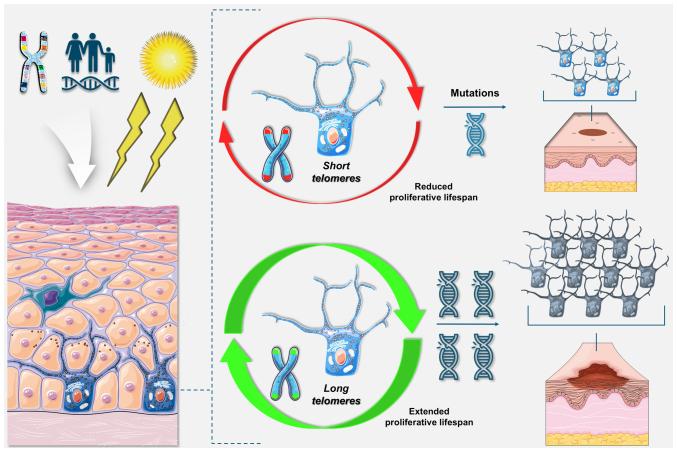
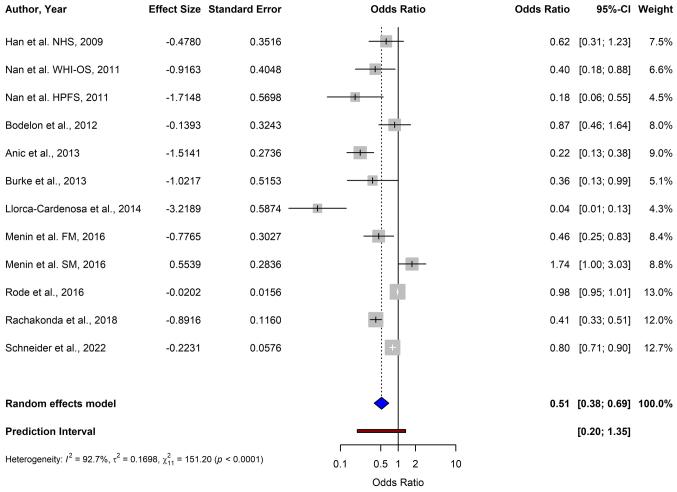
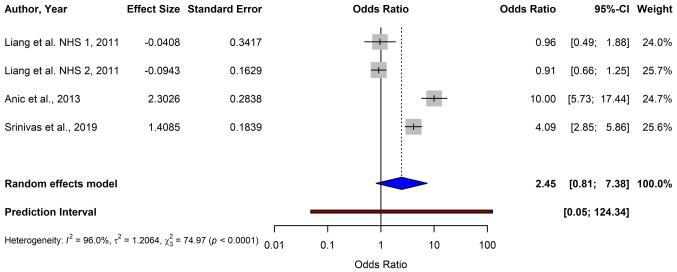
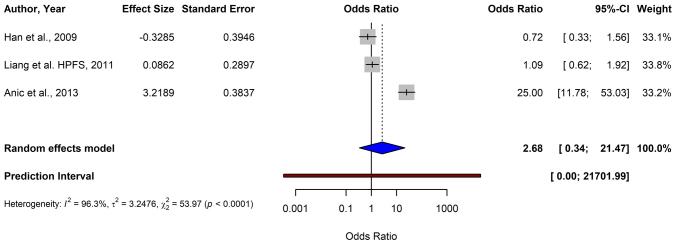
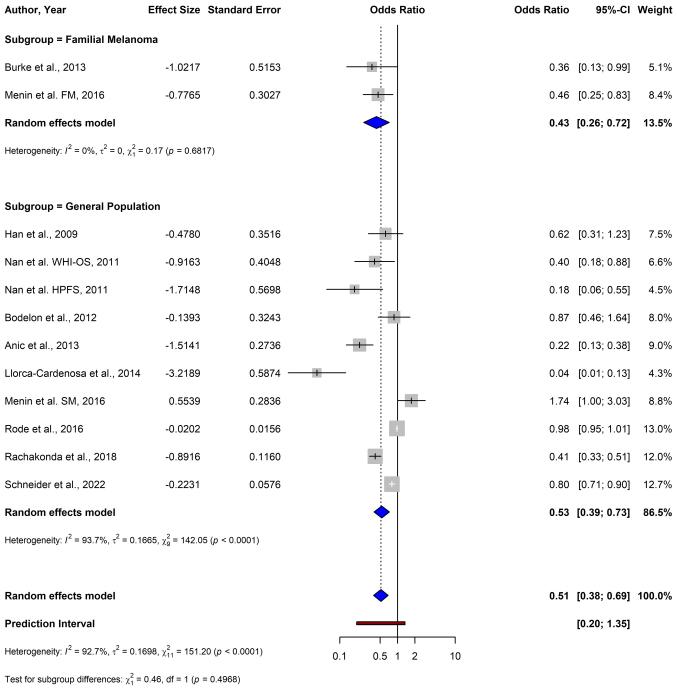
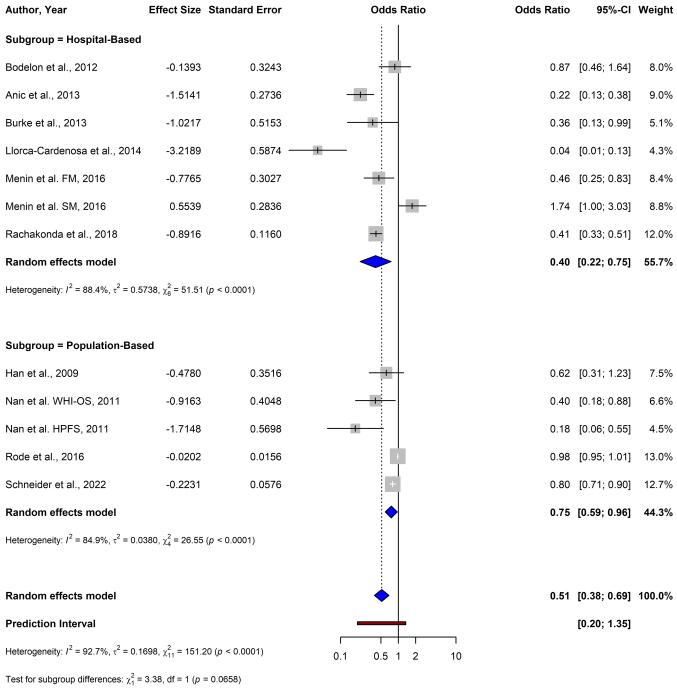
Skin cancer is one of the most prevalent types of cancer worldwide, with its global incidence rising despite prevention efforts. Telomere length (TL) has emerged as a potential biomarker for cancer risk; however, its relationship with skin cancer risk remains incompletely understood. To explore the association between TL and the risk of melanoma, basal cell carcinoma (BCC) and squamous cell carcinoma (SCC), a systematic review and meta-analysis was conducted. Longer TL was significantly associated with an increased risk in melanoma (pooled odds ratio: 0.51; 95% confidence interval: 0.38-0.69; P<0.0001). A significant association between longer TL and increased melanoma risk was identified in both familial melanoma and the general population. Subgroup analyses revealed consistent associations across sex, population source and adjustments for confounding factors. Geographic stratification indicated stronger associations in studies conducted in the USA compared with those from European populations. A meta-analysis of BCC and SCC studies did not achieve statistical significance, although qualitative synthesis suggested a potential association between shortened TL and increased risk. The significant association of longer TL and increased melanoma risk diverges from the conventional hypothesis that telomere shortening elevates cancer risk, highlighting a cancer-type specific telomeric relationship. The inconclusive findings for BCC and SCC underscore the necessity for further detailed investigation. Large-scale prospective studies with standardized methodologies are imperative to validate these findings and explore the underlying mechanisms. The present findings suggested that TL could potentially serve as a valuable biomarker for melanoma risk stratification in dermatologic oncology.
皮肤癌是全球最常见的癌症类型之一,尽管有预防措施,但其全球发病率仍在上升。端粒长度(TL)已成为癌症风险的潜在生物标志物;然而,其与皮肤癌风险的关系仍未完全明了。为了探讨TL与黑色素瘤、基底细胞癌(BCC)和鳞状细胞癌(SCC)风险之间的关联,进行了一项系统综述和荟萃分析。较长的TL与黑色素瘤风险增加显著相关(合并比值比:0.51;95%置信区间:0.38 - 0.69;P<0.0001)。在家族性黑色素瘤和普通人群中均发现较长的TL与黑色素瘤风险增加之间存在显著关联。亚组分析显示,在性别、人群来源以及对混杂因素进行调整后,关联一致。地理分层表明,与欧洲人群的研究相比,美国进行的研究中的关联更强。对BCC和SCC研究的荟萃分析未达到统计学显著性,尽管定性综合分析表明TL缩短与风险增加之间可能存在关联。较长的TL与黑色素瘤风险增加之间的显著关联与端粒缩短会增加癌症风险这一传统假设不同,突出了癌症类型特异性的端粒关系。BCC和SCC的不确定结果强调了进一步详细研究的必要性。采用标准化方法的大规模前瞻性研究对于验证这些发现并探索潜在机制至关重要。目前的研究结果表明,TL可能作为皮肤肿瘤学中黑色素瘤风险分层的有价值生物标志物。





 Zotero 插件