
1980年至2021年亚洲妇科癌症的负担与趋势以及到2050年的预测:全球疾病负担研究2021的系统分析
The Burden and Trends of Gynecological Cancers in Asia from 1980 to 2021, with Projections to 2050: A Systematic Analysis for the Global Burden of Disease Study 2021.
作者信息
Yang Yang, Miao Run, He Haoyu, Zhang Ning, Wan Xingyu, Gao Yuzhou, Ji Dongmei
机构信息
Department of Obstetrics and Gynecology, The First Affiliated Hospital of Anhui Medical University, Hefei 230022, China.
First School of Clinical Medicine, Anhui Medical University, Hefei 230032, China.
出版信息
Curr Oncol. 2025 May 23;32(6):298. doi: 10.3390/curroncol32060298.
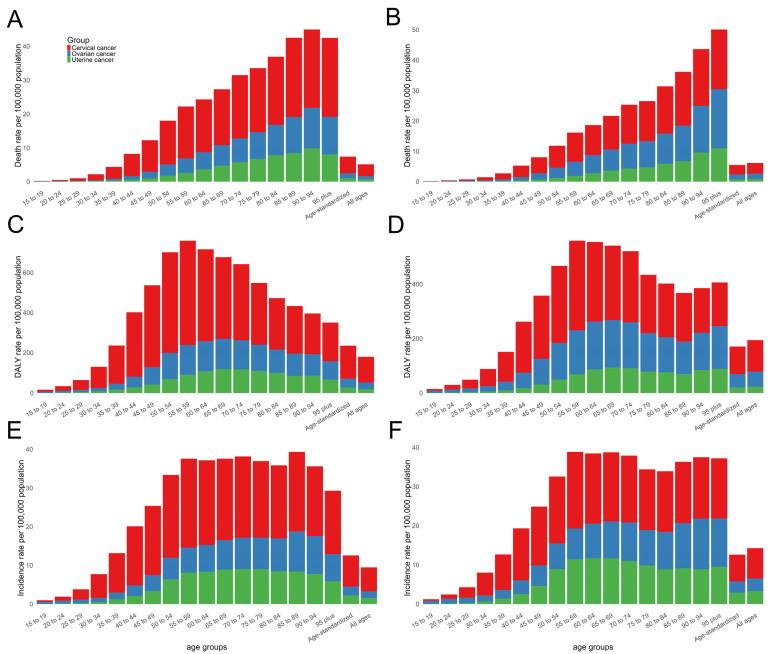
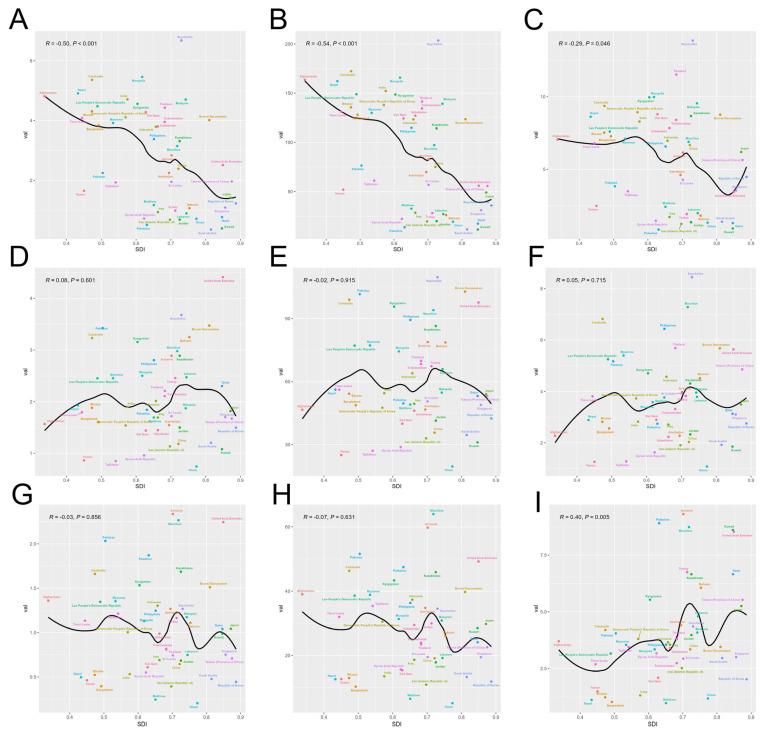
Gynecological cancers pose a significant threat to women's health. This study aimed to investigate the disease burden of cervical, uterine, and ovarian cancers in Asia from 1980 to 2021. The Global Burden of Disease 2021 database (GBD 2021) was used to conduct a cross-sectional study. The incidence, mortality rates, and disability-adjusted life years (DALYs) were obtained as indicators to estimate the burden. The effects of age, period, and cohort on the incidence of gynecological cancers were analyzed via the age-period-cohort web tool (APC-Web). The future trends of the gynecological cancer burden in Asia from 2025 to 2050 were predicted via a Bayesian age-period-cohort model. In 2021, cervical cancer exhibited the highest age-standardized mortality burden (3.1 deaths per 100,000; 95% UI: 2.7-3.4), whereas uterine cancer had the lowest (0.7 deaths per 100,000; 95% UI: 0.6-0.9). Geographically, South Asia has experienced the highest cervical cancer burden, with Seychelles, Mongolia, Cambodia, and Nepal ranking among the most affected nations. In contrast, Central Asia had the highest ovarian cancer burden, led by Georgia, followed by the United Arab Emirates, Seychelles, and Brunei Darussalam. Similarly, the uterine cancer burden was most pronounced in Central Asia, with Georgia, Armenia, Mauritius, and the United Arab Emirates exhibiting elevated rates. Finally, increasing trends in the burden of gynecological cancers were predicted across all age groups from 2025 to 2050, with women aged 60 to 64 years being the most affected. In conclusion, gynecological cancers are significant contributors to the disease burden in Asia. Improved early screening methods are essential to mitigate this increasing burden.
妇科癌症对女性健康构成重大威胁。本研究旨在调查1980年至2021年亚洲宫颈癌、子宫癌和卵巢癌的疾病负担。使用全球疾病负担2021数据库(GBD 2021)进行横断面研究。获取发病率、死亡率和伤残调整生命年(DALY)作为估计负担的指标。通过年龄-时期-队列网络工具(APC-Web)分析年龄、时期和队列对妇科癌症发病率的影响。通过贝叶斯年龄-时期-队列模型预测了2025年至2050年亚洲妇科癌症负担的未来趋势。2021年,宫颈癌的年龄标准化死亡率负担最高(每10万人中有3.1例死亡;95%不确定区间:2.7-3.4),而子宫癌的负担最低(每10万人中有0.7例死亡;95%不确定区间:0.6-0.9)。在地理上,南亚的宫颈癌负担最高,塞舌尔、蒙古、柬埔寨和尼泊尔是受影响最严重的国家。相比之下,中亚的卵巢癌负担最高,格鲁吉亚居首,其次是阿拉伯联合酋长国、塞舌尔和文莱达鲁萨兰国。同样,中亚的子宫癌负担最为显著,格鲁吉亚、亚美尼亚、毛里求斯和阿拉伯联合酋长国的发病率较高。最后,预计2025年至2050年所有年龄组的妇科癌症负担都将呈上升趋势,60至64岁的女性受影响最大。总之,妇科癌症是亚洲疾病负担的重要贡献因素。改进早期筛查方法对于减轻这一日益增加的负担至关重要。



 Zotero 插件