
睾丸衰老的多组学视角:揭示生殖细胞失调、微环境功能障碍和表观遗传重塑
Multi-Omics Perspectives on Testicular Aging: Unraveling Germline Dysregulation, Niche Dysfunction, and Epigenetic Remodeling.
作者信息
Kaltsas Aris
机构信息
Third Department of Urology, Attikon University Hospital, School of Medicine, National and Kapodistrian University of Athens, 12462 Athens, Greece.
出版信息
Cells. 2025 Jun 13;14(12):899. doi: 10.3390/cells14120899.
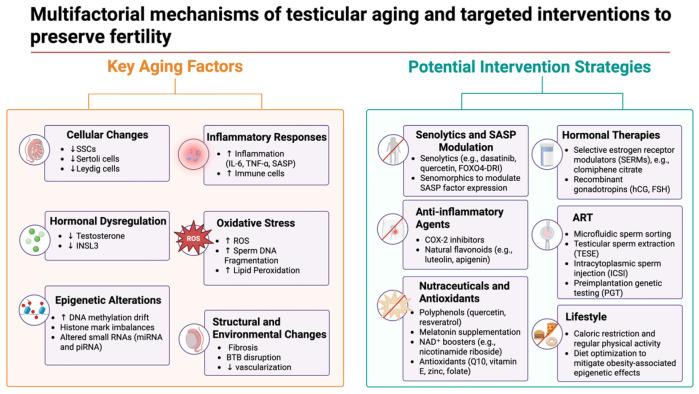
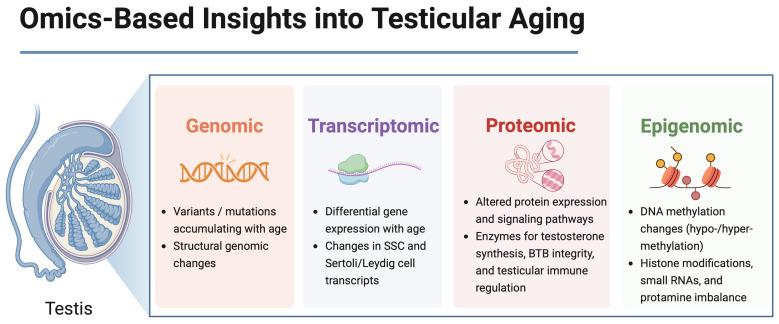
Male reproductive aging proceeds gradually and involves complex alterations across germ cells, somatic cells, and the testicular niche. Multi-omics analyses highlight shifts in spermatogonial stem cell dynamics, diminished sperm quantity and quality, and reconfigured support from Sertoli and Leydig cells. These somatic cells show numerical declines and exhibit senescence-associated changes that amplify inflammatory signals and compromise blood-testis barrier integrity. Concurrently, fibrosis and heightened immune cell infiltration disrupt intercellular communication, contributing to further deterioration of spermatogenesis. Epigenetic remodeling-including DNA methylation drift, histone modification imbalances, and altered small non-coding RNA profiles-adds another dimension, reducing sperm integrity and potentially exerting transgenerational effects on offspring health. Observed hormonal changes, such as reduced testosterone and INSL3 production by aging Leydig cells, reflect the additional weakening of testicular function. These multifactorial processes collectively underlie the drop in male fertility and the increased incidence of adverse outcomes, such as miscarriages and developmental anomalies in the offspring of older fathers. Research into mitigation strategies, including interventions targeting senescent cells, oxidative stress, and inflammatory pathways, may slow or reverse key mechanisms of testicular aging. These findings underscore the importance of understanding the molecular hallmarks of male reproductive aging for preserving fertility and safeguarding offspring well-being.
男性生殖衰老过程是渐进的,涉及生殖细胞、体细胞和睾丸微环境的复杂变化。多组学分析突出了精原干细胞动态变化、精子数量和质量下降以及支持细胞和间质细胞的支持功能重新配置。这些体细胞数量减少,并表现出与衰老相关的变化,放大炎症信号并损害血睾屏障完整性。同时,纤维化和免疫细胞浸润增加破坏了细胞间通讯,导致精子发生进一步恶化。表观遗传重塑,包括DNA甲基化漂移、组蛋白修饰失衡和小非编码RNA谱改变,增加了另一个层面的影响,降低了精子完整性,并可能对后代健康产生跨代影响。观察到的激素变化,如衰老的间质细胞产生的睾酮和胰岛素样肽3减少,反映了睾丸功能的进一步减弱。这些多因素过程共同构成了男性生育能力下降以及不良后果发生率增加的基础,如老年父亲后代的流产和发育异常。对缓解策略的研究,包括针对衰老细胞、氧化应激和炎症途径的干预措施,可能会减缓或逆转睾丸衰老的关键机制。这些发现强调了理解男性生殖衰老分子特征对于维持生育能力和保障后代健康的重要性。
 Zotero 插件