
嗅神经的神经周围免疫环境通过神经炎性引流重塑,并与筛窦骨髓相连。
Perineural immune environment of olfactory nerves is reshaped by neuroinflammatory drainage and connects to ethmoid bone marrow.
作者信息
Laaker Collin J, Kovacs Kristof G, Baenen Cameron M, Hsu Martin, Port Jenna M, Vrba Sophia M, Kumar Mohan, Hubacek Annika J, Herbath Melinda, Priyathilaka Thanthrige Thiunuwan, Sandor Matyas, Fabry Zsuzsanna
机构信息
Neuroscience Training Program, University of Wisconsin-Madison, Madison, WI 53705, USA.
Department of Pathology and Laboratory Medicine, School of Medicine and Public Health, University of Wisconsin-Madison, Madison, WI 53705, USA.
出版信息
Sci Adv. 2025 Jun 27;11(26):eadt9591. doi: 10.1126/sciadv.adt9591. Epub 2025 Jun 25.
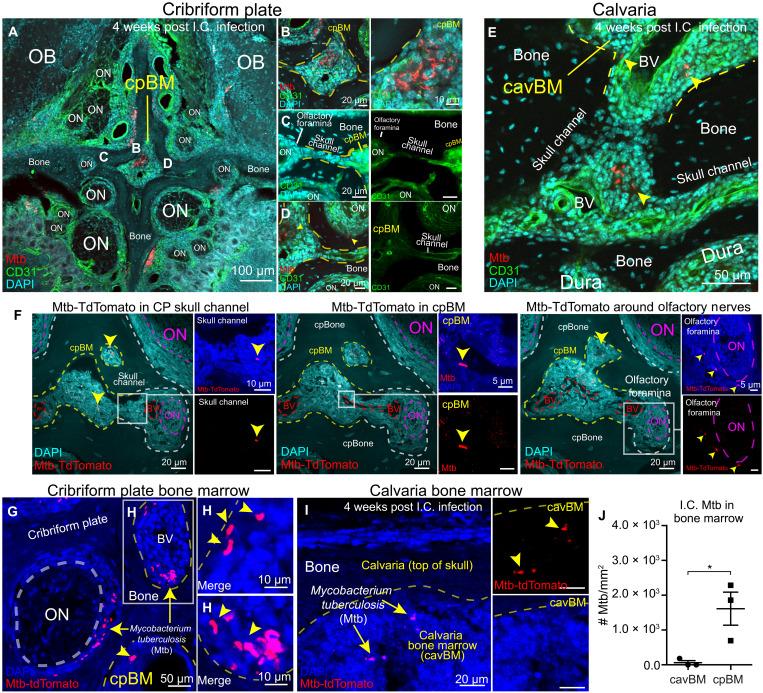
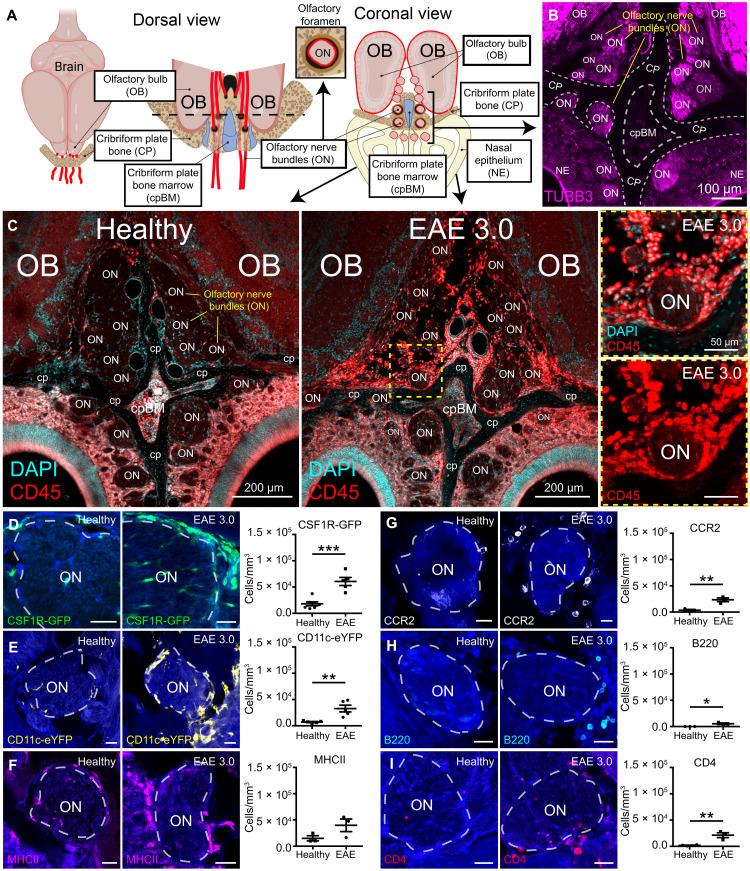
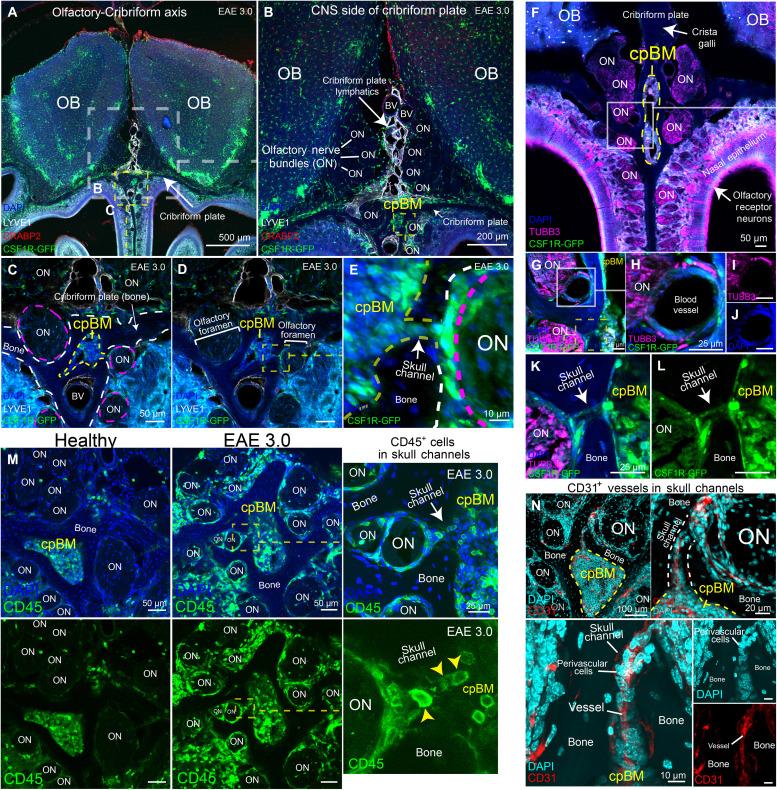
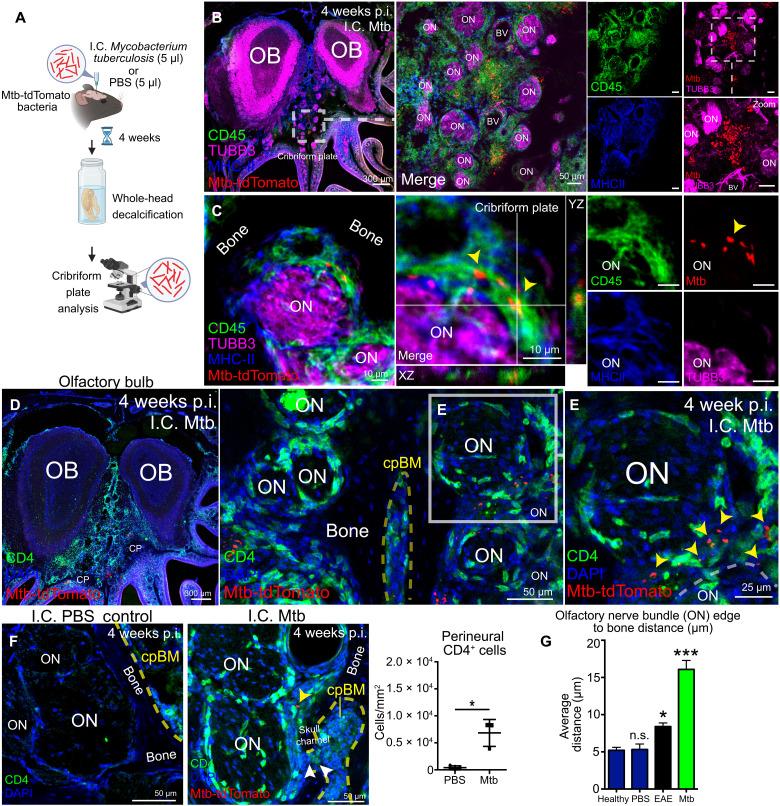
Cerebrospinal fluid (CSF) contains inflammatory cues that enable peripheral immune surveillance of the central nervous system (CNS). While some cranial nerves allow for CSF efflux, the immune environment around CSF-interfacing cranial nerves during neuroinflammation is still poorly understood. Using a mouse model of multiple sclerosis [experimental autoimmune encephalomyelitis (EAE)] and CNS infection (CNS-Mtb), we examined immune responses around olfactory nerve bundles near the cribriform plate, a key CSF efflux route. During neuroinflammation, we found increased perineural immune cells that had access to intracranial injected beads, dye, and bacteria. Additionally, we identified osseous channels connecting the environment surrounding olfactory nerves to bone marrow in the cribriform plate (cpBM). Notably, the cpBM undergoes myelopoiesis during EAE, has access to components of intracranial drainage, and is vulnerable to Mtb bacteria invasion during CNS-Mtb infection. Our findings improve the understanding of how the environments of CSF-interfacing cranial nerves and bone marrow are altered within the skull during neuroinflammatory disease.
脑脊液(CSF)含有炎症信号,可实现对中枢神经系统(CNS)的外周免疫监测。虽然一些颅神经允许脑脊液流出,但在神经炎症期间,与脑脊液接触的颅神经周围的免疫环境仍知之甚少。利用多发性硬化症小鼠模型[实验性自身免疫性脑脊髓炎(EAE)]和中枢神经系统感染(CNS-Mtb),我们研究了筛板附近嗅神经束周围的免疫反应,筛板是脑脊液流出的关键途径。在神经炎症期间,我们发现神经周围免疫细胞增多,这些细胞能够接触到颅内注射的珠子、染料和细菌。此外,我们确定了连接嗅神经周围环境与筛板骨髓(cpBM)的骨通道。值得注意的是,cpBM在EAE期间进行骨髓生成,能够接触颅内引流成分,并且在CNS-Mtb感染期间易受结核分枝杆菌入侵。我们的研究结果有助于更好地理解在神经炎症性疾病期间,颅骨内与脑脊液接触的颅神经和骨髓的环境是如何改变的。



 Zotero 插件