
生活方式对端粒长度的影响:一项针对韩国人群的研究。
Effects of lifestyle on telomere length: A study on the Korean population.
作者信息
Bae Chul-Young, Kim In-Hee, Kim Sun-Hyun, Chun Hyejin, Kim Bo-Seon, Jeon Min-Hee
机构信息
Department of Mediage Research Center, Seongnam-si, Gyeonggi-do, Republic of Korea.
Moadata, Seongnam-si, Gyeonggi-do, Republic of Korea.
出版信息
PLoS One. 2025 Jun 25;20(6):e0325233. doi: 10.1371/journal.pone.0325233. eCollection 2025.
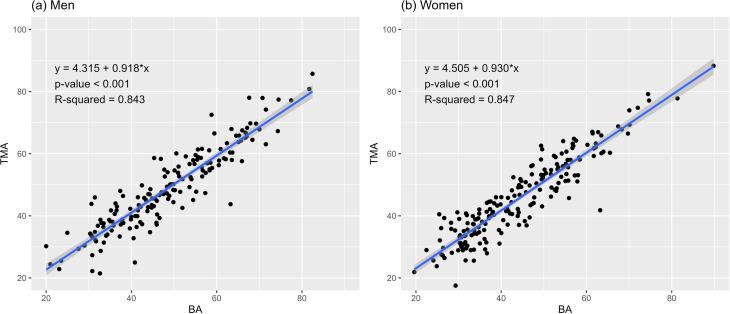
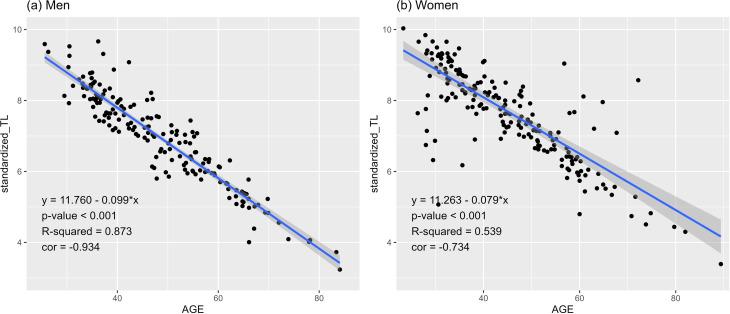
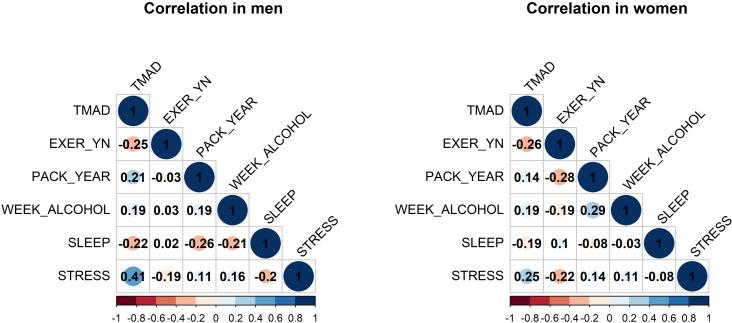
Telomere length is a known indicator of biological aging, typically decreasing with age. Biological age is a benchmark for assessing an individual's health and aging. Correlations between telomere length and lifestyle factors have primarily been investigated from the perspective of a single variable and predominantly examined in postmenopausal women in Korea. This study aimed to analyze the effects of multiple lifestyle factors on telomere length in a diverse Korean population comprising 368 healthy adults (174 men and 194 women). We measured anthropometric and blood-related parameters and collected data on lifestyle-related factors, such as exercise, smoking, alcohol consumption, sleep, and stress, using surveys. Telomere length was quantified using monochrome multiplex quantitative real-time polymerase chain reaction (qPCR), and the relationship between lifestyle factors and telomere length was analyzed using correlation and regression analyses (p-value <0.10). Our findings indicated that telomere age, derived from telomere length, significantly increased with each adverse lifestyle factor. For men, significant contributors included exercise, smoking, and stress, whereas for women, significant contributors were exercise, alcohol consumption, sleep, and stress. The results showed that lifestyle and biological age considerably affected telomere age and accelerated the aging process. These results emphasize the importance of lifestyle in the management of biological aging.
端粒长度是生物衰老的一个已知指标,通常会随着年龄的增长而缩短。生物年龄是评估个体健康和衰老的一个基准。端粒长度与生活方式因素之间的相关性主要是从单一变量的角度进行研究的,并且主要在韩国绝经后女性中进行了检验。本研究旨在分析多种生活方式因素对由368名健康成年人(174名男性和194名女性)组成的多样化韩国人群中端粒长度的影响。我们测量了人体测量学和血液相关参数,并通过调查收集了与生活方式相关的因素的数据,如运动、吸烟、饮酒、睡眠和压力。使用单色多重定量实时聚合酶链反应(qPCR)对端粒长度进行量化,并使用相关性和回归分析(p值<0.10)分析生活方式因素与端粒长度之间的关系。我们的研究结果表明,由端粒长度得出的端粒年龄会随着每一种不良生活方式因素而显著增加。对于男性来说,重要的影响因素包括运动、吸烟和压力,而对于女性来说,重要的影响因素是运动、饮酒、睡眠和压力。结果表明,生活方式和生物年龄对端粒年龄有相当大的影响,并加速了衰老过程。这些结果强调了生活方式在生物衰老管理中的重要性。


 Zotero 插件