
从传统医学到现代医学:中医监管科学(TCMRS)作为一门新兴学科的重要性。
From traditional medicine to modern medicine: the importance of TCM regulatory science (TCMRS) as an emerging discipline.
作者信息
Hua Hua, Tang Jian-Yuan, Zhao Jun-Ning, Wang Ting, Zhang Jun-Hua, Yu Jiang-Yong, Yang Chang-Ming, Ai Yan-Ling, Luo Qiao-Xian
机构信息
Key Lab of Biological Evaluation of TCM Quality of the State Administration of Traditional Chinese Medicine, Translational Chinese Medicine Key Laboratory of Sichuan Province, Sichuan Institute for Translational Chinese Medicine, Chengdu, 610041, China.
Sichuan Provincial Hospital of Traditional Chinese Medicine, Affiliated Hospital of Chengdu University of Traditional Chinese Medicine, Chengdu, 611137, China.
出版信息
Chin Med. 2025 Jun 26;20(1):92. doi: 10.1186/s13020-025-01152-8.
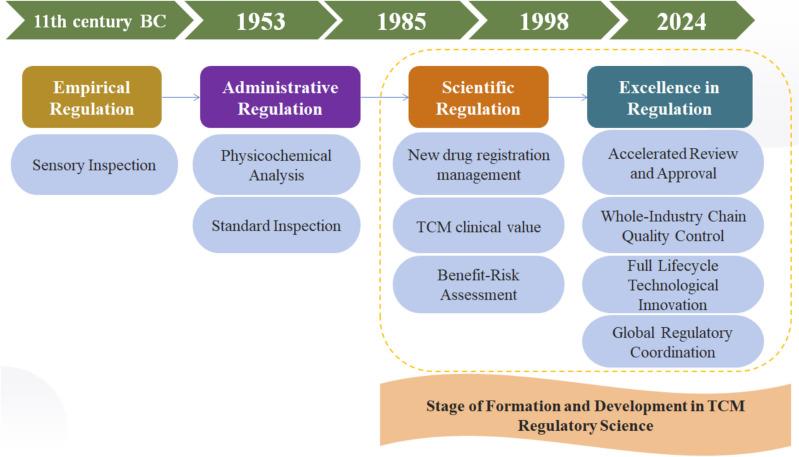
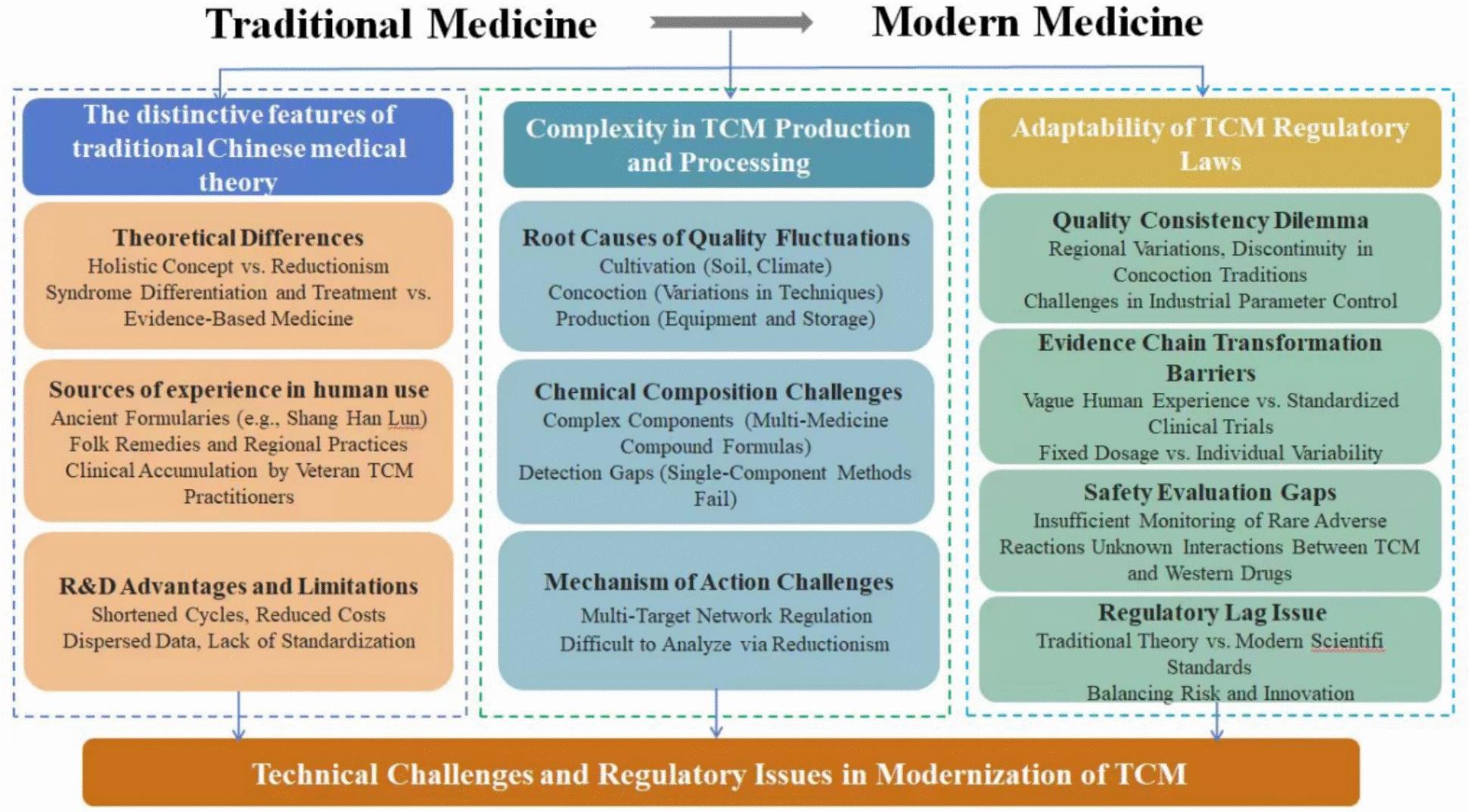
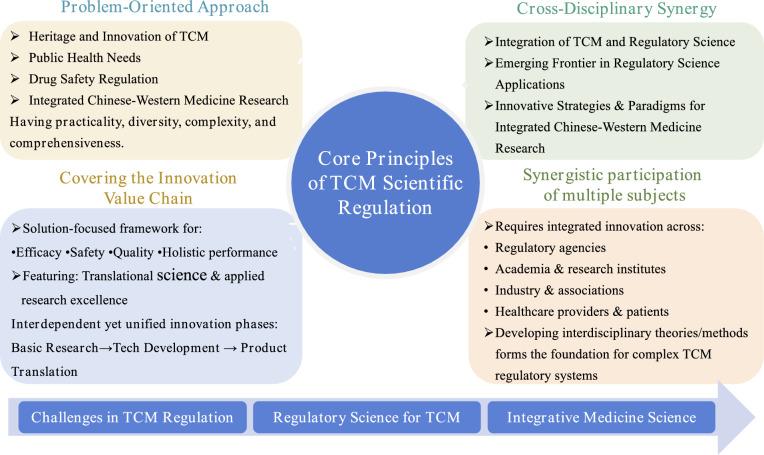
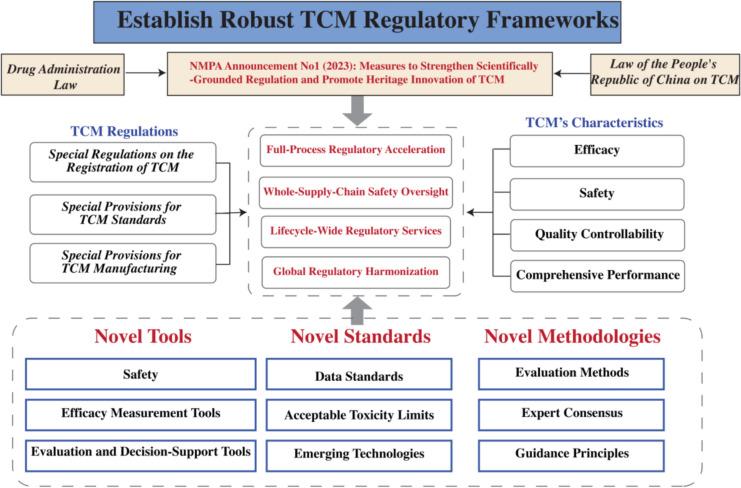
Traditional Chinese medicine (TCM) has become a standardized medical system through systematic development across global healthcare practices. However, concerns persist regarding the safety, efficacy and quality of traditional medicinal products. Traditional Chinese medicine regulatory science (TCMRS) has emerged as an interdisciplinary field to address these challenges. This discipline integrates multidisciplinary knowledge to develop new tools, standards and approaches for systematic evaluation of benefit-risk profiles. This approach aims to ensure the quality, safety, and efficacy of TCM products, while also supporting the development of scientifically grounded regulatory frameworks that accommodate traditional medicine's distinctive characteristics. Through comprehensive quality management from raw material sourcing to production processes and clinical validation, developing and adopting TCMRS is entrusted to significantly strengthen its regulatory oversight. This review examines the critical scientific challenges in the modernization process of TCM, analyzes the conceptual foundations of TCMRS, evaluates its pivotal role in pharmaceutical transformation, and highlights its essential function in preserving traditional knowledge while fostering therapeutic innovation. Key challenges for TCMRS implementation include reconciling traditional epistemologies with modern pharmaceutical paradigms, standardizing complex herbal formulations, and developing rigorous evaluation protocols for decoctions and compound preparations. The integration of advanced methodologies, including systems biology, network pharmacology, artificial intelligence, and nanotechnology, into regulatory frameworks, combined with enhanced international cooperation, remains a crucial strategy for tackling global public health challenges. Future development trajectories for TCMRS will prioritize lifecycle management strategies, technology-driven innovation systems, and global knowledge-sharing initiatives, propelled by advancements in life sciences and information technology. This evolution requires careful balancing of three fundamental elements: theoretical development in traditional medicine, integration of emerging technologies, and maintenance of regulatory system stability. It is crucial to innovate the working mechanisms of the TCMRS researcher alliance and the global policy-coordination mechanism for TCM regulation, enhance the conversion of basic disciplines into regulatory applications, and support the establishment of an excellent TCM regulatory system with scientific decision-making. These efforts are essential for promoting the high-quality development of the TCM industry and boosting its international influence and presence.
传统中医(TCM)通过在全球医疗实践中的系统发展,已成为一个标准化的医疗体系。然而,对于传统医药产品的安全性、有效性和质量的担忧依然存在。传统中医监管科学(TCMRS)作为一个跨学科领域应运而生,以应对这些挑战。该学科整合多学科知识,开发新的工具、标准和方法,用于系统评估效益-风险概况。这种方法旨在确保中药产品的质量、安全性和有效性,同时支持建立基于科学的监管框架,以适应传统医学的独特特征。通过从原材料采购到生产过程以及临床验证的全面质量管理,发展和采用TCMRS被寄予厚望,有望显著加强其监管力度。本综述审视了中医现代化进程中的关键科学挑战,分析了TCMRS的概念基础,评估了其在药物转型中的关键作用,并强调了其在保护传统知识的同时促进治疗创新的重要功能。实施TCMRS的关键挑战包括调和传统认识论与现代制药范式、规范复杂的草药配方,以及为汤剂和复方制剂制定严格的评估方案。将先进方法,包括系统生物学、网络药理学、人工智能和纳米技术,整合到监管框架中,再加上加强国际合作,仍然是应对全球公共卫生挑战的关键策略。TCMRS未来的发展轨迹将优先考虑生命周期管理策略、技术驱动的创新体系和全球知识共享倡议,这些都将由生命科学和信息技术的进步所推动。这种演变需要仔细平衡三个基本要素:传统医学的理论发展、新兴技术的整合以及监管系统稳定性的维持。创新TCMRS研究联盟的工作机制和全球中医监管政策协调机制、加强基础学科向监管应用的转化,以及支持建立具有科学决策能力的优秀中医监管体系至关重要。这些努力对于推动中医药产业的高质量发展、提升其国际影响力和地位至关重要。

 Zotero 插件