
蜂蜜中三氯生及其他典型内分泌干扰物的分布与健康风险评估
Distribution and Health Risk Assessment of Triclosan and Other Typical Endocrine Disruptors in Honey.
作者信息
Wang Jianing, Gao Meiqi, Li Hongmei, Hou Xinyan, Gong Aijun, Cao Yanqiu
机构信息
School of Chemistry and Biological Engineering, University of Science and Technology Beijing, Beijing 100083, China.
Division of Metrology in Chemistry, National Institute of Metrology, Beijing 100020, China.
出版信息
Foods. 2025 Jun 6;14(12):2006. doi: 10.3390/foods14122006.
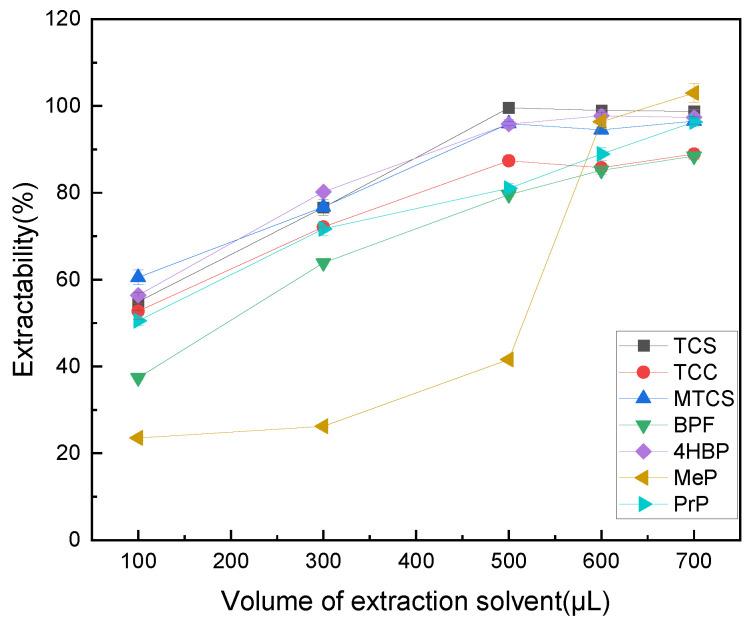
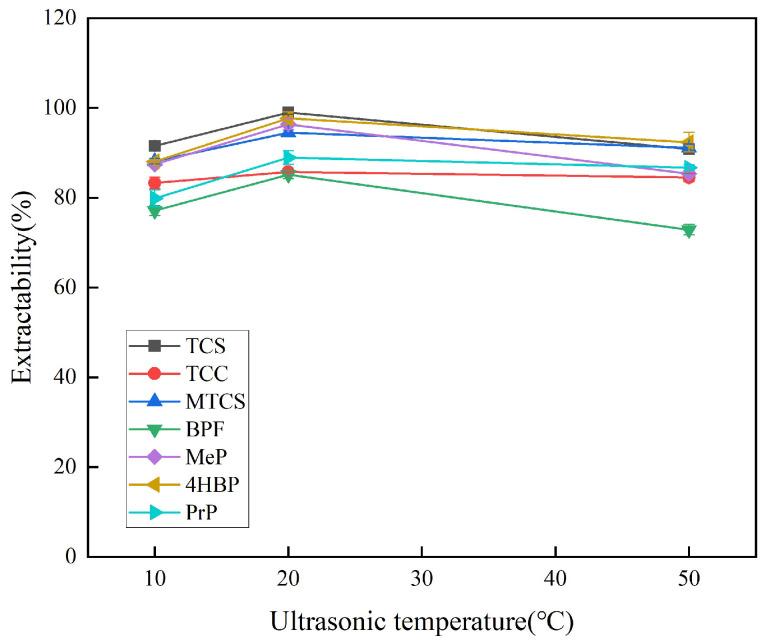
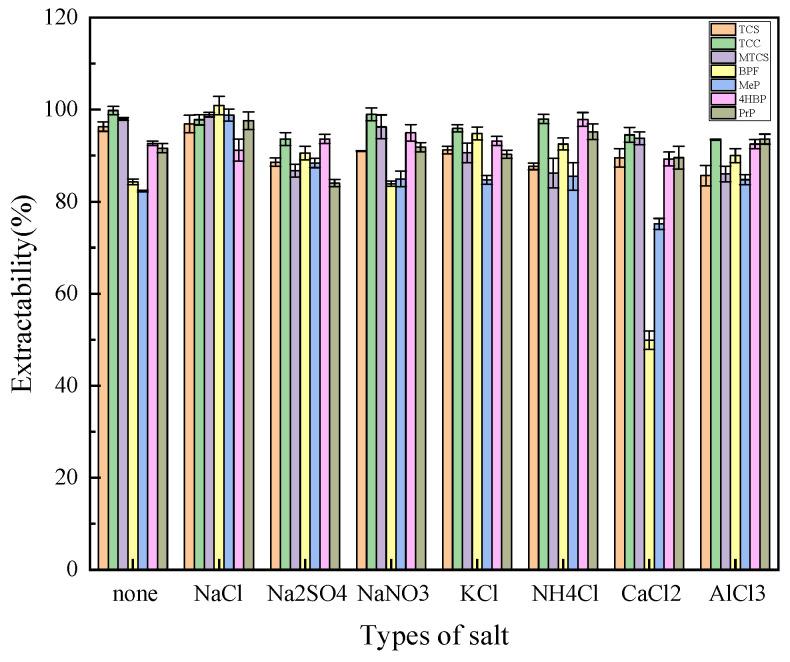
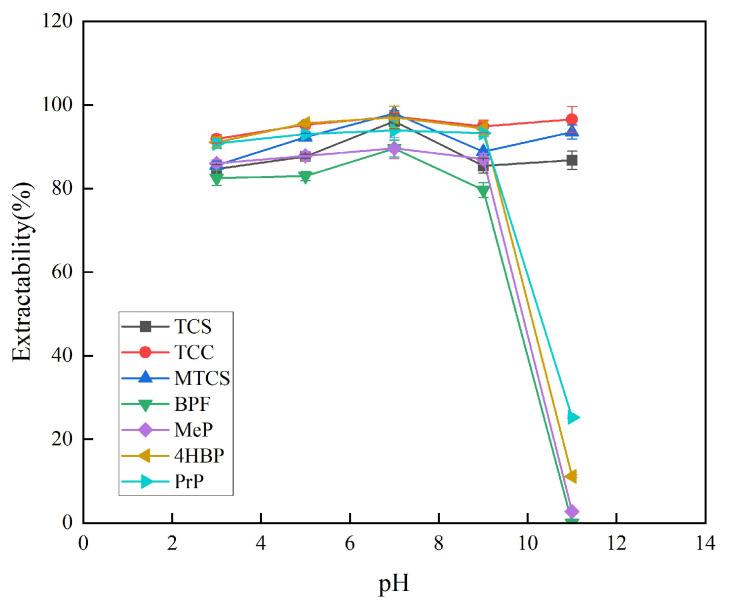
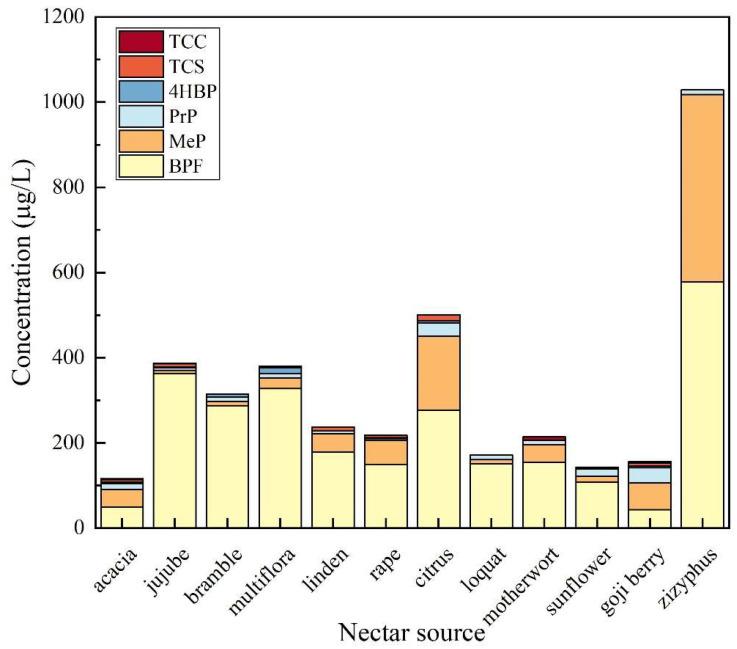
Endocrine disruptors (EDCs) in food pose a significant threat to health. This study developed a method for detecting seven EDCs (triclosan (TCS), triclocarban (TCC), methyltriclosan (MTCS), methylparaben (MeP), propylparaben (PrP), bisphenol F (BPF), and 4-hydroxybenzophenone-3-ethylcarboxylate (4HBP)) in honey. The method combines ultrasonic-assisted dispersive liquid-liquid microextraction with high-performance liquid chromatography. It achieved a recovery rate of 89.70-102.2%, with an RSD value of 1.1-3.9%. Additionally, this study tested 47 honey samples from seven countries, revealing detection rates of TCS at 29.79%, TCC at 19.15%, BPF at 97.87%, 4HBP at 36.17%, MeP at 82.98%, and PrP at 80.85%. Among the 12 nectar sources, citrus flower nectar had the highest TCS detection rate, mother grass nectar had the highest TCC detection rate, and multi-flower nectar had the highest 4HBP detection rate. Moreover, imported honey samples showed higher levels of TCS, BPF, and MeP contamination compared to domestic samples. Honey stored in PET bottles contained the highest levels of EDCs. Finally, health risk assessments indicated that, while the risk for adults is lower, monitoring EDC contamination in food should be strengthened to ensure consumer safety.
食品中的内分泌干扰物(EDCs)对健康构成重大威胁。本研究开发了一种检测蜂蜜中七种内分泌干扰物(三氯生(TCS)、三氯卡班(TCC)、甲基三氯生(MTCS)、对羟基苯甲酸甲酯(MeP)、对羟基苯甲酸丙酯(PrP)、双酚F(BPF)和4-羟基二苯甲酮-3-乙基羧酸盐(4HBP))的方法。该方法将超声辅助分散液液微萃取与高效液相色谱相结合。其回收率达到89.70 - 102.2%,相对标准偏差(RSD)值为1.1 - 3.9%。此外,本研究检测了来自七个国家的47个蜂蜜样本,结果显示三氯生的检出率为29.79%,三氯卡班为19.15%,双酚F为97.87%,4-羟基二苯甲酮-3-乙基羧酸盐为36.17%,对羟基苯甲酸甲酯为82.98%,对羟基苯甲酸丙酯为80.85%。在12种花蜜来源中,柑橘花蜜的三氯生检出率最高,益母草花蜜的三氯卡班检出率最高,杂花蜜的4-羟基二苯甲酮-3-乙基羧酸盐检出率最高。此外,进口蜂蜜样本中三氯生、双酚F和对羟基苯甲酸甲酯的污染水平高于国内样本。储存在PET瓶中的蜂蜜内分泌干扰物含量最高。最后,健康风险评估表明,虽然成年人面临的风险较低,但应加强对食品中内分泌干扰物污染的监测以确保消费者安全。







 Zotero 插件