
来自[具体来源未给出]的海洋衍生肽作为潜在的SARS-CoV-2 Mpro抑制剂:一种[具体方法未给出]方法
Marine-Derived Peptides from as Potential SARS-CoV-2 Mpro Inhibitors: An Approach.
作者信息
Cañedo-Figueroa David Mauricio, Valdez-Flores Marco Antonio, Norzagaray-Valenzuela Claudia Desireé, Calderón-Zamora Loranda, Rábago-Monzón Ángel Radamés, Camberos-Barraza Josué, Guadrón-Llanos Alma Marlene, Herrán-Arita Alberto Kousuke De la, Picos-Cárdenas Verónica Judith, Camacho-Zamora Alejandro, Romero-Utrilla Alejandra, Cordero-Rivera Carlos Daniel, Ángel Rosa María Del, León-Juárez Moisés, Reyes-Ruiz José Manuel, Farfan-Morales Carlos Noe, De Jesús-González Luis Adrián, Osuna-Ramos Juan Fidel
机构信息
Faculty of Medicine, Autonomous University of Sinaloa, Culiacán 80246, Mexico.
Programa de Maestría en Ciencias en Biomedicina Molecular, Facultad de Medicina, Universidad Autónoma de Sinaloa (UAS), Culiacán 80246, Mexico.
出版信息
Microorganisms. 2025 May 30;13(6):1271. doi: 10.3390/microorganisms13061271.
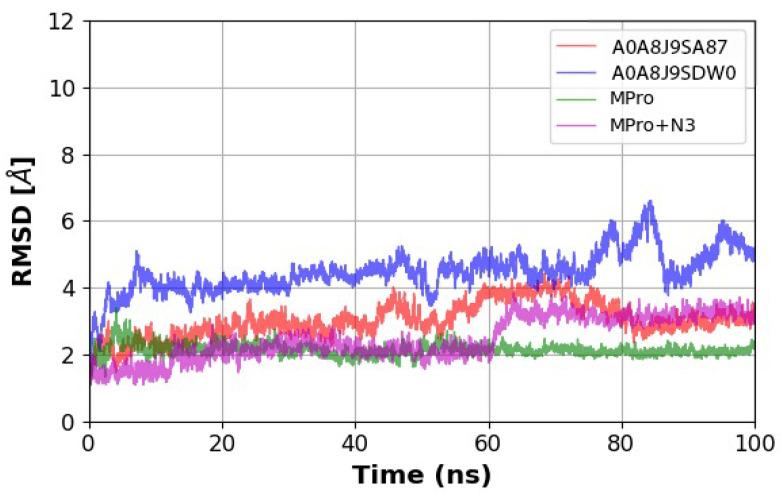
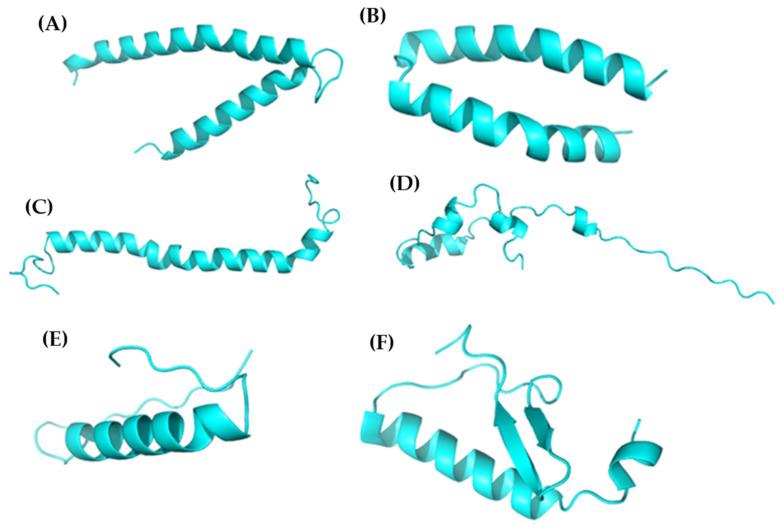
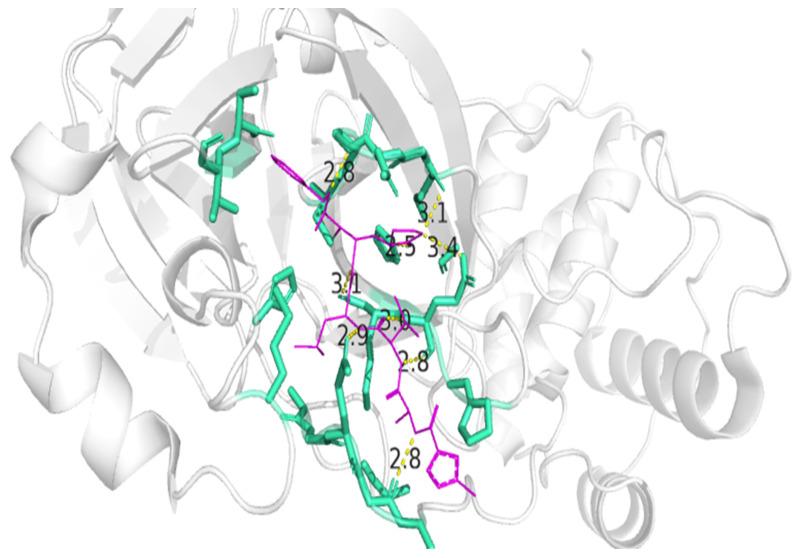
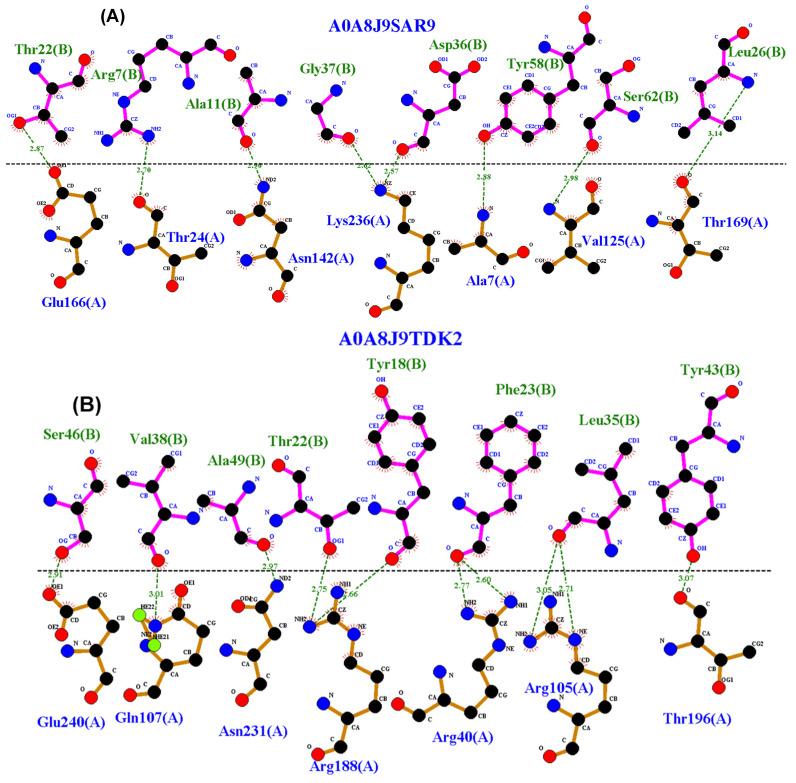
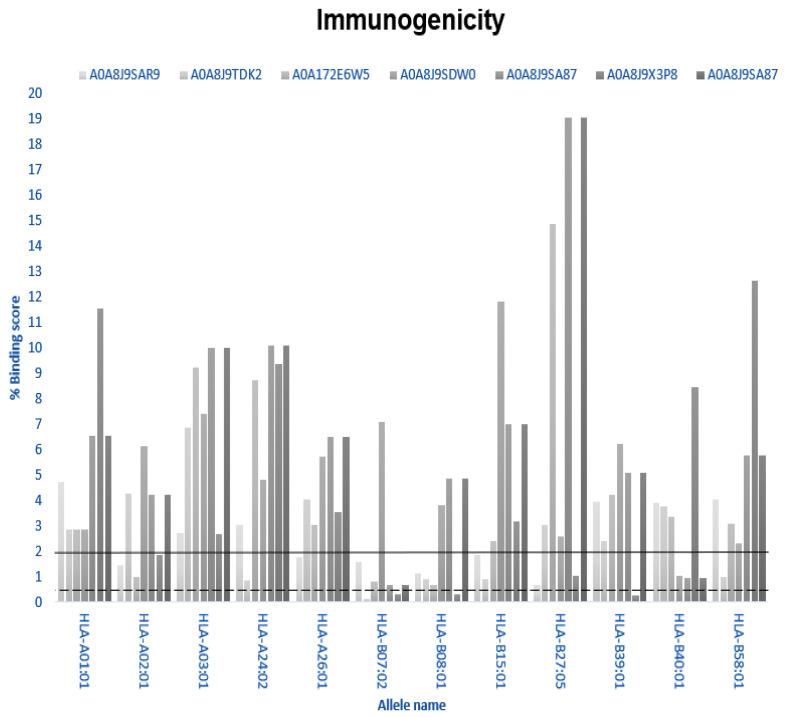
The ongoing threat of viral pandemics such as COVID-19 highlights the urgent need for novel antiviral therapeutics targeting conserved viral proteins. In this study, peptides of 10-30 kDa derived from the marine diatom were identified as potential inhibitors of SARS-CoV-2 main protease (Mpro), a key enzyme in viral replication. Peptides less than 60 amino acids in length were retrieved from the UniProt database and aligned with reference antiviral sequences using the Biopython pairwise2 algorithm. Six candidates were selected for structural modeling using AlphaFold2 and Swiss-Model, followed by molecular docking using ClusPro2. LigPlot+ was used to assess molecular interactions, while NetMHCpan 4.1 and AVPpred evaluated immunogenicity and antiviral potential, respectively. Molecular dynamics simulations over 100 ns were conducted using OpenMM. These peptides demonstrated stable binding interactions with key catalytic residues of Mpro. Specifically, peptide A0A8J9SA87 interacted with Cys145 and Glu166, while peptide A0A8J9SDW0 exhibited interactions with His41 and Phe140, both of which are known to be essential for Mpro inhibition. Although peptide A0A8J9X3P8 also interacted with catalytic residues, it exhibited greater structural fluctuations during molecular dynamics simulations and achieved lower AVPpred scores, suggesting lower overall antiviral potential. Therefore, A0A8J9SA87 and A0A8J9SDW0 were identified as the most promising candidates. Molecular dynamics simulations further supported the high structural stability of these peptide-Mpro complexes over a 100 ns timescale, reinforcing their potential as effective inhibitors. These findings support as a valuable source of antiviral peptides and demonstrate the feasibility of pipelines for identifying therapeutic candidates against SARS-CoV-2.
诸如新冠病毒(COVID-19)之类的病毒性大流行的持续威胁凸显了针对保守病毒蛋白开发新型抗病毒疗法的迫切需求。在本研究中,从海洋硅藻中提取的10-30 kDa肽被鉴定为严重急性呼吸综合征冠状病毒2型(SARS-CoV-2)主要蛋白酶(Mpro)的潜在抑制剂,Mpro是病毒复制中的关键酶。从UniProt数据库中检索长度小于60个氨基酸的肽,并使用Biopython pairwise2算法与参考抗病毒序列进行比对。使用AlphaFold2和Swiss-Model对六个候选肽进行结构建模,随后使用ClusPro2进行分子对接。使用LigPlot+评估分子相互作用,而NetMHCpan 4.以及AVPred分别评估免疫原性和抗病毒潜力。使用OpenMM进行了超过100纳秒的分子动力学模拟。这些肽与Mpro的关键催化残基表现出稳定的结合相互作用。具体而言,肽A0A8J9SA87与半胱氨酸145和谷氨酸166相互作用,而肽A0A8J9SDW0与组氨酸41和苯丙氨酸140表现出相互作用,已知这两者对于抑制Mpro至关重要。尽管肽A0A8J9X3P8也与催化残基相互作用,但它在分子动力学模拟过程中表现出更大的结构波动,并且获得较低的AVPred分数,表明其总体抗病毒潜力较低。因此,A0A8J9SA87和A0A8J9SDW0被确定为最有前景的候选肽。分子动力学模拟进一步证实了这些肽-Mpro复合物在100纳秒时间尺度上具有很高的结构稳定性,增强了它们作为有效抑制剂的潜力。这些发现支持了海洋硅藻作为抗病毒肽的宝贵来源,并证明了用于鉴定抗SARS-CoV-2治疗候选物流程的可行性。

 Zotero 插件