
嵌合抗原受体T细胞疗法在系统性自身免疫性风湿病中的应用:当前见解与未来展望
Chimeric Antigen Receptor T-cell therapy in systemic autoimmune rheumatic diseases: current insights and future prospects.
作者信息
Lee Bong-Woo, Kwon Eui-Jong, Ju Ji Hyeon
机构信息
Division of Rheumatology, Department of Internal Medicine, Seoul St. Mary's Hospital, College of Medicine, The Catholic University of Korea, Seoul, Korea.
Division of Rheumatology, Department of Internal Medicine, Bucheon St. Mary's Hospital, College of Medicine, The Catholic University of Korea, Bucheon, Korea.
出版信息
J Rheum Dis. 2025 Jul 1;32(3):154-165. doi: 10.4078/jrd.2024.0122. Epub 2025 Jan 20.
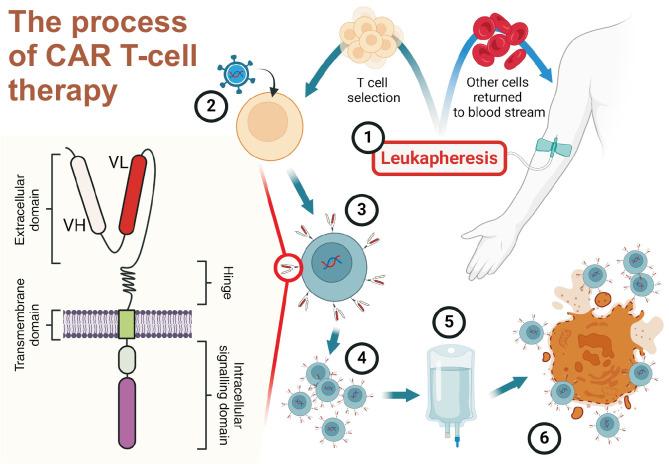
Chimeric Antigen Receptor (CAR) T-cell therapy, revolutionary in treating hematological malignancies, is emerging as a promising approach for systemic autoimmune rheumatic diseases (SARDs). This review examines the potential of CAR T-cell therapy in treating conditions such as systemic lupus erythematosus (SLE), systemic sclerosis (SSc), and idiopathic inflammatory myopathies (IIMs). The evolution of CAR T cells technology, from first to fifth generation, has enhanced its efficacy and persistence. Early clinical studies in SARDs have shown encouraging results, with some patients achieving drug-free remission. CD19-targeted CAR T cells have demonstrated significant B-cell depletion and clinical improvement in patients with SLE, SSc, and IIMs. Despite promising outcomes, challenges remain, including cytokine release syndrome and the need for careful patient selection. Future directions include exploring dual-targeting CARs, chimeric autoantibody receptors (CAARs), and alternative cell sources like γδ T cells, regulatory T cells, natural killer cells. The integration of CAR-based cell therapy into treatment paradigms of patients with SARDs requires further research to optimize efficacy, mitigate side effects, and identify suitable target biomarkers. While hurdles exist CAR-based cell therapy holds the potential to revolutionize management of patients with SARDs, offering hope for long-term, drug-free remission in these complex autoimmune conditions.
嵌合抗原受体(CAR)T细胞疗法在治疗血液系统恶性肿瘤方面具有革命性意义,正成为治疗系统性自身免疫性风湿疾病(SARDs)的一种有前景的方法。本综述探讨了CAR T细胞疗法在治疗系统性红斑狼疮(SLE)、系统性硬化症(SSc)和特发性炎性肌病(IIMs)等疾病中的潜力。从第一代到第五代,CAR T细胞技术的发展提高了其疗效和持久性。SARDs的早期临床研究显示出令人鼓舞的结果,一些患者实现了无药缓解。靶向CD19的CAR T细胞已在SLE、SSc和IIMs患者中显示出显著的B细胞耗竭和临床改善。尽管取得了令人鼓舞的成果,但挑战依然存在,包括细胞因子释放综合征以及需要仔细选择患者。未来的方向包括探索双靶点CAR、嵌合自身抗体受体(CAARs)以及替代细胞来源,如γδT细胞、调节性T细胞、自然杀伤细胞。将基于CAR的细胞疗法纳入SARDs患者的治疗模式需要进一步研究,以优化疗效、减轻副作用并确定合适的靶标生物标志物。虽然存在障碍,但基于CAR的细胞疗法有可能彻底改变SARDs患者的管理方式,为这些复杂的自身免疫性疾病实现长期无药缓解带来希望。


 Zotero 插件