
基于网络药理学、分子对接和分子动力学模拟探讨黄芩治疗系统性红斑狼疮的潜在机制
The potential mechanism of Huangqin for treatment of systemic lupus erythematosus based on network pharmacology, molecular docking and molecular dynamics simulation.
作者信息
Zheng Shuting, Yang Hui, Wu Jialing, Jin Ou, Zhang Xi
机构信息
Department of Rheumatology and Immunology, Third Affiliated Hospital of Sun Yat-Sen University, Guangzhou, Guangdong, China.
Department of Rheumatology and immunology, People's Hospital of Ningxia Hui Autonomous Region, Yinchuan, Ningxia Hui Autonomous Region, China.
出版信息
PeerJ. 2025 Jun 26;13:e19536. doi: 10.7717/peerj.19536. eCollection 2025.
BACKGROUND
Systemic lupus erythematosus (SLE) is an autoimmune disease that cannot be cured at present. The primary treatment strategies for SLE include glucocorticoids, immunosuppressants, antimalarial drugs, and biologics. There is an urgent need for milder and more effective treatment methods. This study aims to explore the effective ingredients and targets of traditional Chinese medicine (Huangqin) in the treatment of systemic lupus erythematosus based on network pharmacology, and further analyze the potential mechanisms of action.
METHOD
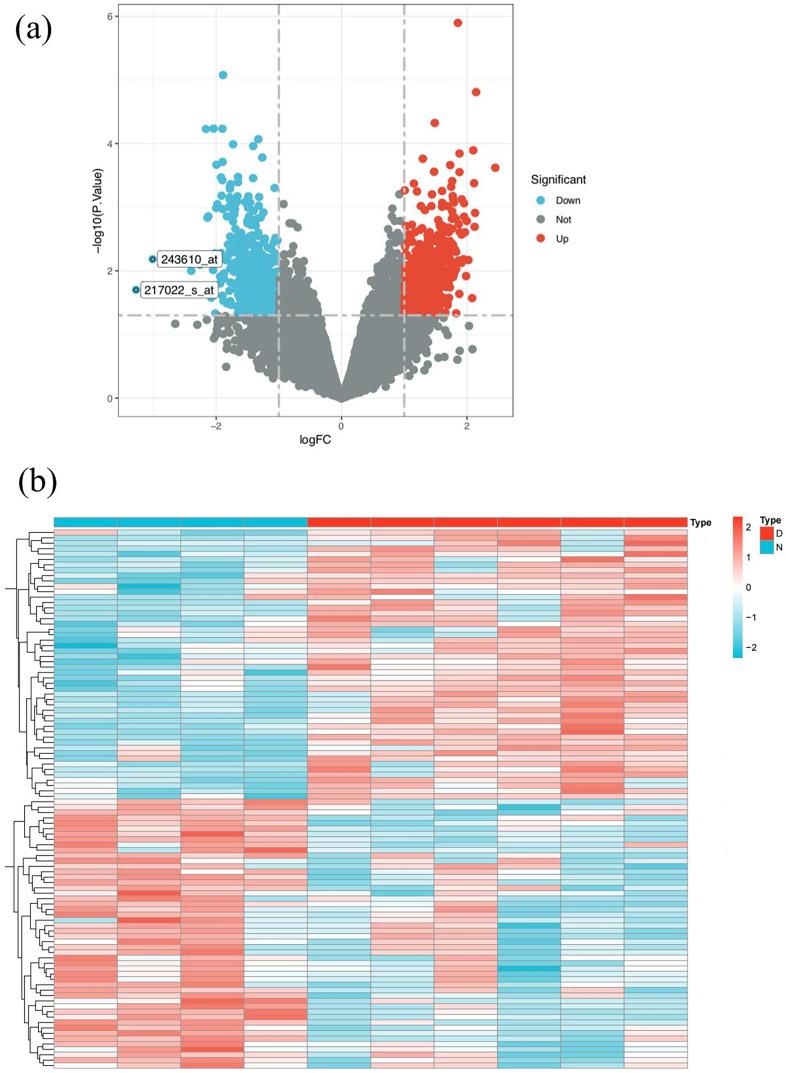
Employing the Traditional Chinese Medicine Systems Pharmacology Database and Analysis Platform (TCMSP) database to identify the active chemical components of Huangqin, searching for target genes related to SLE through GeneCards and the KEGG database, extracting the SLE expression gene profile from the GEO database to identify SLE-related targets, and identifying Huangqin-SLE interaction targets using Venny diagrams; Constructing protein interaction networks using the STRING database, identifying core targets with Cytoscape software, and conducting protein clustering analysis; Importing the common targets into the Database for Annotation, Visualization and Integrated Discovery (DAVID) for Gene Ontology (GO) and Kyoto Encyclopedia of Genes and Genomes (KEGG) enrichment analysis. Molecular docking was carried out by AutoDockTools, AutoDock Vina, and Discovery Studio software to verify the correlation between the main components of Huangqin and the core targets. Molecular dynamics simulations further confirmed the stability of the binding between components and the targets.
RESULTS
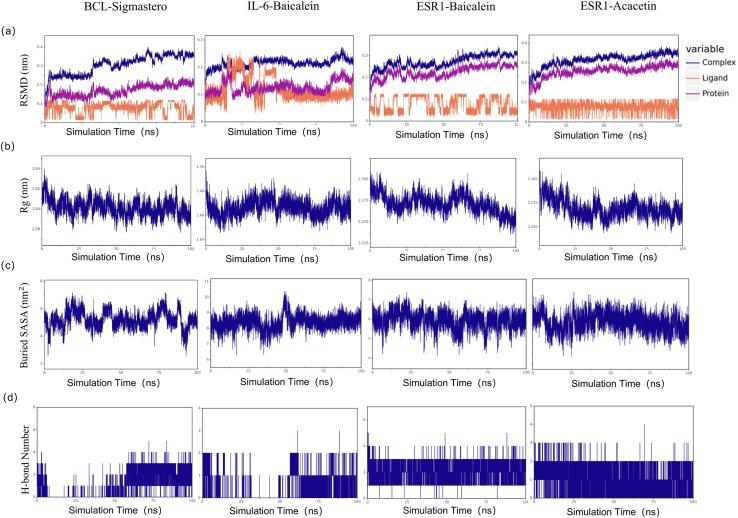
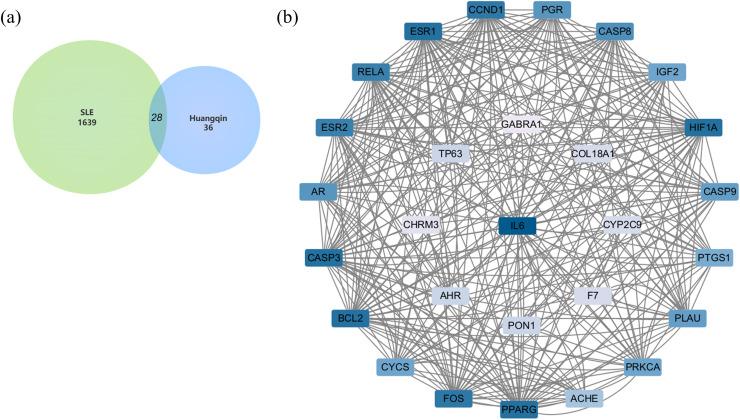
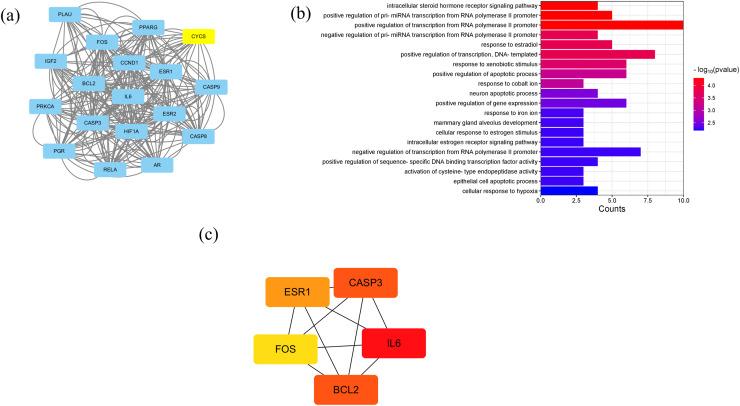
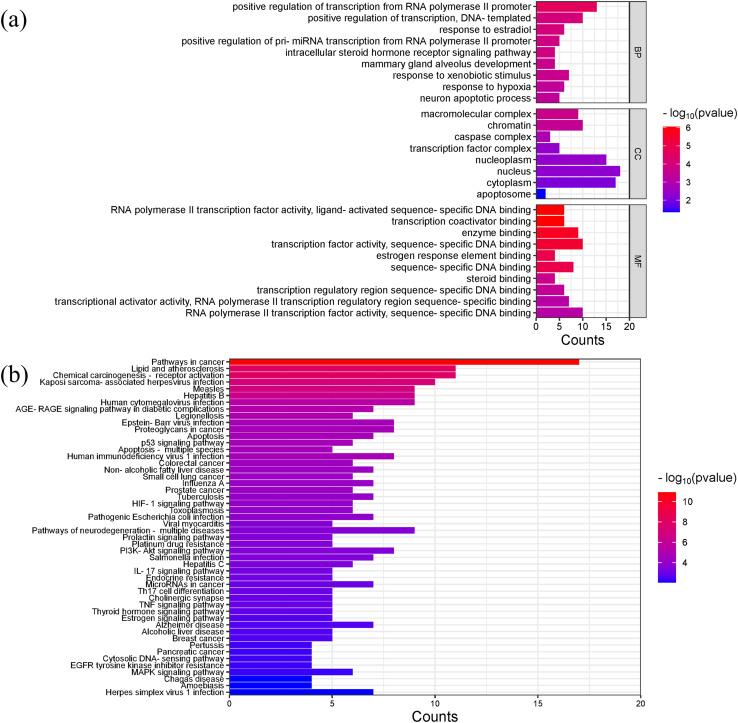
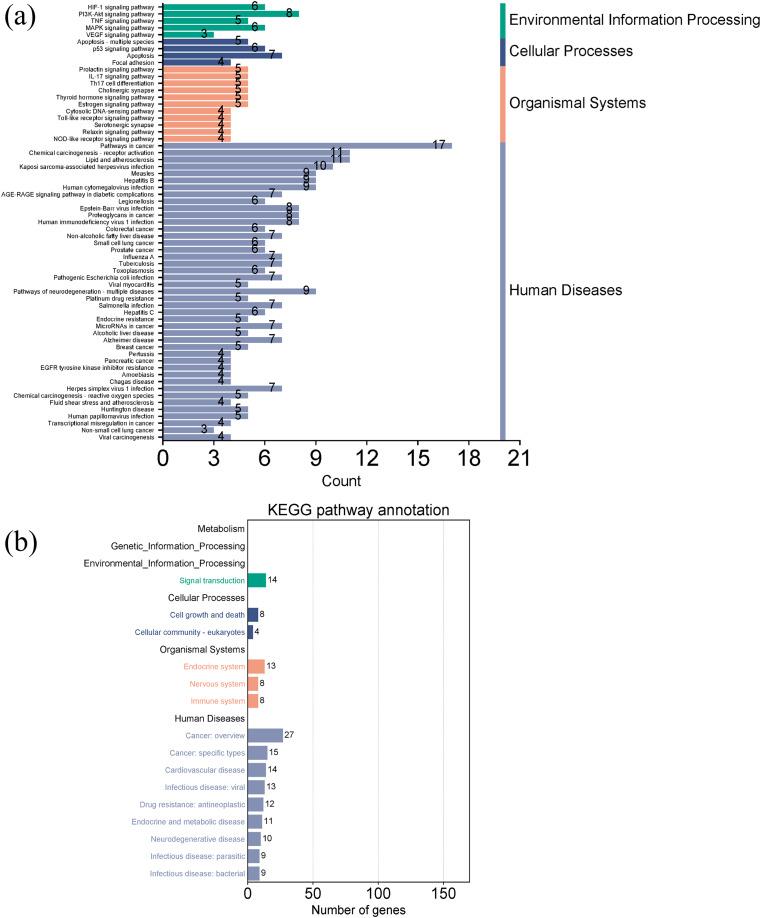
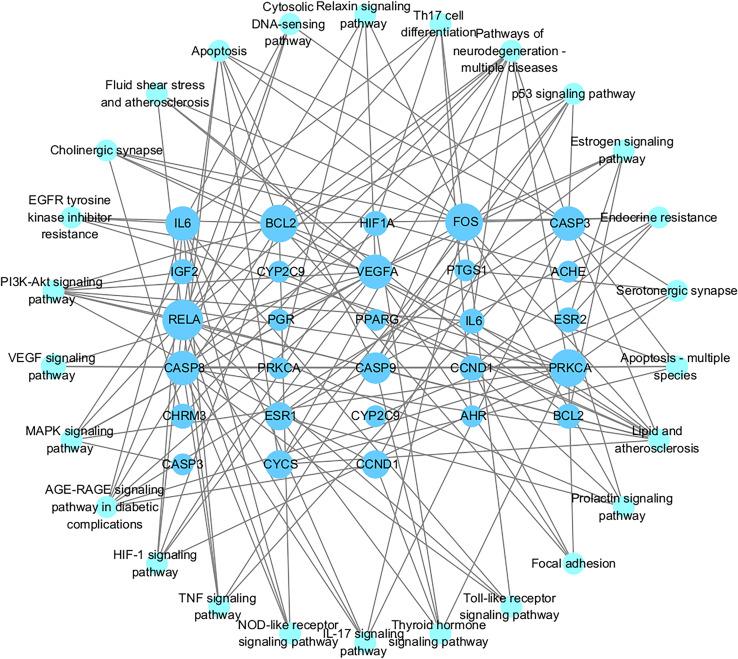
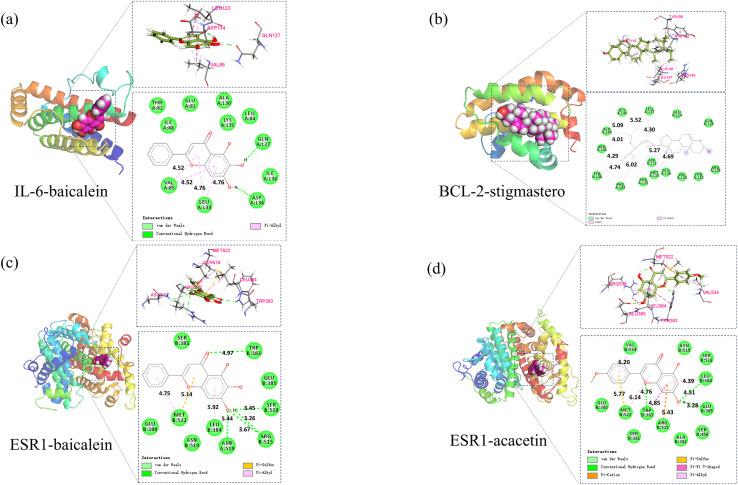
Network pharmacology identified 36 active components and 512 drug targets in Huangqin, resulting in the identification of 1,439 SLE targets and 28 common targets. The primary active components are baicalin, acacetin, oroxylin a, neobaicalin, and stigmasterol. Key genes were IL6, CASP3, BCL2, ESR1, and FOS; GO enrichment analysis yielded 77 significant results, while KEGG enrichment analysis produced 64 significant results. The primary signaling pathways targeted by Huangqin in SLE include the HIF-1 signaling pathway, PI3K-AKt signaling pathway, MAPK signaling pathway, IL-17 signaling pathway. Results of molecular docking indicated good binding affinity of Huangqin to stigmastero, baicalein and acacetin. The dynamics simulation indicated that the four complexes possessed reliable structural stability and compactness.
CONCLUSION
Huangqin can treat SLE through its effective components such as baicalin and acacetin. The mechanism involves inhibiting inflammatory factors, affecting the expression and activation of immune cells, and regulating cell autophagy.
背景
系统性红斑狼疮(SLE)是一种目前无法治愈的自身免疫性疾病。SLE的主要治疗策略包括糖皮质激素、免疫抑制剂、抗疟药物和生物制剂。迫切需要更温和、更有效的治疗方法。本研究旨在基于网络药理学探索中药(黄芩)治疗系统性红斑狼疮的有效成分和靶点,并进一步分析其潜在作用机制。
方法
利用中药系统药理学数据库与分析平台(TCMSP)数据库鉴定黄芩的活性化学成分,通过GeneCards和KEGG数据库搜索与SLE相关的靶基因,从GEO数据库中提取SLE表达基因谱以鉴定SLE相关靶点,并使用Venny图鉴定黄芩 - SLE相互作用靶点;利用STRING数据库构建蛋白质相互作用网络,使用Cytoscape软件鉴定核心靶点,并进行蛋白质聚类分析;将共同靶点导入注释、可视化与综合发现数据库(DAVID)进行基因本体论(GO)和京都基因与基因组百科全书(KEGG)富集分析。通过AutoDockTools、AutoDock Vina和Discovery Studio软件进行分子对接,以验证黄芩主要成分与核心靶点之间的相关性。分子动力学模拟进一步证实了成分与靶点之间结合的稳定性。
结果
网络药理学鉴定出黄芩中的36种活性成分和512个药物靶点,共鉴定出1439个SLE靶点和28个共同靶点。主要活性成分有黄芩苷、刺槐素、木犀草素、新黄芩苷和豆甾醇。关键基因有IL6、CASP3、BCL2、ESR1和FOS;GO富集分析产生77个显著结果,KEGG富集分析产生64个显著结果。黄芩在SLE中靶向的主要信号通路包括HIF - 1信号通路、PI3K - AKt信号通路、MAPK信号通路、IL - 17信号通路。分子对接结果表明黄芩与豆甾醇、黄芩素和刺槐素具有良好的结合亲和力。动力学模拟表明这四种复合物具有可靠的结构稳定性和紧密性。
结论
黄芩可通过黄芩苷和刺槐素等有效成分治疗SLE。其机制包括抑制炎症因子、影响免疫细胞的表达和激活以及调节细胞自噬。


 Zotero 插件