
先驱转录因子、染色质可及性和表观遗传重编程在致癌病毒中的作用。
The role of pioneering transcription factors, chromatin accessibility and epigenetic reprogramming in oncogenic viruses.
作者信息
Kgatle Mankgopo, Mbambara Saidon, Khoza Leon, Fadebi Olalekan, Mashamba-Thompson Tivani, Sathekge Mike
机构信息
Department of Nuclear Medicine, University of Pretoria and Steve Biko Academic Hospital, Pretoria, South Africa.
Nuclear Medicine Research Infrastructure (NuMeRI), Steve Biko Academic Hospital, Pretoria, South Africa.
出版信息
Front Microbiol. 2025 Jun 16;16:1602497. doi: 10.3389/fmicb.2025.1602497. eCollection 2025.
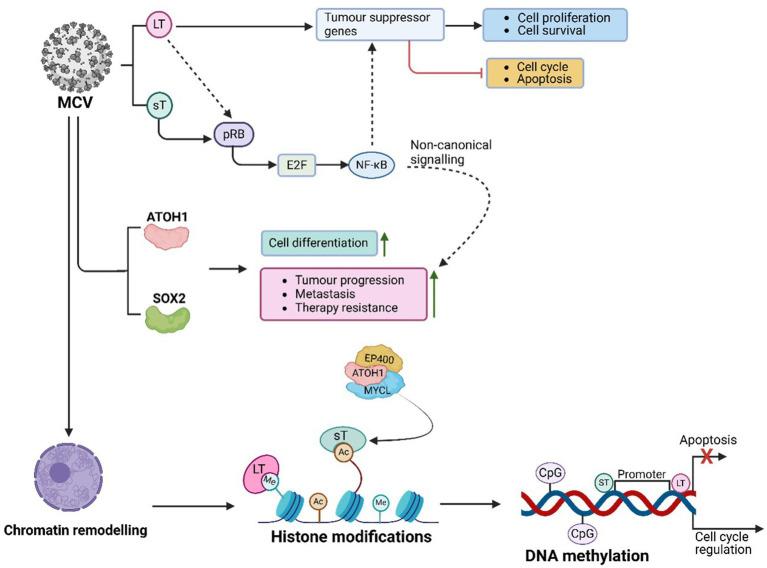
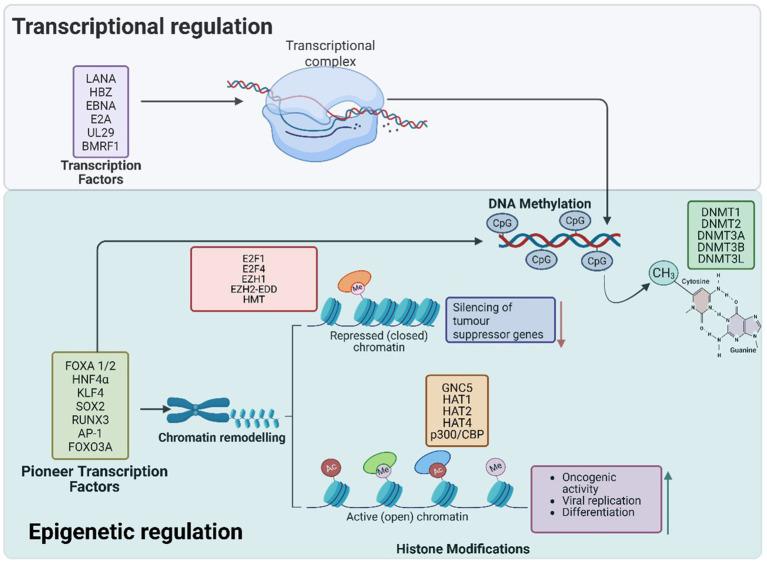
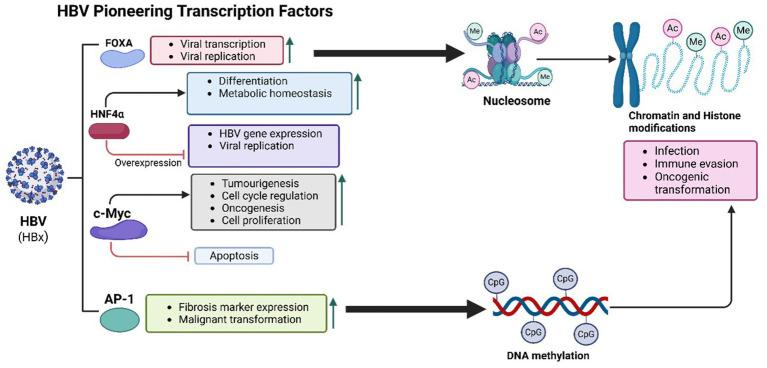
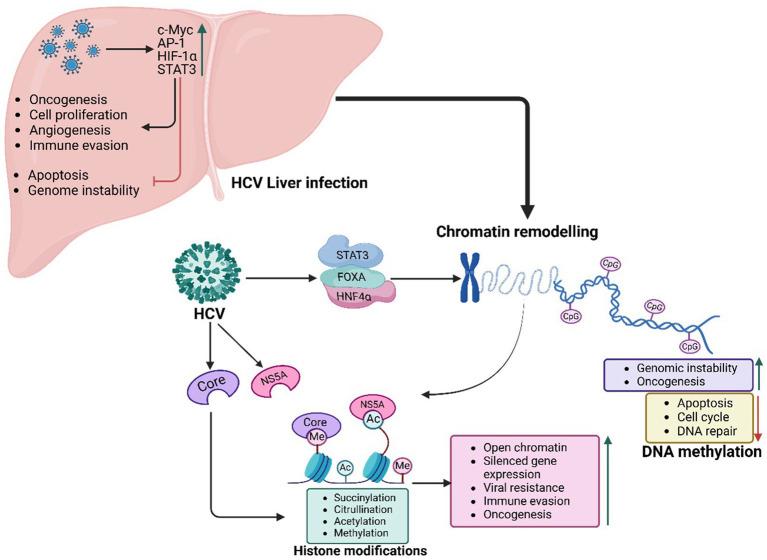
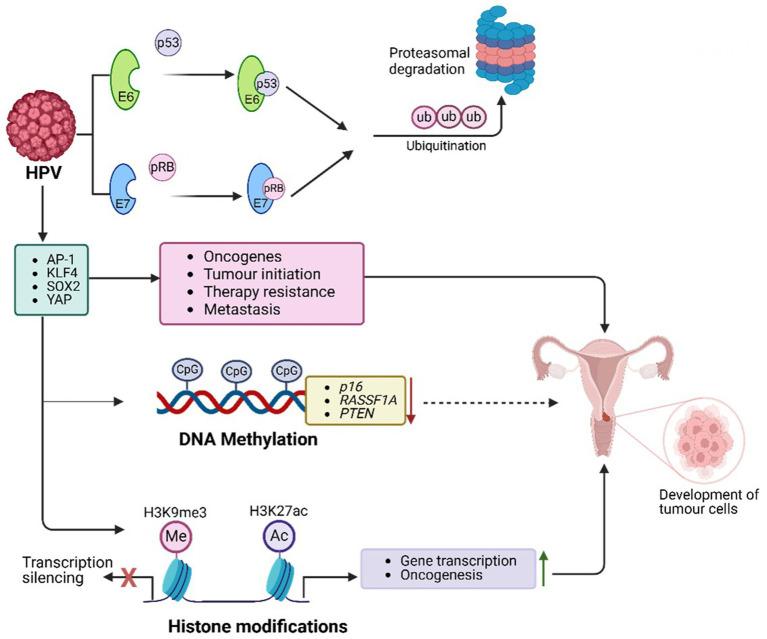
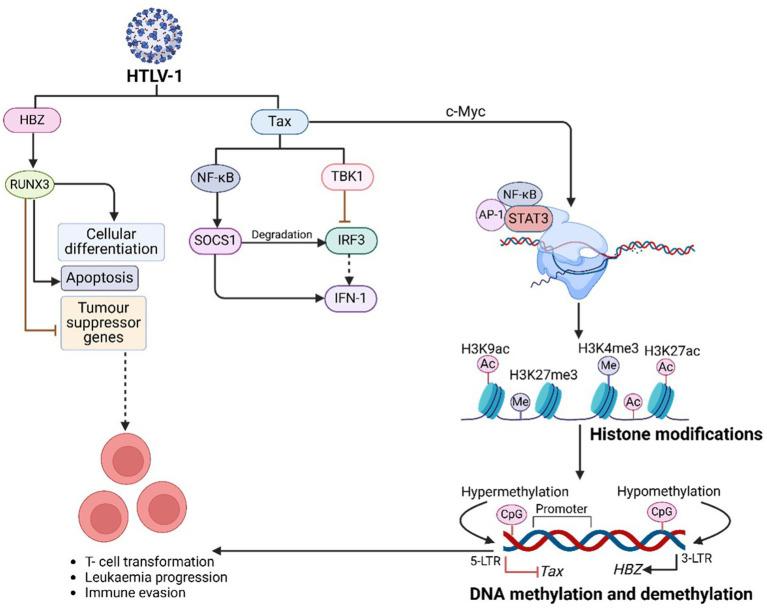
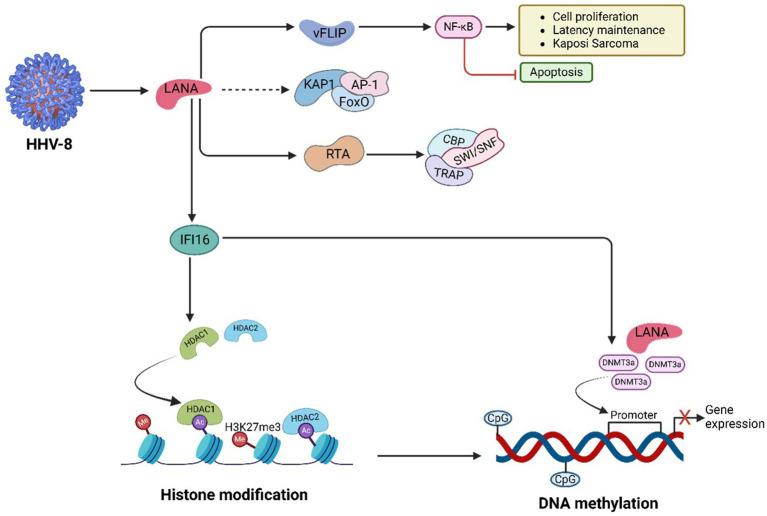
Oncogenic viruses typically manipulate host cellular mechanisms to drive tumorigenesis. They exploit pioneering transcription factors to modify gene expression, enabling uncontrolled proliferation. These viruses alter chromatin accessibility and induce chromatin remodelling, disrupting DNA repair and promoting viral genome integration. Additionally, epigenetic reprogramming through mechanisms like DNA methylation and histone modifications silences tumor suppressor genes and activates oncogenes. Understanding these mechanisms is critical for identifying more improved therapeutic targets, improving diagnostics, and predicting disease progression. Advances in this field can guide the development of innovative treatments and early detection tools. This comprehensive review synthesizes existing knowledge on the contributions of oncogenic viruses such as hepatitis B virus (HBV), hepatitis C virus (HCV), human papillomavirus (HPV), and human T-cell leukaemia virus type 1 (HTLV-1), Epstein-Barr virus (EBV), human herpesvirus 8 (HHV-8), and Merkel cell polyomavirus (MCV) to cancer development, highlighting their therapeutic relevance and driving forward research in viral oncogenesis.
致癌病毒通常操纵宿主细胞机制以驱动肿瘤发生。它们利用先驱转录因子来改变基因表达,从而实现不受控制的增殖。这些病毒改变染色质可及性并诱导染色质重塑,破坏DNA修复并促进病毒基因组整合。此外,通过DNA甲基化和组蛋白修饰等机制进行的表观遗传重编程会使肿瘤抑制基因沉默并激活癌基因。了解这些机制对于确定更多改进的治疗靶点、改善诊断以及预测疾病进展至关重要。该领域的进展可以指导创新治疗方法和早期检测工具的开发。这篇综述综合了关于乙型肝炎病毒(HBV)、丙型肝炎病毒(HCV)、人乳头瘤病毒(HPV)、1型人T细胞白血病病毒(HTLV-1)、爱泼斯坦-巴尔病毒(EBV)、人疱疹病毒8型(HHV-8)和默克尔细胞多瘤病毒(MCV)等致癌病毒对癌症发展的贡献的现有知识,强调了它们的治疗相关性,并推动了病毒致癌作用的研究。

 Zotero 插件