
1990年至2021年全球、区域和国家65岁及以上老年人痛风负担及2050年预测。
Global, regional, and national burden of gout among older adults (≥65) from 1990 to 2021 and projections for 2050.
作者信息
Tang Xiaoli, Deng Dan, Wu Qian
机构信息
Endocrinology and Metabolism, West China Hospital, Sichuan University, Chengdu, Sichuan, China.
Division of Vascular Surgery, Department of General Surgery, West China Hospital, Sichuan University/West China School of Nursing, Sichuan University, Chengdu, Sichuan, China.
出版信息
Front Public Health. 2025 Jun 16;13:1540190. doi: 10.3389/fpubh.2025.1540190. eCollection 2025.
BACKGROUND
Gout, a common and treatable type of inflammatory arthritis, is caused by the buildup of monosodium urate crystals in the synovial fluid and other tissues. This study uses epidemiological modeling to analyze the global impact of gout among older adults (≥65) from 1990 to 2021, with projections extending to 2050, using the most recent data from the Global Burden of Disease (GBD) 2021.
METHOD
Data from the GBD 2021 database were used to evaluate the global burden of gout in adults aged 65 and older from 1990 to 2021. The analysis considered factors such as age group (65+), gender, year (1990-2021), geographic classification [204 countries/regions, five socio-demographic index (SDI) regions, 21 GBD regions], and the SDI. Metrics assessed included incidence, prevalence, and disability-adjusted life years (DALYs), with their 95% uncertainty intervals (UI). All metrics were age-standardized using the GBD global standard population.
RESULTS
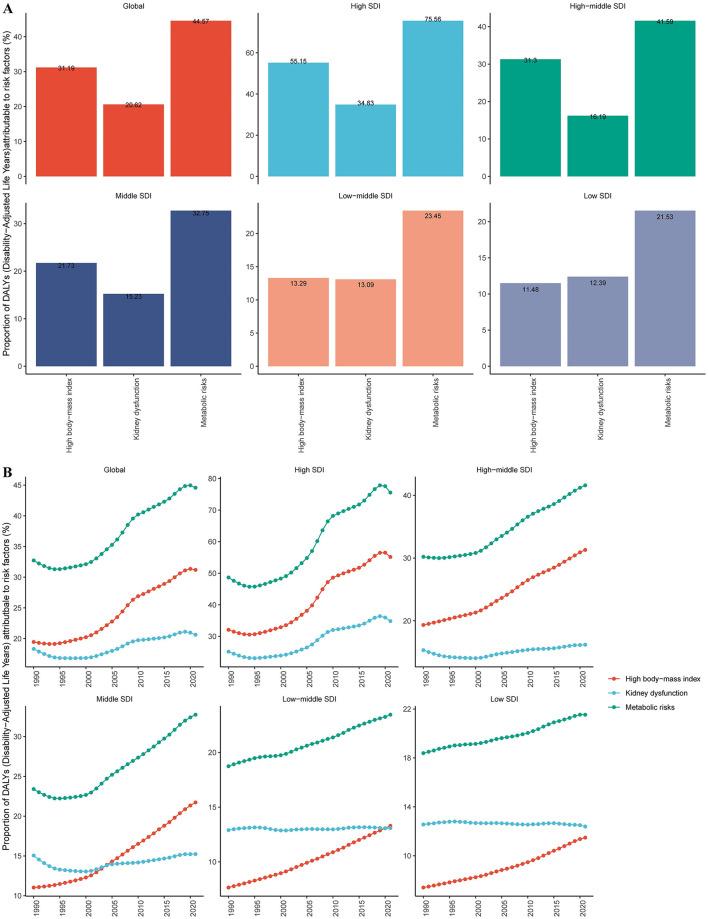
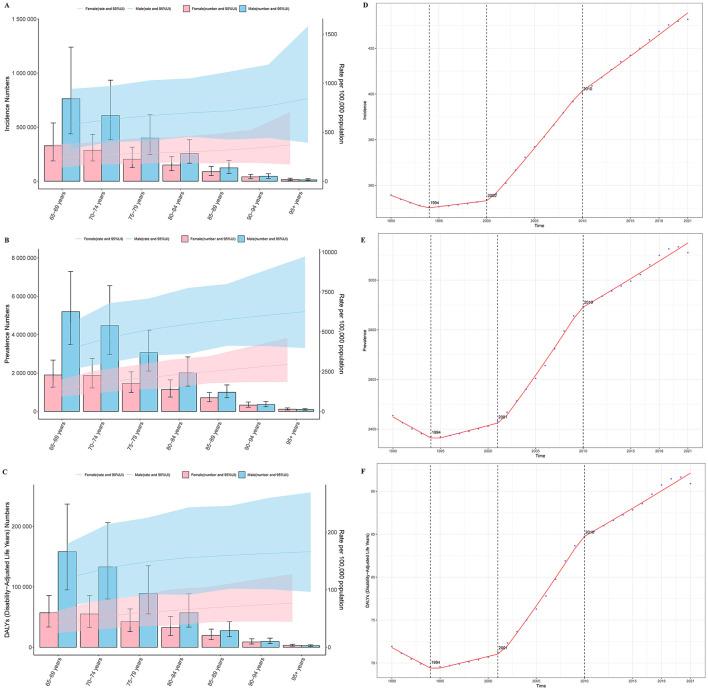
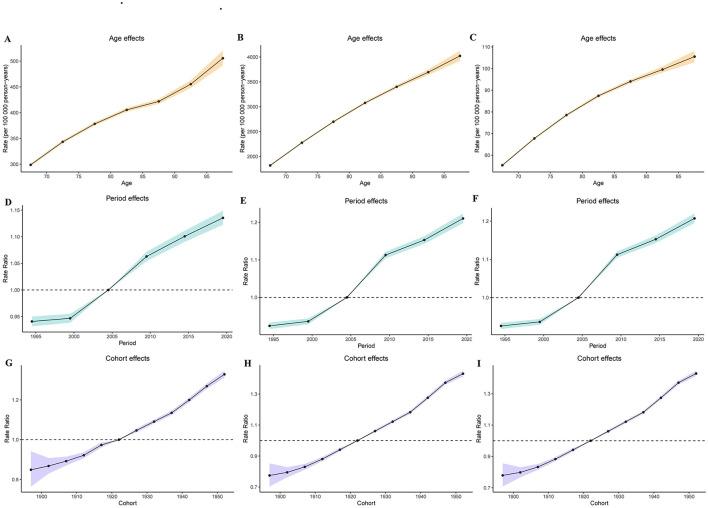
In 2021, the global age-standardized incidence rate of gout among older adults was 432.70 (95% UI: 263.28, 677.27) per 100,000 population. The age-standardized prevalence rate was 3,110.84 (95% UI: 2,092.83, 4,419.20) per 100,000, and the age-standardized DALYs were 90.90 (95% UI: 54.95, 139.13) per 100,000 person-years. There was an increasing trend in the incidence rate, prevalence, and DALYs as age increased among those 65 and older. The disease burden among older males was nearly twice that of females. Projections for 2050 show that the age-standardized incidence rate, prevalence rate, and DALYs are expected to increase to 524.99, 3,628.85, and 105.36 per 100,000 population, respectively. Metabolic risks have become the primary risk factor for gout.
DISCUSSION
Due to global population aging, our predictive model estimates that by 2050, the number of older adults with gout will increase by 8.5 million. The rise is particularly pronounced in high-SDI and high-income regions, highlighting the need for stronger prevention and management strategies in these areas. Early intervention in metabolic risk factors and improved early diagnosis and treatment are essential for effective gout management.
背景
痛风是一种常见且可治疗的炎症性关节炎,由滑膜液和其他组织中尿酸钠晶体的积聚引起。本研究利用流行病学模型,根据《2021年全球疾病负担》(GBD 2021)的最新数据,分析1990年至2021年痛风对老年人(≥65岁)的全球影响,并预测至2050年。
方法
使用GBD 2021数据库的数据评估1990年至2021年65岁及以上成年人痛风的全球负担。分析考虑了年龄组(65岁以上)、性别、年份(1990 - 2021年)、地理分类[204个国家/地区、五个社会人口指数(SDI)区域、21个GBD区域]以及SDI等因素。评估的指标包括发病率、患病率和伤残调整生命年(DALYs)及其95%不确定性区间(UI)。所有指标均使用GBD全球标准人口进行年龄标准化。
结果
2021年,全球老年人痛风的年龄标准化发病率为每10万人432.70(95% UI:263.28,677.27)。年龄标准化患病率为每10万人3110.84(95% UI:2092.83,4419.20),年龄标准化DALYs为每10万人年90.90(95% UI:54.95,139.13)。在65岁及以上人群中,随着年龄增长,发病率、患病率和DALYs呈上升趋势。老年男性的疾病负担几乎是女性的两倍。2050年的预测显示,年龄标准化发病率、患病率和DALYs预计将分别增至每10万人524.99、3628.85和105.36。代谢风险已成为痛风的主要危险因素。
讨论
由于全球人口老龄化,我们的预测模型估计,到2050年,痛风老年患者数量将增加850万。这种增长在高SDI和高收入地区尤为明显,凸显了这些地区加强预防和管理策略的必要性。对代谢危险因素的早期干预以及改善早期诊断和治疗对有效管理痛风至关重要。




 Zotero 插件