
在非小细胞肺癌中,固醇调节元件结合蛋白2(SREBP-2)通过甲羟戊酸-蛋白激酶B(Akt)途径促进癌症进展。
SREBP-2 promotes cancer progression through the mevalonate-Akt pathway in non-small cell lung cancer.
作者信息
You Wenjie, Su Lili, Weng Shuping, Li Jing, Wang Xingguang, Liang Bin, Li Daowei, Li Lijun, Chen Haiquan
机构信息
Departments of Thoracic Surgery and State Key Laboratory of Genetic Engineering, Fudan University Shanghai Cancer Center, Dong-An Road 270#, Shanghai, 200032, China.
Institute of Thoracic Oncology, Fudan University, Shanghai, 200032, China.
出版信息
Sci Rep. 2025 Jul 2;15(1):23103. doi: 10.1038/s41598-025-07437-0.
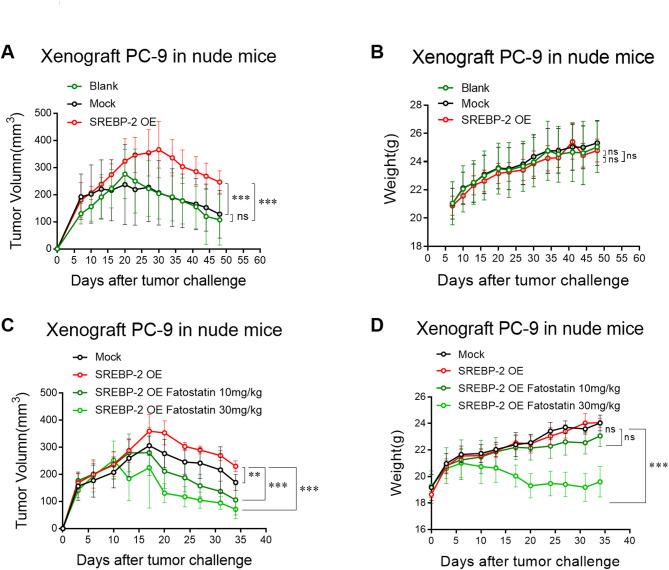
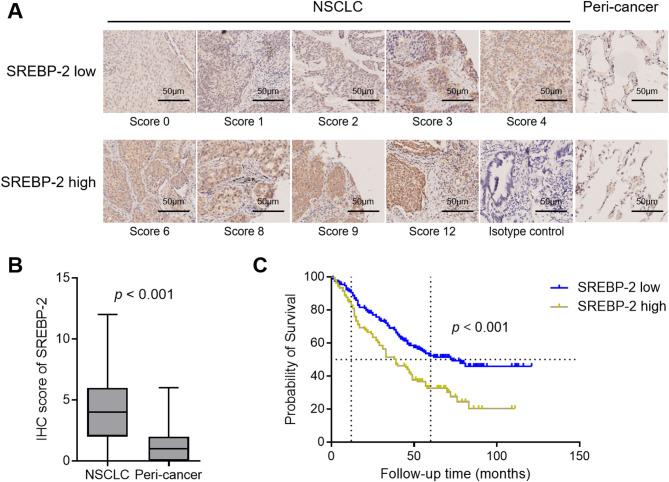
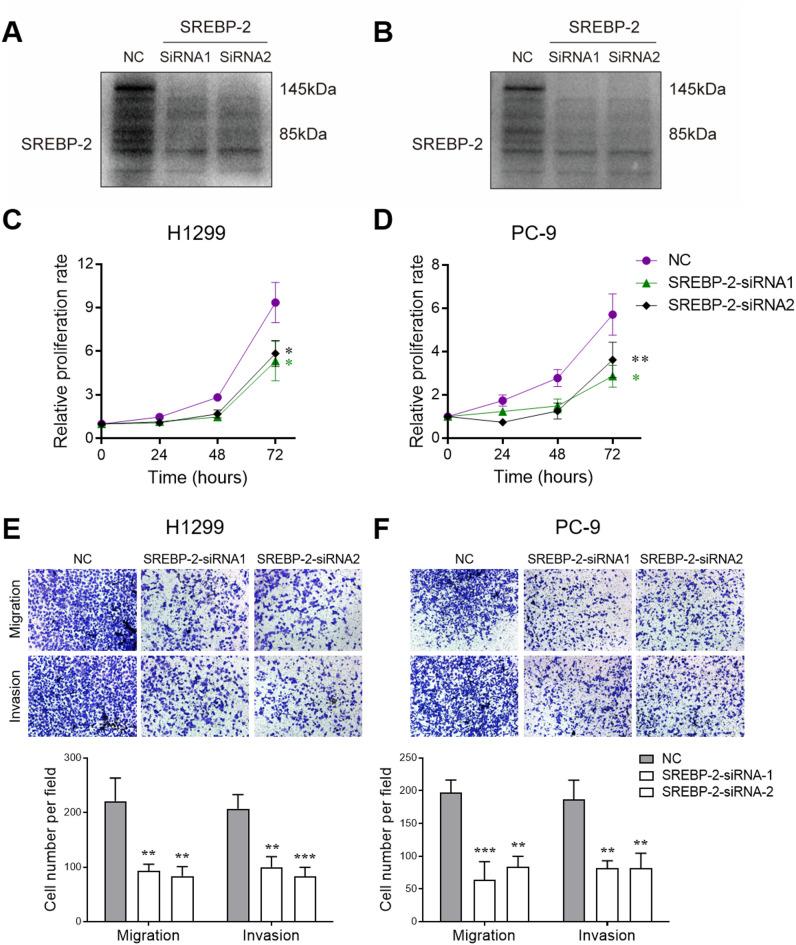
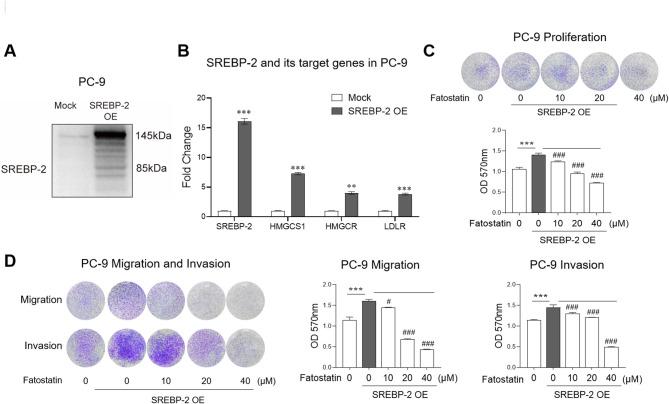
Sterol regulatory element-binding protein-2 (SREBP-2) is a transcriptional factor, which mainly regulates cholesterogenesis-associated genes. The metabolism of cholesterol was found to be abnormal in non-small cell lung cancer (NSCLC). However, the clinical relevance of SREBP-2 in NSCLC has yet to be elucidated. Herein, the prognostic significance of SREBP-2 in NSCLC patients, and the functional roles of SREBP-2 in NSCLC proliferation, migration and invasion was examined. Then, therapeutic potential of targeting SREBP-2 in NSCLC was evaluated using mouse xenograft tumor models. We found that SREBP-2 was significantly increased in NSCLC, as compared with pericarcinous lung tissues. High expression of SREBP-2 was associated with poor clinical characteristics, and predicted a shorter overall survival (OS) in NSCLC patients. Cox multivariate regression revealed that high SREBP-2 expression served as an independent predictor for poor OS. Biofunctional analysis showed that gene silencing of SREBP-2 abrogated the proliferation, migration and invasion of NSCLC cells, while enforced SREBP-2 promoted NSCLC cell proliferation, migration and invasion. Mechanistically, SREBP-2 was found to promote cell proliferation, migration and invasion via the mevalonate-Akt pathway in NSCLC cells. Further in vivo treatment experiments showed that SREBP inhibitor decreased NSCLC tumor growth in mouse xenograft models in vivo. In combination, this study dissected the clinical significance and oncogenic role of SREBP-2 in NSCLC progression, providing evidence that have both prognostic and therapeutic implications.
固醇调节元件结合蛋白2(SREBP-2)是一种转录因子,主要调节胆固醇生成相关基因。研究发现非小细胞肺癌(NSCLC)中胆固醇代谢异常。然而,SREBP-2在NSCLC中的临床相关性尚待阐明。在此,研究了SREBP-2在NSCLC患者中的预后意义,以及SREBP-2在NSCLC增殖、迁移和侵袭中的功能作用。然后,使用小鼠异种移植肿瘤模型评估了靶向SREBP-2在NSCLC中的治疗潜力。我们发现,与癌旁肺组织相比,NSCLC中SREBP-2显著升高。SREBP-2高表达与不良临床特征相关,并预测NSCLC患者总生存期(OS)较短。Cox多因素回归分析显示,SREBP-2高表达是OS不良的独立预测因素。生物功能分析表明,SREBP-2基因沉默可消除NSCLC细胞的增殖、迁移和侵袭,而强制表达SREBP-2则促进NSCLC细胞增殖、迁移和侵袭。机制上,发现SREBP-2通过甲羟戊酸-Akt途径促进NSCLC细胞增殖、迁移和侵袭。进一步的体内治疗实验表明,SREBP抑制剂可降低小鼠异种移植模型中NSCLC肿瘤的生长。综上所述,本研究剖析了SREBP-2在NSCLC进展中的临床意义和致癌作用,提供了具有预后和治疗意义的证据。


 Zotero 插件