
利用石英音叉(QTF)微机械传感器监测绿色合成的氧化锌纳米颗粒在模拟口腔环境的革兰氏阴性菌和革兰氏阳性菌上的抗菌活性。
Monitoring the Antibacterial Activity of the Green Synthesized ZnO Nanoparticles on the Negative and Positive Gram Bacteria Mimicking Oral Environment by Using a Quartz Tuning Fork (QTF) Micromechanical Sensor.
作者信息
Al-Hamad Khalid A, Asiri Ashwaq, Alqahtani Ali M, Alotaibi Saud, Almalki Abdullah
机构信息
Department of Maxillofacial and Diagnostic Sciences, College of Dentistry, Majmaah University, Majmaah, 11952, Saudi Arabia.
Department of Restorative Dental Sciences, College of Dentistry, Majmaah University, Majmaah, 11952, Saudi Arabia.
出版信息
Int J Nanomedicine. 2025 Jun 21;20:7975-7985. doi: 10.2147/IJN.S480164. eCollection 2025.
INTRODUCTION
Green-synthesized nanoparticles show promise as anti-biofilm and antibacterial agents in medical applications, including dental implants and oral devices. However, conventional antibacterial testing methods are laborious and lack sensitivity. Quartz tuning fork (QTF)-based biosensors offer a compelling alternative due to their high sensitivity, compact size, and cost-effectiveness. This study evaluates a QTF biosensor for quantifying the antibacterial activity of green-synthesized ZnO nanoparticles against negative and positive Gram bacteria.
METHODS
The antibacterial activity of ZnO nanoparticles was tested in a simulated oral environment against (gram-positive) and (gram-negative) using a QTF biosensor. Changes in resonance frequency and quality factor were measured to assess bacterial growth inhibition. Experiments were conducted with varying ZnO concentrations (eg, 1 mm) to correlate sensor responses with antibacterial effects.
RESULTS
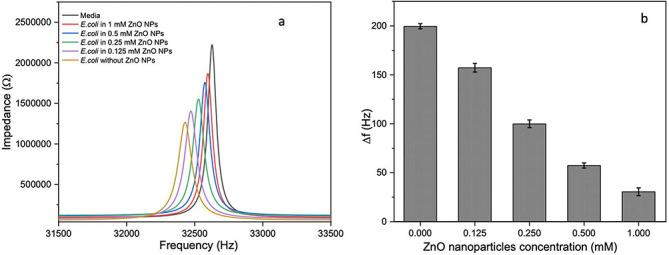
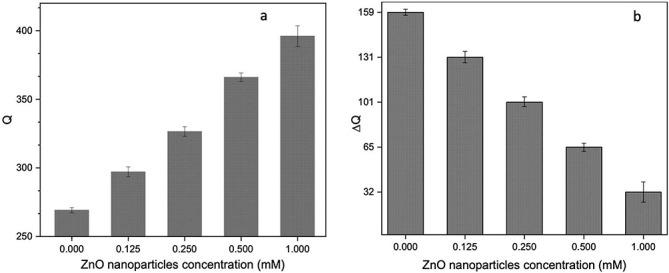
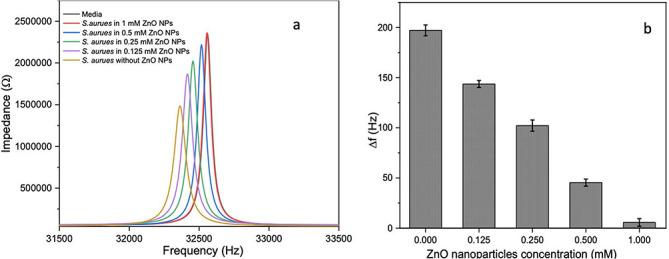
The QTF biosensor detected significant antibacterial activity as resonance frequency decreased by 5.69 ± 3.81 hz () and 30.57 ± 4.01 hz () in 1 mm ZnO. Quality factor declined by 31.75 ± 7.55 for but remained stable for . Higher bacterial concentrations (lower ZnO doses) increased damping effects, reducing the quality factor. exhibited greater sensitivity to ZnO nanoparticles than .
DISCUSSION
The QTF biosensor successfully quantified the antibacterial effects of green-synthesized ZnO nanoparticles, demonstrating its potential as a rapid, sensitive alternative to traditional methods. The differential responses of and suggest species-specific interactions with ZnO, warranting further study. This approach could streamline the development of biocompatible, antibacterial medical materials.
引言
绿色合成的纳米颗粒在包括牙科植入物和口腔器械在内的医学应用中显示出作为抗生物膜和抗菌剂的潜力。然而,传统的抗菌测试方法既费力又缺乏灵敏度。基于石英音叉(QTF)的生物传感器由于具有高灵敏度、紧凑的尺寸和成本效益,提供了一种引人注目的替代方案。本研究评估了一种QTF生物传感器,用于量化绿色合成的ZnO纳米颗粒对革兰氏阴性菌和革兰氏阳性菌的抗菌活性。
方法
使用QTF生物传感器在模拟口腔环境中测试ZnO纳米颗粒对(革兰氏阳性菌)和(革兰氏阴性菌)的抗菌活性。测量共振频率和品质因数的变化以评估细菌生长抑制。使用不同的ZnO浓度(例如1毫米)进行实验,以将传感器响应与抗菌效果相关联。
结果
在1毫米ZnO中,QTF生物传感器检测到显著的抗菌活性,共振频率分别下降了5.69±3.81赫兹()和30.57±4.01赫兹()。的品质因数下降了31.75±7.55,而保持稳定。较高的细菌浓度(较低的ZnO剂量)增加了阻尼效应,降低了品质因数。对ZnO纳米颗粒的敏感性高于。
讨论
QTF生物传感器成功地量化了绿色合成的ZnO纳米颗粒的抗菌效果,证明了其作为传统方法的快速、灵敏替代方法的潜力。和的不同反应表明与ZnO存在物种特异性相互作用,值得进一步研究。这种方法可以简化生物相容性抗菌医用材料的开发。


 Zotero 插件