
靶向肿瘤相关巨噬细胞在胃癌进展和治疗中的作用:从分子机制到治疗应用的见解
Targeting tumor-associated macrophages in gastric cancer progression and therapy: insights from molecular mechanisms to therapeutic applications.
作者信息
Wan ChengTao, Deng Jie, Zhu Yu, Wan Li, Xu Linyue, Chen Qiuyan, Zou Can, Huang Ju
机构信息
Department of Gastroenterology, Jian Yang Hospital of Traditional Chinese Medicine, Chengdu, Sichuan, China.
The General Hospital of Western Theater Command, Chengdu, Sichuan, China.
出版信息
Front Pharmacol. 2025 Jun 17;16:1549694. doi: 10.3389/fphar.2025.1549694. eCollection 2025.
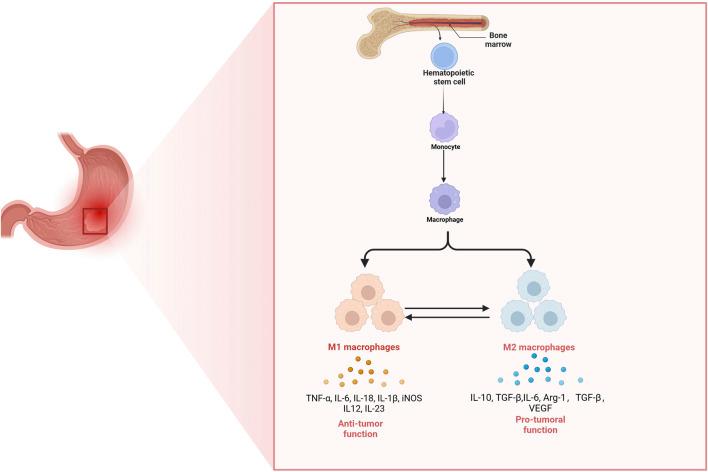
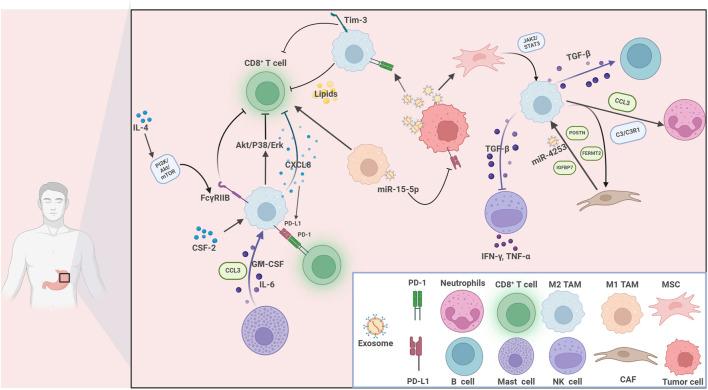
Gastric cancer (GC) is the fifth most common malignant tumor that imposes heavily public health burdens worldwide. Systemic therapies for gastric cancer (GC), such as chemotherapy, targeted therapy, and immunotherapy, have undergone significant advancements. Nevertheless, the extensive application of anti-cancer agents has resulted in an increasing array of challenges related to drug resistance, presenting a substantial barrier in GC treatment. Tumor-associated macrophages (TAMs) as essential immunomodulators within the tumor immune microenvironment (TIME) of GC, providing novel therapeutic targets due to their capacity for plasticity in reaction to environmental signals. They create a complex network of communication with various immune and stromal cell types, thereby contributing to the immunosuppressive nature of the TME in GC. In this review, we establish the map of the origin and polarization of macrophages in GC. During the process of carcinogenesis, macrophages undergo dynamic phenotypic transitions. Additionally, the interactions between TAMs and tumor cells significantly influence the progression of GC, affecting tumor growth, metastasis, angiogenesis, and drug resistance. Furthermore, this intricate immunomodulatory axis notably enhances resistance to immunotherapy, suggesting that targeting TAMs presents substantial therapeutic opportunities for patients with GC. Approaches such as TAM elimination, TAM repolarization, and CAR-M therapy have been validated in numerous studies. We also elaborate on the challenges faced by the development of targeting TAMs, which may provide innovative perspectives on the GC treatment.
胃癌(GC)是全球第五大常见恶性肿瘤,给公共卫生带来沉重负担。胃癌的全身治疗,如化疗、靶向治疗和免疫治疗,已取得显著进展。然而,抗癌药物的广泛应用导致了与耐药性相关的一系列挑战日益增加,这在胃癌治疗中构成了重大障碍。肿瘤相关巨噬细胞(TAM)作为胃癌肿瘤免疫微环境(TIME)中的重要免疫调节因子,因其能够根据环境信号发生可塑性变化而提供了新的治疗靶点。它们与各种免疫和基质细胞类型形成复杂的通讯网络,从而促成了胃癌肿瘤微环境(TME)的免疫抑制特性。在本综述中,我们绘制了胃癌中巨噬细胞的起源和极化图谱。在致癌过程中,巨噬细胞经历动态的表型转变。此外,TAM与肿瘤细胞之间的相互作用显著影响胃癌的进展,影响肿瘤生长、转移、血管生成和耐药性。此外,这种复杂的免疫调节轴显著增强了对免疫治疗的抗性,这表明靶向TAM为胃癌患者提供了大量治疗机会。在众多研究中已验证了诸如消除TAM、使TAM重极化和CAR-M疗法等方法。我们还阐述了靶向TAM开发所面临的挑战,这可能为胃癌治疗提供创新视角。

 Zotero 插件