
厄立特里亚安塞巴省奶牛乳房炎的患病率、病因及宿主与管理因素:一项横断面研究
Prevalence, aetiology and host and management factors associated with bovine mastitis in dairy cows in Zoba Anseba, Eritrea: a cross-sectional study.
作者信息
Ghebrehawariat Redie Kidane, Woldehiwet Zerai, Tesfai Tzeggai, Imam Bereket Habte, Kibrom Yirgalem Mehari, Habte Abraham Debru, Hadgu Betiel Habte, Kahsay Filmon Berhane, Fisehaye Rim Berhane, Kahsay Samuel Haile, Yosief Saron Yemane
机构信息
School of Veterinary Medicine, Hamelmalo Agricultural College, Hamelmalo, Eritrea.
Institute of Infection, Veterinary and Ecological Sciences, University of Liverpool, Liverpool, UK.
出版信息
BMC Vet Res. 2025 Jul 2;21(1):419. doi: 10.1186/s12917-025-04868-9.
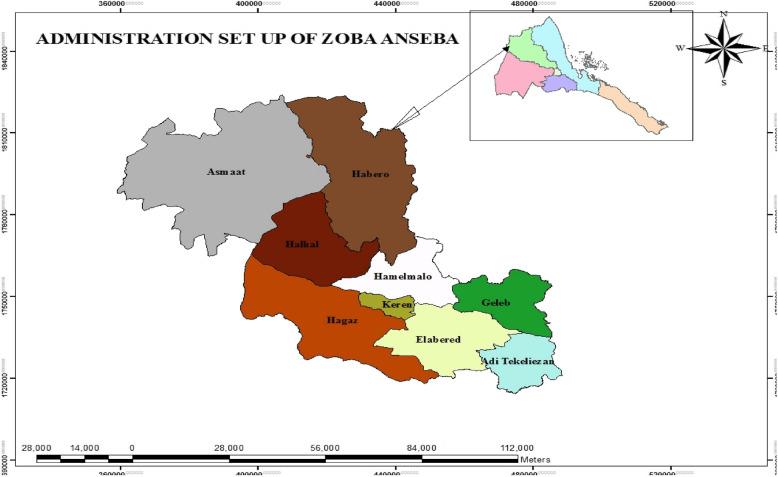
From 47 dairy farms located in the Anseba Region of Eritrea, 222 cows were randomly selected for a questionnaire survey, examined for signs of clinical mastitis and milk samples tested for subclinical mastitis using the California mastitis test (CMT). Twenty cows (9%) were deemed to have clinical mastitis (CM), because they had visible clinical signs or visible changes in milk samples. Of the 202 cows tested by the CMT, 156 (77.23%) had a score of 1 or above at least in one quarter and were deemed to have subclinical mastitis (SCM). SCM was significantly more frequent in exotic breeds than in cross or indigenous breeds (p < 0.001) and cows with poor body condition compared to cows with good body condition (p = 0.025). CM was significantly more frequent in cows with a history of clinical mastitis (p = 0.004). SCM was significantly more frequent in farms that keep dung inside the compound (p = 0.004), do not milk cows with mastitis last (p < 0.01), use earthen floor (p < 0.01), do not routinely use mastitis test (p < 0.001), have intensive system of production and in farms with frequent tick infestation of the udder (p < 0.001). From 20 CM-positive and 153-SCM-positive composite milk samples tested, 29 isolates of Staphylococcus aureus, 23 Enterococcus faecium and 20 Streptococcus species, including 8 Streptococcus agalactiae were isolated. Of the 13 isolates of S. aureus tested, all were resistant to tetracycline, 11 to sulfonamides and 10 to penicillin. Two Streptococcus agalactiae isolates tested were resistant to tetracycline and penicillin.
从厄立特里亚安塞巴地区的47个奶牛场中,随机挑选了222头奶牛进行问卷调查,检查其临床乳腺炎体征,并使用加利福尼亚乳腺炎检测法(CMT)对牛奶样本进行亚临床乳腺炎检测。20头奶牛(9%)被判定患有临床乳腺炎(CM),因为它们有明显的临床体征或牛奶样本有可见变化。在通过CMT检测的202头奶牛中,156头(77.23%)至少有一个乳区的检测得分为1或以上,被判定患有亚临床乳腺炎(SCM)。外来品种奶牛的SCM发生率显著高于杂交或本地品种(p < 0.001),与身体状况良好的奶牛相比,身体状况差的奶牛SCM发生率更高(p = 0.025)。有临床乳腺炎病史的奶牛CM发生率显著更高(p = 0.004)。在将粪便存放在牛舍内的农场(p = 0.004)、不最后挤患有乳腺炎奶牛的奶(p < 0.01)、使用泥土地面的农场(p < 0.01)、不常规进行乳腺炎检测的农场(p < 0.001)、采用集约化生产方式的农场以及乳房频繁受到蜱虫侵扰的农场中,SCM发生率显著更高(p < 0.001)。在检测的20份CM阳性和153份SCM阳性的混合牛奶样本中,分离出29株金黄色葡萄球菌、23株粪肠球菌和20株链球菌,其中包括8株无乳链球菌。在检测的13株金黄色葡萄球菌中,所有菌株都对四环素耐药,11株对磺胺类药物耐药,10株对青霉素耐药。检测的2株无乳链球菌对四环素和青霉素耐药。

 Zotero 插件