
2017年至2021年中国宁夏缺血性中风后的再入院情况:回顾性队列研究
Readmission After Ischemic Stroke in Ningxia, China, From 2017 to 2021: Retrospective Cohort Study.
作者信息
Meng Hua, Wang Xingtian, Pan Dongfeng, Su Xinya, Lu Wenwen, Liu Zhuo, Geng Yuhui, Ma Xiaojuan, Pan Ting, Liang Peifeng
机构信息
Hubei Provincial Clinical Research Center for Alzheimer's Disease, Tianyou Hospital, School of Medicine, Wuhan University of Science and Technology, Wuhan, China.
Brain Science and Advanced Technology Institute, Wuhan University of Science and Technology, Wuhan, China.
出版信息
Interact J Med Res. 2025 Jul 3;14:e67522. doi: 10.2196/67522.
BACKGROUND
Stroke remains a major cause of death and disability worldwide. Ischemic stroke is the most common type of stroke. Readmissions after hospitalization increase the patient burden and waste health resources.
OBJECTIVE
This study aimed to calculate rehospitalization rates and explore risk factors associated with rehospitalization in ischemic stroke.
METHODS
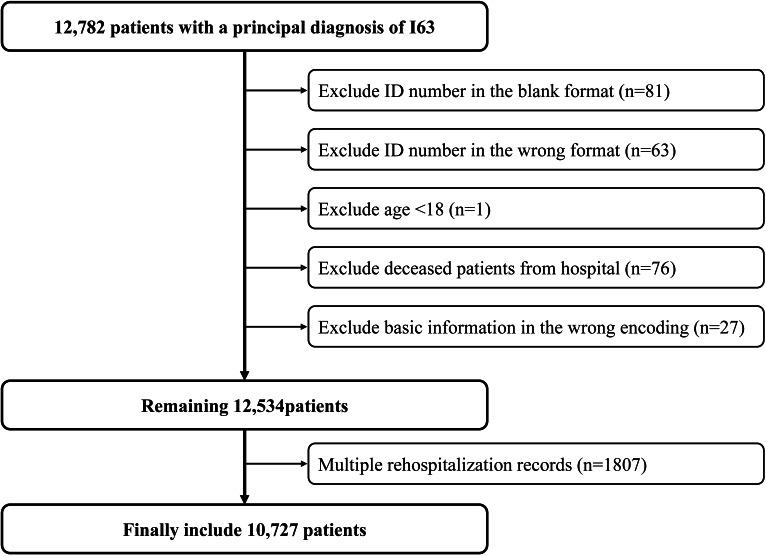
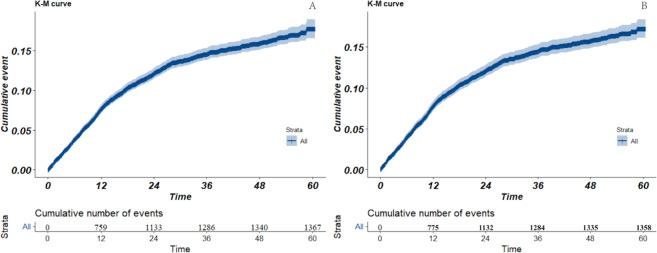
In this retrospective cohort study, we identified 12,782 patients admitted for ischemic stroke at People's Hospital of Ningxia Hui Autonomous Region between January 2017 and December 2021. Groups were determined based on the ID number. The most important factors were selected using the Least Absolute Shrinkage and Selection Operator regression model. Stabilized inverse probability of treatment weighting (SIPTW) was used to correct baseline imbalances between groups. The adjusted hazard ratios and Kaplan-Meier survival curves of significant factors after SIPTW were calculated using stepwise backward Cox regression.
RESULTS
A total of 10,727 patients were included in the study. Among them, 12.7% and 7.2% were readmitted within 5 years and 1 year, respectively. Stepwise backward Cox analysis of SIPTW showed that diabetes was the influencing factor for rehospitalization within 5 years (1.15, 1.02-1.30) and 1 year (1.21, 1.03-1.43). Additionally, the female gender was identified as a protective factor against readmission within 5 years (0.83, 0.74-0.93).
CONCLUSIONS
Although the rate of rehospitalization varied among patients with ischemic stroke at different time points, the significant factors remained consistent. Therefore, early prevention and treatment methods may be consistent.
背景
中风仍是全球死亡和残疾的主要原因。缺血性中风是最常见的中风类型。住院后的再次入院增加了患者负担并浪费了卫生资源。
目的
本研究旨在计算缺血性中风的再住院率,并探讨与再住院相关的危险因素。
方法
在这项回顾性队列研究中,我们确定了2017年1月至2021年12月期间在宁夏回族自治区人民医院因缺血性中风入院的12782例患者。根据身份证号码确定分组。使用最小绝对收缩和选择算子回归模型选择最重要的因素。使用稳定的治疗权重逆概率(SIPTW)来校正组间的基线不平衡。使用逐步向后Cox回归计算SIPTW后显著因素的调整风险比和Kaplan-Meier生存曲线。
结果
共有10727例患者纳入研究。其中,分别有12.7%和7.2%在5年内和1年内再次入院。SIPTW的逐步向后Cox分析表明,糖尿病是5年内(1.15,1.02-1.30)和1年内(1.21,1.03-1.43)再住院的影响因素。此外,女性被确定为5年内再次入院的保护因素(0.83,0.74-0.93)。
结论
尽管缺血性中风患者在不同时间点的再住院率有所不同,但重要因素保持一致。因此,早期预防和治疗方法可能是一致的。

 Zotero 插件