
探索疼痛管理偏好:一项针对中老年人对大麻或阿片类药物的离散选择实验。
Exploring pain management preferences: a discrete choice experiment on cannabis or opioids among middle-aged and older adults.
作者信息
Fabian Rudiel, Brown Paul, Cisneros Ricardo
机构信息
Department of Public Health, University of California Merced, 5200 N. Lake Road, Merced, CA, 95348, USA.
出版信息
J Health Popul Nutr. 2025 Jul 3;44(1):225. doi: 10.1186/s41043-025-00989-x.
OBJECTIVE
The study examines middle-aged and older adult’s preferences to identify policies that might increase the use of cannabis rather than opioids for controlling physical pain.
METHOD
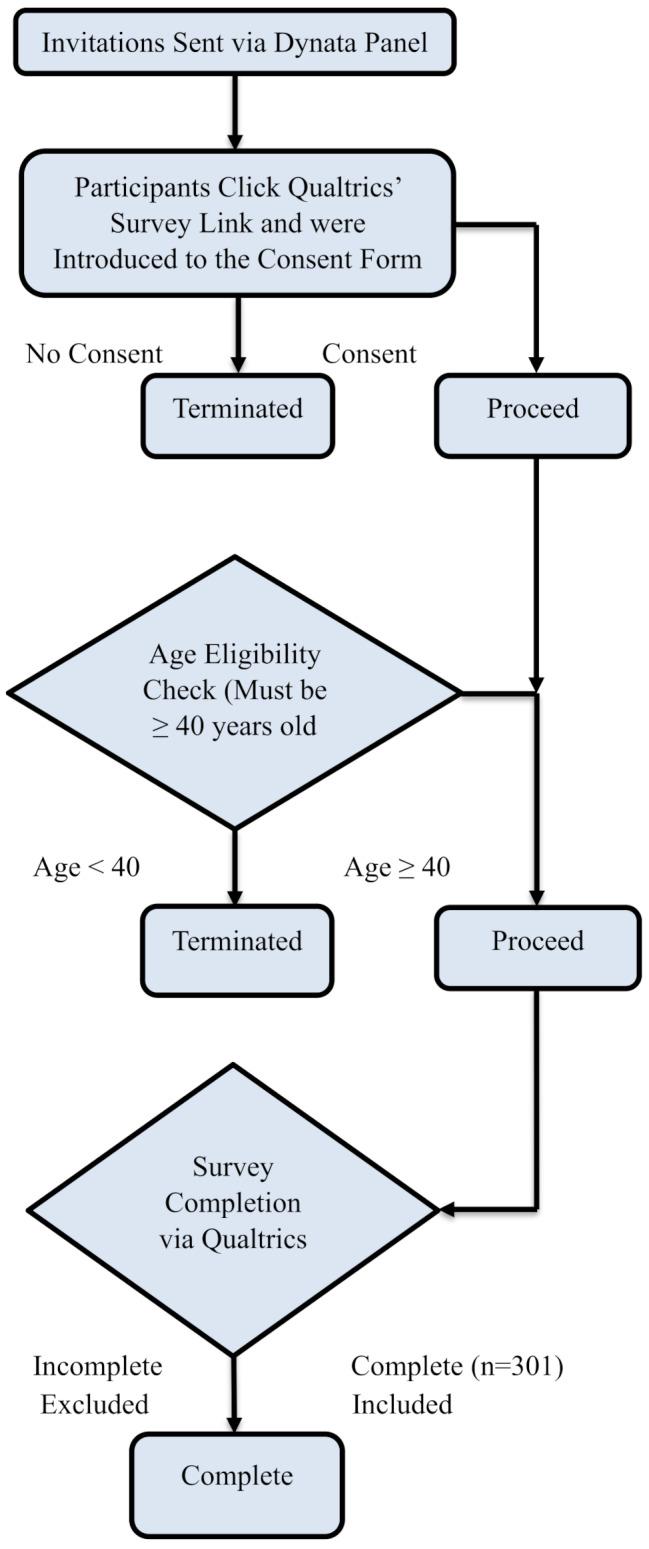
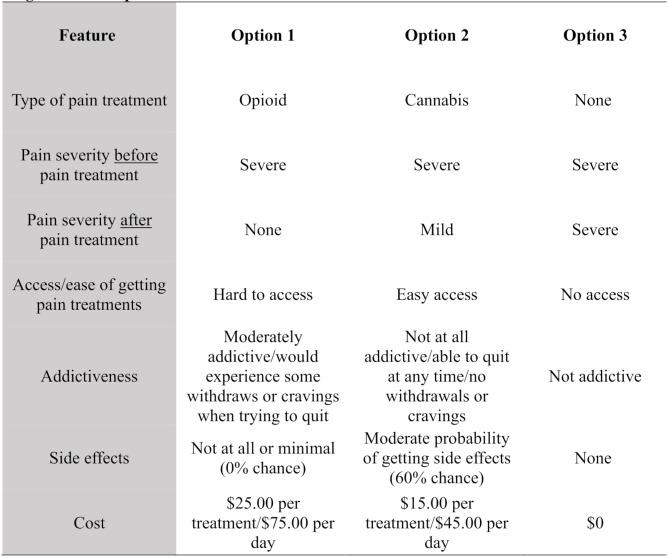
A discrete choice survey was administered to 301 older adults (≥ 40 years) in three California regions (Los Angeles, Bay Area, and San Joaquin Valley). Participants expressed preferences for pain medication under mild, moderate, and severe pain scenarios. Each participant made 16 choices between options that varied by medication type (medical cannabis, opioids, over-the-counter medications, or none), effectiveness, accessibility, side effects, addictiveness, and cost of the medication. A conditional logit model (CLM) was used to analyze the results for the entire sample, stratified by pain levels, and according to whether the participant had previous experience with taking medications for physical pain.
RESULTS
The results suggest that, all else equal, over-the-counter (OTC) treatments were the most preferred option for pain management. However, individuals were also willing to consider cannabis as a secondary treatment. Respondents with previous cannabis experience, either medically or recreationally, were more likely to select cannabis as their primary treatment choice. Marginal analysis revealed that the policy option of doubling opioid costs led to the greatest reduction in opioid use and increased the likelihood of cannabis use.
CONCLUSIONS
Cannabis is a viable alternative to opioids for controlling pain. Findings suggest that interest in cannabis relative to opioids is high, and that messages that emphasize the addictiveness of opioids relative to cannabis might be particularly effective in decreasing opioid use.
目的
本研究调查了中老年人的偏好,以确定可能会增加使用大麻而非阿片类药物来控制身体疼痛的政策。
方法
对加利福尼亚州三个地区(洛杉矶、湾区和圣华金谷)的301名老年人(≥40岁)进行了一项离散选择调查。参与者表达了在轻度、中度和重度疼痛情况下对止痛药的偏好。每位参与者在不同药物类型(医用大麻、阿片类药物、非处方药或不使用药物)、有效性、可及性、副作用、成瘾性和药物成本的选项之间做出16次选择。使用条件逻辑模型(CLM)对整个样本、按疼痛程度分层以及根据参与者是否有过服用身体疼痛药物的经验来分析结果。
结果
结果表明,在其他条件相同的情况下,非处方(OTC)治疗是疼痛管理中最受欢迎的选择。然而,个体也愿意将大麻作为第二选择的治疗方法。有过医用或娱乐用大麻经历的受访者更有可能选择大麻作为他们的主要治疗选择。边际分析表明,将阿片类药物成本提高一倍的政策选择导致阿片类药物使用量的最大减少,并增加了使用大麻的可能性。
结论
大麻是控制疼痛的阿片类药物的可行替代品。研究结果表明,相对于阿片类药物,对大麻的兴趣较高,并且强调阿片类药物相对于大麻的成瘾性的信息可能在减少阿片类药物使用方面特别有效。
 Zotero 插件