
农业生物技术的演变:作物抗逆性与发育的范式转变综述
Evolution of agricultural biotechnology is the paradigm shift in crop resilience and development: a review.
作者信息
Riaz Muhammad, Yasmeen Erum, Saleem Bilal, Hameed Muhammad Khalid, Saeed Almheiri Maryam Thani, Saeed Al Mir Reem Omar, Alameri Ghalia, Khamis Alghafri Jwaher Salem, Gururani Mayank Anand
机构信息
Department of Plant Sciences, School of Agriculture and Biology, Shanghai Jiao Tong University, Shanghai, China.
National Institute of Genomics and Advance Biotechnology, National Agriculture Research Centre, Islamabad, Pakistan.
出版信息
Front Plant Sci. 2025 Jun 19;16:1585826. doi: 10.3389/fpls.2025.1585826. eCollection 2025.
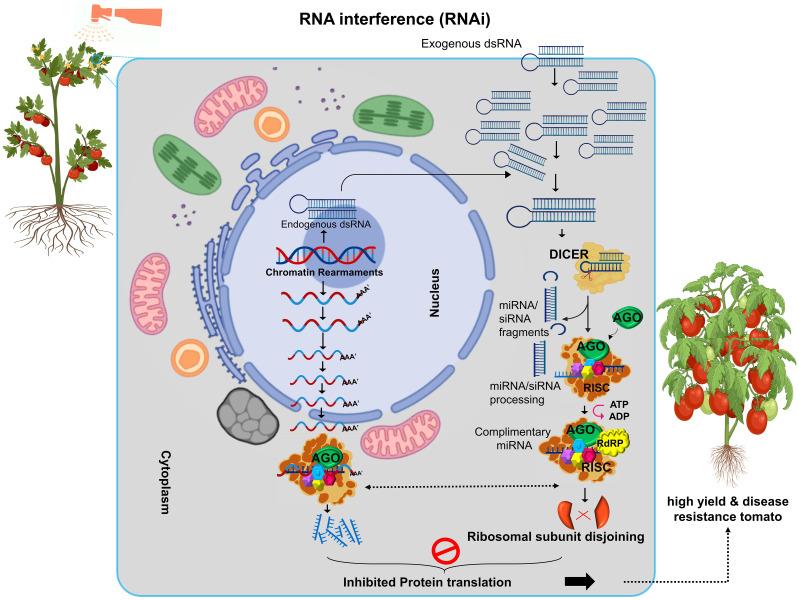
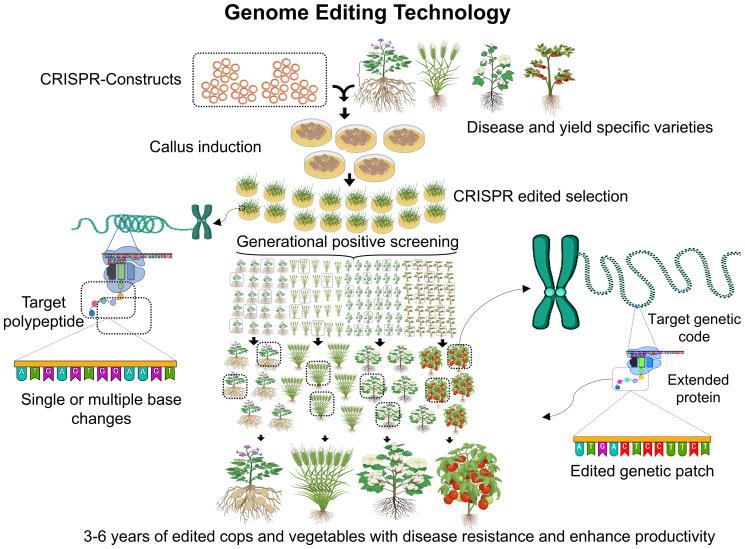
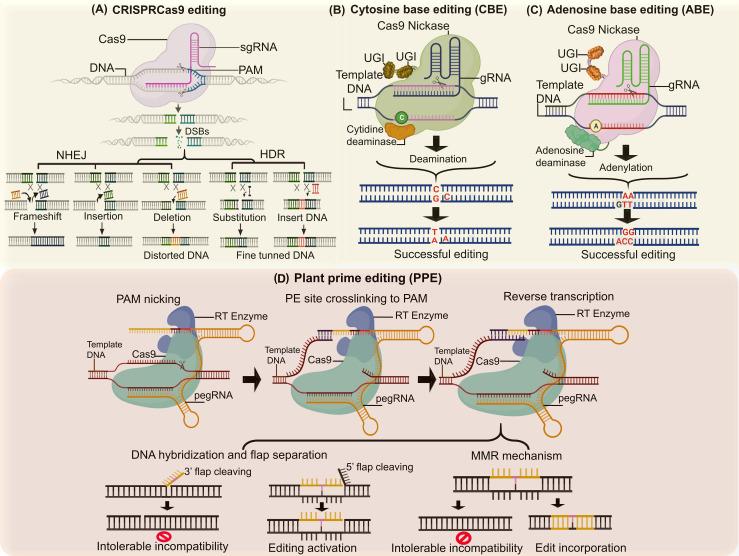
The dual challenges of climate change and population growth have intensified both biotic and abiotic stresses on crops resulting in disruptions of water dissipation patterns, lessen growth, yield, productivity and food security. Therefore, smart and sustainable agriculture practices for climate resilient and high yielding crops is the need of time. For this purpose, Innovation in biotechnological strategies is essential for sustainable agricultural development. Traditional breeding techniques have evolved through molecular approaches like marker-assisted selection (MAS) and quantitative trait loci (QTL) mapping, which accelerate the identification of trait-specific improvements. Mutational breeding, although effective in generating genetic diversity but lacks the precision, accuracy and effectiveness. Transgenic breeding allows for the transfer of beneficial genes across species, but recent advancements have shifted focus toward more refined approaches, such as RNA interference (RNAi) and genome editing tools like CRISPR-Cas9. These technologies enable precise, controlled genetic modifications to enhance traits like stress tolerance, disease resistance, and nutritional content. The integration of cutting-edge multi-omics platforms, including transcriptomics, proteomics, metabolomics combined with robust artificial intelligence (AI) based methods has revolutionizing crop genome elucidation. AI-driven analysis of large-scale biological data has revealed intricate genetic networks and regulatory pathways that underpin stress responses, growth, yield and genetics circuit patterns. These innovations in biotechnology from conventional breeding to advanced data-trait elucidation integrated methods are pushing the boundaries of climate resilient and next generation crop development. This review focused on the future of resilient and sustainable agriculture that lies in the convergence of conventional and molecular breeding, biotechnology approaches and AI's driven strategies that enabling scientists to understand the genomics circuits of crops. These next generationally evolved crops bridging gaps from laboratory to field application with reduced reliance on chemical fertilizers, lessen yield gaps, climate resilience and promising nutritional enrichment. Such crops thrive under harsh environment paving the way for resilient and sustainable crop system development in constantly populating and warming ecosystem.
气候变化和人口增长的双重挑战加剧了对农作物的生物和非生物胁迫,导致水分消散模式紊乱,生长、产量、生产力和粮食安全受到影响。因此,采用智能且可持续的农业做法来培育适应气候变化且高产的作物是当务之急。为此,生物技术策略的创新对于可持续农业发展至关重要。传统育种技术已通过分子方法不断演进,如标记辅助选择(MAS)和数量性状位点(QTL)定位,这些方法加速了特定性状改良的鉴定。诱变育种虽然在产生遗传多样性方面有效,但缺乏精确性、准确性和有效性。转基因育种允许跨物种转移有益基因,但最近的进展已将重点转向更精细的方法,如RNA干扰(RNAi)和CRISPR-Cas9等基因组编辑工具。这些技术能够进行精确、可控的基因修饰,以增强诸如胁迫耐受性、抗病性和营养成分等性状。前沿多组学平台(包括转录组学、蛋白质组学、代谢组学)与强大的基于人工智能(AI)的方法相结合,彻底改变了作物基因组的解析。基于AI对大规模生物数据的分析揭示了支撑胁迫反应、生长、产量和遗传电路模式的复杂遗传网络和调控途径。从传统育种到先进的数据-性状解析综合方法,生物技术的这些创新正在推动适应气候变化和下一代作物开发的边界。本综述聚焦于抗逆性和可持续农业的未来,它在于传统育种与分子育种、生物技术方法以及AI驱动策略的融合,使科学家能够理解作物的基因组电路。这些下一代进化作物弥合了从实验室到田间应用的差距,减少了对化肥的依赖,缩小了产量差距,具有气候适应性并有望实现营养富集。此类作物在恶劣环境下茁壮成长,为在人口不断增长和气候变暖的生态系统中发展抗逆性和可持续作物系统铺平了道路。


 Zotero 插件