
新型维生素K环氧化物还原酶(VKOR)潜在抑制剂的研究表明了一种更新的构效关系。
and Studies of Potential Novel Vitamin K Epoxide Reductase (VKOR) Inhibitors Suggest an Updated Structure-Activity Relationship.
作者信息
Mortel Ser Loisse R, Macalino Stephani Joy Y, Wang Mengying, Tie Jian-Ke
机构信息
Department of Chemistry, De La Salle University, 2401 Taft Ave, Malate, Metro Manila, Manila 1004, Philippines.
Department of Biology, University of North Carolina at Chapel Hill, Chapel Hill, North Carolina 27599, United States.
出版信息
ACS Omega. 2025 Jun 13;10(25):26694-26704. doi: 10.1021/acsomega.5c01116. eCollection 2025 Jul 1.
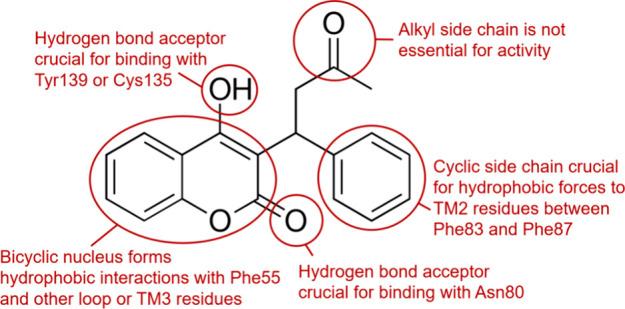
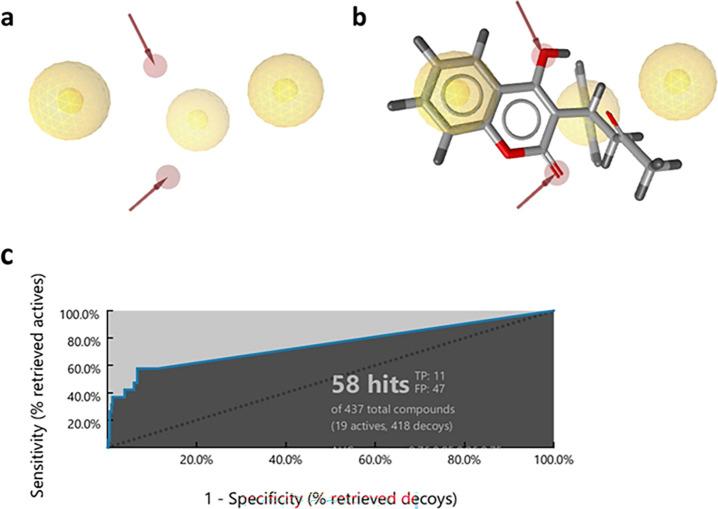
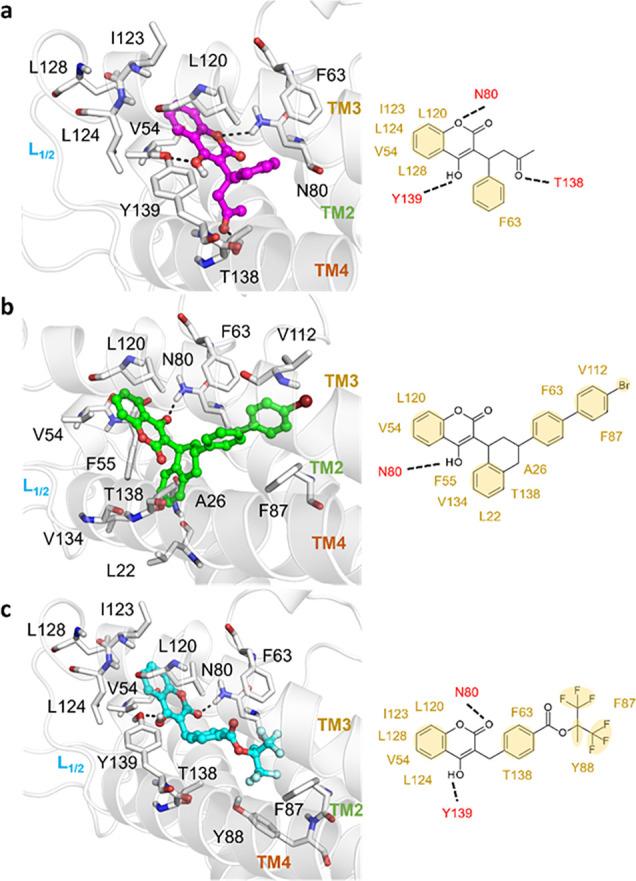
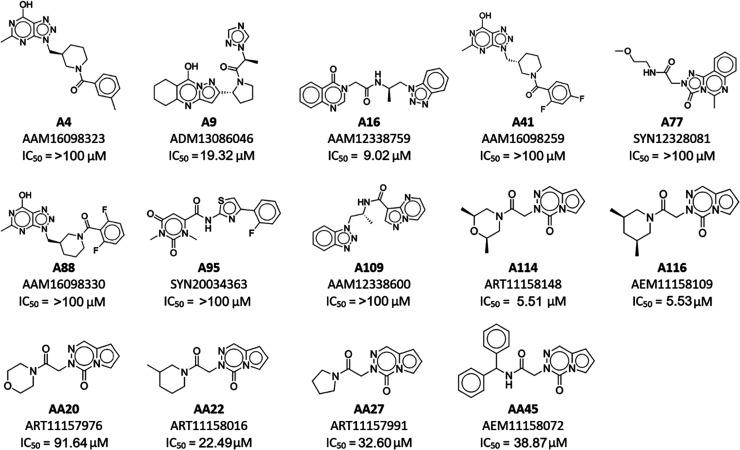
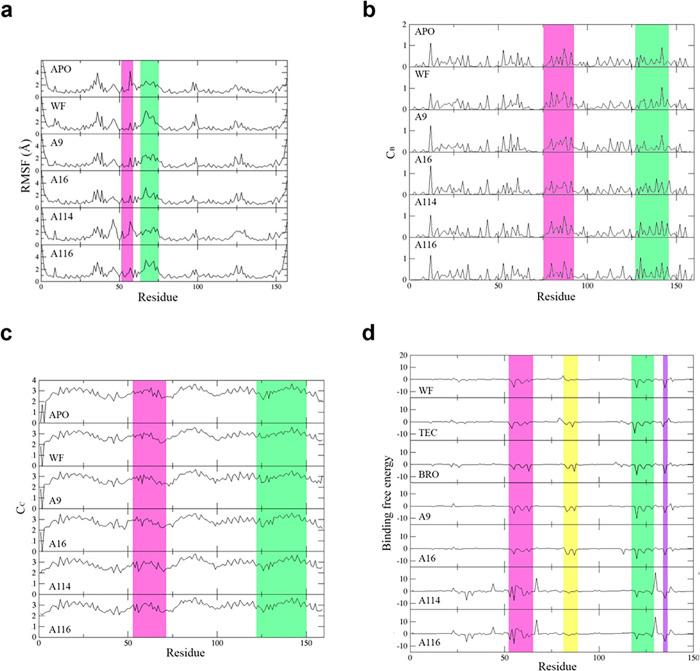
Vitamin K epoxide reductase (VKOR) is an enzyme involved in the activation of several clotting factors, making its inhibition a well-known mechanism of anticoagulant action. Though the VKOR inhibitor warfarin remains essential and popular today, its adverse effects still make it a high-risk drug. This study intends to identify novel compounds with predicted VKOR inhibition and pharmacokinetic stability and explain the mechanistic basis of their action. A combination of pharmacophore modeling, druglikeness prediction, and molecular docking was used to find hits from existing compound libraries. The top hits showed activity at the micromolar level in a cell-based VKOR inhibition assay using human embryonic kidney 293 cells, led by A114 (IC = 5.51 μM) and A116 (IC = 5.53 μM). The docked protein-ligand complexes of the hits were also subjected to molecular dynamics to study atomic-level interactions. The combined data suggest that VKOR inhibitors need a bicyclic nucleus to elicit hydrophobic forces with the luminal residues 55 to 63 and TM3 residues 120 to 128, and extensively hydrogen bond to N80 and Y139 or C135. Shorter side chains should interact primarily with F83, while longer side chains must interact with residues G84 to F87. An extra side chain, like warfarin's alkyl ketone, may not be essential. This proposed structure-activity relationship can serve as a useful guide for designing improved and novel VKOR inhibitors in the future.
维生素K环氧化物还原酶(VKOR)是一种参与多种凝血因子激活的酶,其抑制作用是一种众所周知的抗凝作用机制。尽管VKOR抑制剂华法林如今仍然至关重要且广受欢迎,但其副作用使其仍是一种高风险药物。本研究旨在鉴定具有预测的VKOR抑制作用和药代动力学稳定性的新型化合物,并解释其作用的机制基础。采用药效团建模、类药性预测和分子对接相结合的方法,从现有的化合物库中寻找命中化合物。在使用人胚肾293细胞的基于细胞的VKOR抑制试验中,排名靠前的命中化合物在微摩尔水平显示出活性,其中A114(IC = 5.51 μM)和A116(IC = 5.53 μM)活性最强。命中化合物的对接蛋白-配体复合物也进行了分子动力学研究,以探究原子水平的相互作用。综合数据表明,VKOR抑制剂需要一个双环核,以便与腔面残基55至63和跨膜结构域3残基120至128产生疏水作用力,并与N80和Y139或C135广泛形成氢键。较短的侧链应主要与F83相互作用,而较长的侧链必须与残基G84至F87相互作用。像华法林的烷基酮这样的额外侧链可能并非必不可少。这种提出的构效关系可为未来设计改进型和新型VKOR抑制剂提供有用的指导。

 Zotero 插件