
羊水通过减弱肝星状细胞激活来减轻肝纤维化。
Amniotic fluid reduces liver fibrosis by attenuating hepatic stellate cell activation.
作者信息
Bowen Charles M, Ditmars Frederick, Liu Naiyou, Abril Jose Marri, Ajasin David, Russell William K, Stevenson Heather L, Eugenin Eliseo A, Fair Jeffrey H, Fagg W Samuel
机构信息
Division of Transplant, Department of Surgery, University of Texas Medical Branch, Galveston, TX 77555, United States.
John Sealy School of Medicine, University of Texas Medical Branch, Galveston, TX 77555, United States.
出版信息
Stem Cells Transl Med. 2025 Jun 25;14(7). doi: 10.1093/stcltm/szaf026.
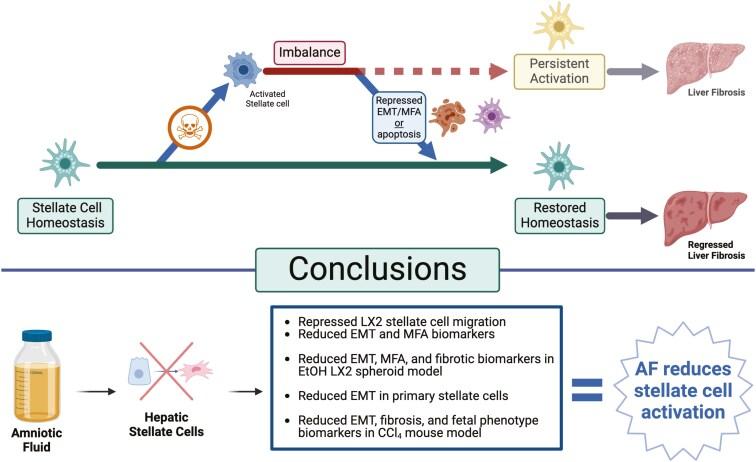
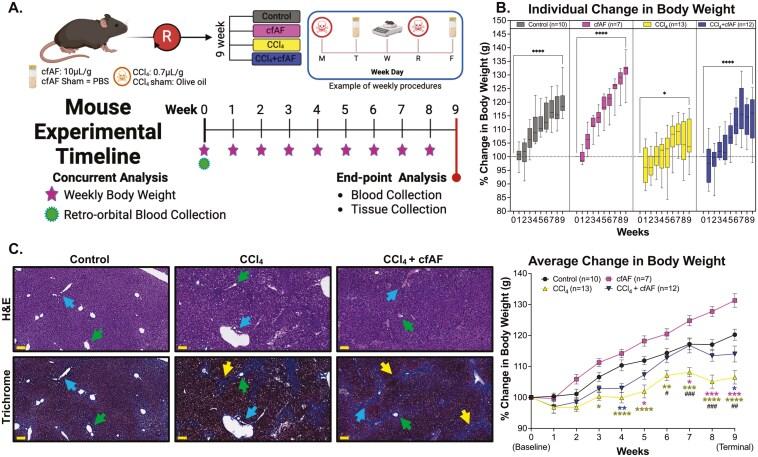
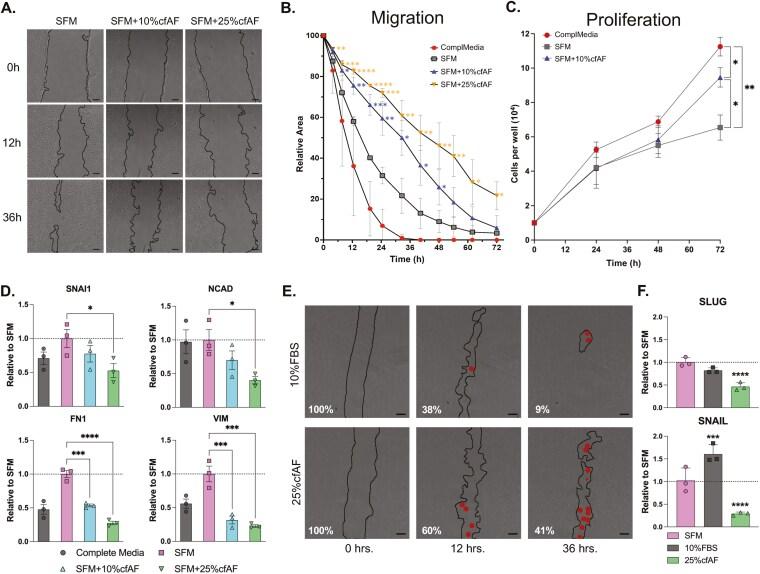
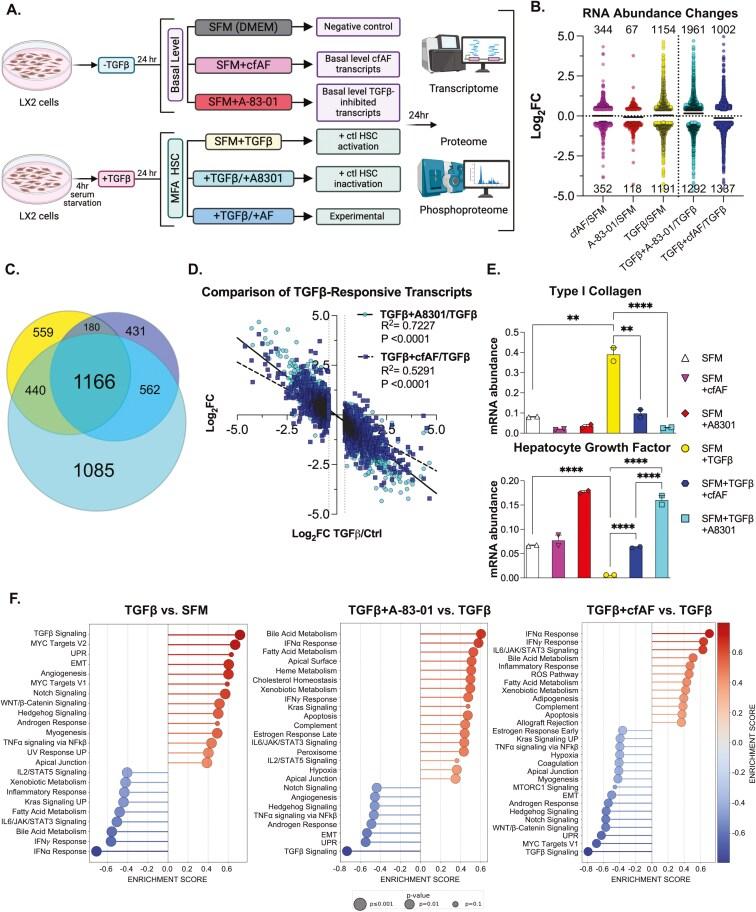
Regardless of the source of injury or metabolic dysfunction, fibrosis is a frequent driver of liver pathology. Excessive liver fibrosis is caused by persistent activation of hepatic stellate cells (HSCs), which is defined by myofibroblast activation (MFA) and the epithelial-mesenchymal transition (EMT). Strategies to prevent or reverse this HSC phenotype will be critical for successful treatment of liver fibrosis. We have previously shown that full-term, cell-free human amniotic fluid (cfAF) inhibits MFA and EMT in fibroblasts in vitro. We hypothesize that cfAF treatment can attenuate HSC activation and limit liver fibrosis. We tested if cfAF could prevent liver fibrosis or HSC activation in murine models of liver damage, 3-dimensional hepatic spheroids, and HSC cultures. Administering cfAF prevented weight loss and the extent of fibrosis in mice with chronic liver damage without stimulating deleterious immune responses. Gene expression profiling and immunostaining indicated that cfAF administration in carbon tetrachloride-treated mice reduced EMT- and MFA-related biomarker abundance and modulated transcript levels associated with liver metabolism, immune regulatory pathways, and cell signaling. cfAF treatment lowered MFA biomarker levels in a dose-dependent manner in ex vivo hepatic spheroids. Treating HSCs with cfAF in vitro strongly repressed EMT. Multiomics analyses revealed that it also attenuates TGFβ-induced MFA and inflammation-associated processes. Thus, cfAF treatment prevents liver fibrosis by safeguarding against persistent HSC activation. These findings suggest that cfAF may be a safe and effective therapy for reducing liver fibrosis and preventing the development of cirrhosis and/or hepatocellular carcinoma.
无论损伤来源或代谢功能障碍如何,纤维化都是肝脏病理的常见驱动因素。过度的肝纤维化是由肝星状细胞(HSCs)的持续激活引起的,这表现为肌成纤维细胞激活(MFA)和上皮-间质转化(EMT)。预防或逆转这种肝星状细胞表型的策略对于肝纤维化的成功治疗至关重要。我们之前已经表明,足月无细胞人羊水(cfAF)在体外可抑制成纤维细胞中的MFA和EMT。我们假设cfAF治疗可以减轻肝星状细胞激活并限制肝纤维化。我们测试了cfAF是否能在肝损伤小鼠模型、三维肝球体和肝星状细胞培养物中预防肝纤维化或肝星状细胞激活。给予cfAF可防止慢性肝损伤小鼠体重减轻和纤维化程度,且不会刺激有害的免疫反应。基因表达谱分析和免疫染色表明,在四氯化碳处理的小鼠中给予cfAF可降低与EMT和MFA相关的生物标志物丰度,并调节与肝脏代谢、免疫调节途径和细胞信号传导相关的转录水平。在体外肝球体中,cfAF治疗以剂量依赖的方式降低了MFA生物标志物水平。在体外使用cfAF处理肝星状细胞可强烈抑制EMT。多组学分析表明,它还可减轻TGFβ诱导的MFA和炎症相关过程。因此,cfAF治疗通过防止肝星状细胞持续激活来预防肝纤维化。这些发现表明,cfAF可能是一种安全有效的治疗方法,可减少肝纤维化并预防肝硬化和/或肝细胞癌的发生。



 Zotero 插件